I sat there in my empty shop, the smell of fresh coffee hanging in the air with nobody to drink it, staring at my smartphone. I typed in “best coffee near me.” My heart sank. I wasn’t there. Not in the top three. Not even in the top ten. I was buried on page four of the local results, while a guy three blocks away with mediocre lattes and half as many reviews was sitting pretty at the top. That was my “enough is enough” moment. I realized that having a great business wasn’t enough if Google didn’t know how to talk about me. It’s that sinking feeling when you realize your “open for business” sign is invisible to the people standing right outside your door. We’re going to stop the invisible man routine. I’m showing you how to fix that profile so you finally get that local listing win you’ve been working for.
Stop Being Invisible in Your Own Neighborhood
Most of us start out thinking that if we build it, they will come. But in the world of local business maps, if you don’t play by the rules, you’re basically wearing a cloaking device. I spent months trying to figure out why my map pack placement was so stagnant. I even made the rookie mistake of thinking that more keywords in my business name would save me. I actually got my listing suspended for a week because I tried to game the system. Lesson learned: over-optimizing the wrong way is a fast track to nowhere. Today, we’re going to roll up our sleeves and fix the foundation. We aren’t just looking for a temporary boost; we are looking for a long-term local pack improvement that sticks.
Is chasing the map pack really worth the headache?
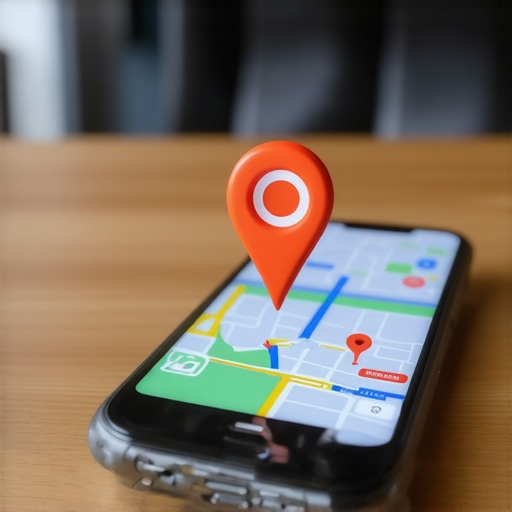
I get it. You’re busy running a business, not a marketing agency. You might wonder if these small tweaks actually move the needle. Here is a reality check: a study by Search Engine Journal found that the “Map Pack” captures roughly 44% of all clicks on a search results page. That is nearly half the people looking for what you sell. If you aren’t there, you’re handing that money to the guy down the street. Have you ever searched for your own business while standing in your lobby, only to find your competitor at the top of the list? [image] It’s frustrating, right? We’re going to change that narrative by looking at how specific profile settings are likely holding you back right now and how we can flip the switch on your local visibility.
The One Category Switch That Changes Everything
Think of your primary category as the aisle where Google places your product on the digital shelf. If you are a high-end steakhouse but you are listed generally as a Restaurant, you are competing with every taco stand and pizza parlor in a five-mile radius. I remember working with a local boutique that was struggling to show up for vintage clothing. We realized they were listed under General Retailer. Within forty-eight hours of changing it to Vintage Clothing Store, they jumped from page three to the second spot in the pack. This is exactly how a simple category change fixed our hidden map listing problem. Don’t guess here. Look at what the businesses in the top three are using and match their primary category if you want to see a real local pack boost.#IMAGE_PLACE_HOLDER_B#
Stop Confusing the Algorithm with Messy Data
Google acts like a suspicious investigator; it is looking for any reason to doubt your legitimacy. If your address says Suite 100 on Facebook but Ste. 100 on your website and just 100 on your Google profile, the algorithm gets nervous. It hates inconsistency because it cannot verify your exact physical location with 100% certainty. This is why consistency is the most underrated factor for map pack placement. I once spent an entire weekend manually hunting down old Yelp listings and random directory mentions just to make sure the phone number matched to the last digit. It felt like tedious digital housecleaning, but the result was a rock-solid foundation that stopped our rankings from fluctuating every time Google ran an update. You need a blueprint to map pack success in 2025 that prioritizes this vital data cleanup above all else.
Turn Your Customers into Your Best Salespeople
Most business owners think reviews are just about the star rating, but the algorithm is actually reading the text for context. When a customer writes, best artisan sourdough in Portland, they are giving Google the exact keywords needed to associate your shop with those search terms. You should also be proactive with the Q&A section. I used to ignore it until I realized I could post my own questions. I started asking things like, Do you offer gluten-free options? and answering them myself. It might feel strange, but it is actually how to use google questions and answers to steal map pack placement from competitors who leave that section blank and unmonitored. Additionally, keep your visual feed fresh. It is fascinating how high resolution photos actually influence your spot on local business maps. A blurry photo of your storefront from 2018 is not enough anymore. I once uploaded a crisp, high-res video of a latte art pour, and that single post generated more direct directions requests than three months of static images. Focus on clarity, accuracy, and frequent interaction to keep the momentum going.
Everyone tells you that reviews are the holy grail, but if you want real map pack success, you need to understand that the algorithm is actually quite skeptical of a sudden flood of five-star ratings. In my experience, focusing solely on the number of reviews is a rookie move. While they help with credibility, Google prioritizes ‘behavioral signals’ like how often people click for directions or call you directly from the map. This is the interaction metric Google uses to gauge map pack success more than a static review count. I’ve seen businesses with 500 reviews get beaten by a shop with 50 simply because the smaller shop had more consistent local foot traffic and engagement.
One massive trap I see people fall into is the ‘Virtual Office’ shortcut. You think you can snag a local listing win by renting a mailbox in the fancy part of town to appear closer to high-value customers. Don’t do it. Google’s AI has become incredibly good at flagging addresses associated with co-working spaces or UPS stores that don’t have a dedicated, staffed physical presence. This is one of the most common mistakes people make when chasing map pack success, and it usually results in a permanent suspension that is a nightmare to appeal. Have you ever fallen into this trap of trying to ‘adjust’ your location? Let me know in the comments.
Why does your competitor with fewer reviews still rank higher than you?
The answer usually boils down to something the industry calls ‘Proximity to Searcher.’ According to the 2023 Local Search Ranking Factors study by Whitespark, the physical distance between the person searching and your business remains the single most influential factor in map pack placement. It doesn’t matter if your coffee is roasted by monks on a mountaintop; if a customer is searching from a street corner three miles closer to your competitor, Google will likely show them first. This is why your physical distance is the biggest map pack placement factor and why you can’t just ‘SEO your way’ out of a bad location without a specific localized strategy.
To really see local pack improvement strategies that outperform competitors, you have to look at your website’s local authority. Google scans your site to see if you actually mention local landmarks, neighborhoods, and community events. If your website is generic, your map listing will feel generic to the algorithm. I started writing blog posts about the best dog parks in our neighborhood and linked them back to our service pages. This created a ‘geographical relevance’ that signaled to Google we weren’t just a business in the city, but a pillar of that specific community. This deep-level integration is the only way to guarantee a long-term local pack improvement that doesn’t vanish every time there is a minor update.
I used to think that once I hit the top three, I could just put my feet up and watch the customers roll in. I was dead wrong. The map is a living, breathing thing that shifts every time a competitor changes their hours or a new business opens its doors. To keep your spot, you need more than just hope; you need a system that alerts you the moment things go sideways. I personally rely on a tool called Local Falcon because it provides a grid-style view of your rankings. Instead of just seeing one number, I can see exactly where my visibility drops off street by street. This is how to monitor your map pack placement progress without guessing which neighborhood you’re losing.
Why the Grid View is the Only Metric That Matters
When you’re chasing a local listing win, checking your rank from your own office is the biggest mistake you can make. Google knows where you are. Of course you’re number one when you’re sitting in your own breakroom! You need to see how you appear to a customer five miles away. I use grid trackers to spot ‘dead zones’ where our competitors are creeping in. This allows me to see the simple way to monitor your competitors map pack placement changes before they completely overtake us. If I see a cluster of red dots in a specific zip code, I know it’s time to create some localized content for that area or adjust our service radius settings.
How do I maintain my map rank without burning out?
Maintenance doesn’t have to be a full-time job. I’ve developed what I call the 5-minute daily routine for map pack success. Every morning, while the coffee is brewing, I check for three things: new reviews that need a response, customer questions in the Q&A, and any ‘suggested edits’ from the public. People can actually suggest changes to your business hours or phone number, and if you don’t reject them, Google might just accept them automatically. Staying active is vital because local pack improvement requires fresh profile posts to show the algorithm that your business is still operational and engaged with the community.
Don’t Get Blindsided by AI Summaries
Looking ahead, I predict that local business maps are going to become even more conversational. We are already seeing Google’s AI (SGE) summarize reviews to tell users exactly what a business is known for. If three people mention ‘best spicy tuna roll,’ that becomes a permanent tag on your profile. As Joy Hawkins from Sterling Sky—one of the foremost experts in the field—frequently notes, the ‘justification’ (those little snippets of text that show up under your listing) is becoming the primary driver of clicks. This is a core part of your blueprint to map pack success in 2025. You need to focus on what customers are saying as much as what they are rating. If you want a long-term local pack improvement, start prompting your happy customers to mention specific services in their reviews. It’s a small nudge that pays massive dividends in the algorithm. My challenge to you: Go into your dashboard today and post one high-res photo of a specific service you want to rank for—it’s the fastest way to signal relevance right now.
The Truth About Why My First Three Attempts Failed Miserably
I learned the hard way that chasing a local listing win isn’t about outsmarting the system; it’s about being the most helpful answer for the user. One of my biggest lightbulb moments was realizing that Google actually tracks how many people click ‘Call’ or ‘Directions’ after seeing my listing. If your profile is static and boring, nobody clicks, and your rank drops. I also discovered that duplicate listings are often the silent killer of your visibility, confusing the algorithm until it just gives up on you. Finally, remember that local authority is built through real-world connections and consistent engagement, not just a one-time setup.
The Gear That Keeps My Shop on the Map
I don’t believe in using fifty different tools. I keep my map pack success toolkit lean and effective. First, Local Falcon is non-negotiable for seeing your actual reach beyond your front door. I also religiously read the Sterling Sky blog because Joy Hawkins and her team catch algorithm shifts months before anyone else. For visual impact, I use a simple high-quality DSLR camera instead of a phone for my main shop photos; the clarity difference is one of those high resolution photo factors that actually triggers higher engagement and signals professionalism to the algorithm.
Your Community is Waiting to Discover You
Taking the first step toward mastering local pack improvement can feel like shouting into a void, but I promise the results are tangible. When that first customer walks in and says, ‘I found you on Google Maps,’ all the hours of data cleanup and photo uploading suddenly feel worth it. You have a great business; now you just need to make sure the digital world reflects that reality. Go claim your spot and start building that map pack placement momentum today. Your neighbors are already searching for you; it is time you let them find you.
Have you noticed a specific competitor suddenly jumping ahead of you in the results lately? Let me know in the comments below!