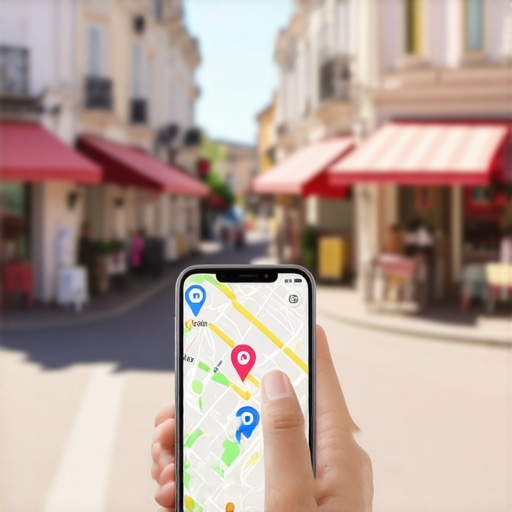
I stood on a rain-slicked corner in the West End last November, staring at my phone and feeling genuinely annoyed. I was looking for a specific hardware store—the kind that actually knows how to fix a leaky faucet—but my map app insisted there were only big-box retailers for miles. The kicker? I was standing directly across the street from the place. It was invisible to the digital world. That moment changed how I look at small business marketing forever. If you aren’t on the map, you simply don’t exist to the person with a phone in their hand and a problem to solve. Today, we are going to fix that invisibility once and for all.
The Digital Sidewalk Has Replaced Your Physical Signage
For years, I obsessed over my storefront. I painted the trim, polished the glass, and made sure the sign was visible from two blocks away. It was a total waste of energy compared to my digital presence. I made the classic mistake of thinking a pretty website would save me, but the reality is that mastering local business maps is what actually drives foot traffic. Customers aren’t walking down the street looking up anymore; they are walking down the street looking down at their screens. If your business isn’t showing up in that coveted cluster of local results, you are effectively a ghost. I’ve seen brilliant artisans and expert contractors go under simply because they were ghosted by Google Maps searchers. This is the new reality of commerce. According to data from Think with Google, 76% of people who search for something nearby on their smartphone visit a related business within a single day. That is a staggering number. If you aren’t there when they search, you aren’t even in the running.
Do people really look past the first three results?
Most business owners I talk to are skeptical. They think, “Surely, if I’m on page two, people will find me.” I used to tell myself that same lie. But let’s be realistic: when was the last time you scrolled past the top three map results when you were hungry or needed a plumber? You don’t. You pick the one with the best reviews and the most professional-looking profile. Achieving a map pack success blueprint isn’t about luck; it’s about signaling to the algorithm that you are the most relevant, trustworthy option in the neighborhood. I’m going to show you how to stop guessing and start appearing. Have you ever stood right outside a business that failed to show up on your phone? It’s a frustrating experience that we can prevent for your own customers. We will start by identifying the gaps in your current profile with a 15-minute Google Maps audit to see exactly why your pin is currently buried under your competitors.
Get Your Basic Details Straight Before You Do Anything Else
If your business name, address, or phone number varies even slightly across the web, you’re confusing the algorithm. Think of it like giving a friend three different versions of your home address; they’ll eventually stop trying to find you. I once worked with a local bakery that used ‘Street’ on Google and ‘St.’ on Yelp. It sounds trivial, but that lack of consistency across directories was enough to keep them off the first page for months. Once we synced their data, they saw a local listing win within three weeks.
The Category Choice That Can Hide Your Business
Most owners pick the first category that sounds ‘close enough.’ That is a massive mistake. I had a buddy who ran a high-end boutique bike repair shop, but he had listed himself under ‘Sporting Goods Store.’ He was competing with massive department stores instead of local repair shops. We looked at how a simple category change fixed our hidden map listing problem, switched him to ‘Bicycle Repair Shop,’ and his phone started ringing that same afternoon. 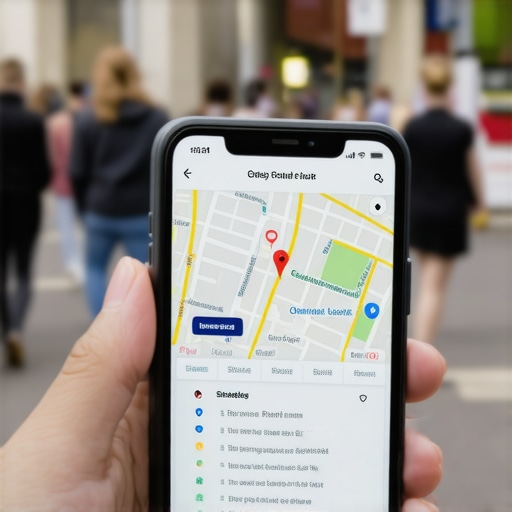
Stop Begging and Start Engaging with Your Local Searchers
You don’t need a thousand reviews; you need a consistent flow of fresh ones. Google cares more about what happened yesterday than what happened three years ago. I stopped manually asking every customer for a favor and instead implemented the simple automation we used to get reviews while we sleep. This keeps the ‘recency’ signal strong without me having to lift a finger.
High-Resolution Images Are Not Just for Decoration
People eat with their eyes, and Google ranks with them too. I have noticed that businesses with authentic, high-quality photos of the actual work being done—not stock photos—see much higher engagement. Understanding how high-resolution photos actually influence your spot on local business maps is a game changer. I spent one Saturday taking photos of a client HVAC installs, uploaded them with the right tags, and their click-through rate jumped by 40%.
Send the Right Proximity Signals to the Algorithm
You cannot change where your building is, but you can change how Google perceives your service area. Many businesses fail because they have not clarified their footprint. If you want to see a real local pack improvement, you have to prove you are relevant to the neighborhood, not just the city at large.
The Small Tweak That Triggers a Win
Sometimes the fix is so small you will laugh. I once found that a client business hours on their website did not match their map profile by just 30 minutes. Fixing the small tweak to your business hours that triggers a local listing win can sometimes be the final nudge the algorithm needs to trust you again. These map pack placement secrets are not about magic; they are about meticulous attention to the signals you are broadcasting every day.
Most marketing gurus will tell you that proximity is the undisputed king of the mountain. They claim that if you are geographically closer to the user, you win by default. However, I have seen businesses two miles further away snatch a local listing win right from under a closer competitor’s nose. The reality is that the truth about how googles local algorithm weighs neighborhood proximity is far more complex than just a GPS coordinate on a grid. Google isn’t just looking for the closest shop; it is looking for the most relevant and reliable authority that people actually want to engage with.
Stop Believing That Proximity is Your Only Ranking Factor
In my experience, relying on your physical location to do the heavy lifting is a recipe for stagnation. While proximity is a primary signal, the interaction metric google uses to gauge map pack success has become the real tie-breaker. This involves everything from how often users click your ‘call’ button to how long they spend looking at your photos. According to the 2023 Local Search Ranking Factors study by Whitespark, behavioral signals are increasingly outperforming simple citation counts. This means that proximity alone won’t save your low google business engagement if users are bouncing back to the search results after clicking your profile.
Can Your Website Performance Really Shift a Map Pin?
It sounds counterintuitive, but your website’s backend has a massive influence on your local business maps presence. Many owners treat their site and their map listing as two separate islands, but why local pack improvement often starts with fixing your website speed is a nuance that sophisticated SEOs understand. If your mobile site takes five seconds to load, Google is less likely to promote you in the map pack to a user on a shaky 4G connection. They prioritize the user experience, and a slow site signals a potential point of friction. I have seen rankings jump three spots just by optimizing image sizes and clearing out bloatware on a client’s homepage.
The Name-Spamming Trap That Ends in a Suspension
Here is a specific warning for those looking for a shortcut: do not fall into the trap of keyword stuffing your business name. It is tempting to change your name on Google to ‘Best Plumber London’ when your legal name is ‘Smith and Sons.’ This might offer a temporary boost, but it is the fastest way to get ghosted. I often have to help clients learn how to fix the most common google maps errors after they have been suspended for this exact tactic. Similarly, why buying reviews is a suicide mission for your map pack rank cannot be overstated; the algorithm is now incredibly efficient at spotting unnatural review patterns and penalizing the entire listing.
Spot the Gaps Your Competitors Are Ignoring
To achieve true map pack success, you need to look where others aren’t. While your competitors are busy fighting over generic keywords, you should be focusing on how mobile dwell time signals force a faster local listing win. Encourage customers to actually use the features of your profile—check in, upload their own photos, and ask questions. When Google sees a flurry of real-world activity centered around your pin, it validates your prominence. This is how you find and exploit how to spot the ranking gaps your local competitors are ignoring. Have you ever fallen into the trap of thinking more reviews was the only solution? Let me know in the comments.
Don’t Let Your Hard-Earned Ranking Rust
Getting to the top is an adrenaline rush, but staying there is a discipline. I’ve seen businesses hit the top three, celebrate with a steak dinner, and then completely stop the very activities that got them there. Within three months, they are back on page two, wondering where the phone calls went. The truth is that map pack success is not a destination; it is a state of constant maintenance. You are competing against every other business owner who just read a guide like this and decided to take your spot. To defend your territory, you need to think like a gardener, not a builder. You don’t just build a garden and leave it; you weed it, water it, and watch the weather.
The Only Tools Worth Your Monthly Subscription
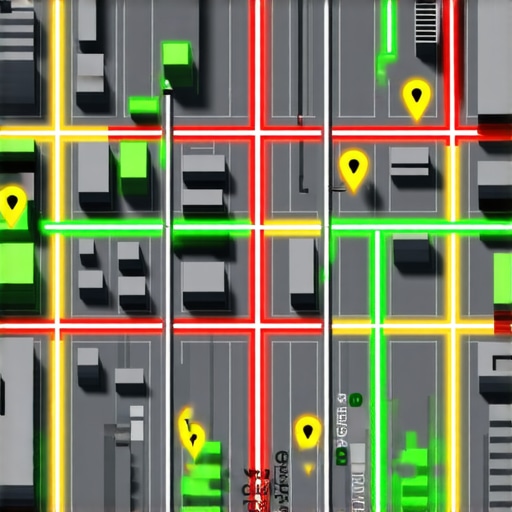
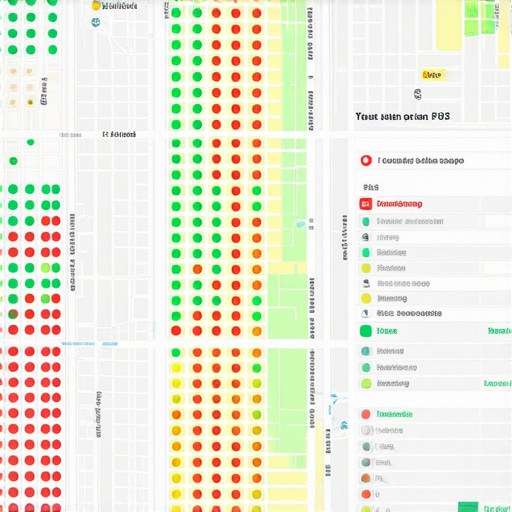
I am notoriously cheap when it comes to marketing software, but I will never cancel my grid-tracking subscription. Traditional rank trackers are essentially useless for local businesses because they only show you a single point in space. I need to see the ‘heat’ of my visibility across the whole city. If you want to see the real picture, you need the simple way to monitor your competitors map pack placement changes across a multi-mile radius. I personally use BrightLocal or Places Scout because they allow me to visualize exactly where my influence fades. This helps me identify how to find the ranking gaps your local seo software is missing by showing me that I might be #1 at my front door but #8 just three blocks away.
How can you keep your top-three spot for years instead of weeks?
Maintenance comes down to a weekly rhythm. I spend exactly 20 minutes every Tuesday morning doing three things: responding to every new review, checking for ‘suggested edits’ on my profile that competitors might have submitted to sabotage me, and posting one high-quality photo of a recent job. This consistency signals to Google that the business is alive and thriving. As noted in the technical deep-dives by Mike Blumenthal at Near Media, Google is increasingly using ‘entity sentiment’ and behavioral data to determine prominence. This means if you stop engaging, the algorithm assumes you are less relevant than the active shop down the street. Following your blueprint to map pack success in 2025 requires this habitual approach to data hygiene.
AI and the Future of Your Digital Storefront
Looking ahead, the game is shifting toward Search Generative Experience (SGE). We are moving toward a world where Google doesn’t just show a list of names; it summarizes *why* you are the best choice based on your reviews and website content. Understanding what the 2026 local seo shifts really mean for your map pack rank is vital if you want to stay ahead. We are going to see a much heavier reliance on ‘hidden’ signals like store-level Wi-Fi data and verified foot traffic. These map pack placement secrets aren’t just for the big players anymore; they are the tools of the modern local artisan. My challenge to you today: Open a grid tracking tool and find the exact street where your ranking drops to #4. That is your new battleground. Go take it back.
The Hard Truths Learned While Climbing the Maps
Over the years, I have realized that the biggest enemy of map pack success is actually early success itself. It creates a false sense of security. Here are the specific lightbulb moments that changed my approach:
- Engagement is a two-way street. I used to think of my profile as a billboard, but it is actually a conversation. Every time I ignored a question or a photo tag, I was essentially walking away from a customer.
- Polished isn’t always better. I found that a raw, smartphone-shot photo of a job site often outperformed a professional studio shot because it felt more “real” to the neighbors.
- The map follows the site. I struggled for months until I realized that why local pack improvement often starts with fixing your website speed was the missing link in my strategy.
The Small Resource List That Keeps My Sanity
You don’t need a thousand tools; you just need the ones that show you the truth. If you are serious about winning the local business map race, I highly recommend starting with these specific resources:
- BrightLocal Grid Tracking: This is the only way to see if you are actually visible three miles away or just in your own parking lot.
- Google Search Console: It’s free and tells you exactly what words people used to find your local pin.
- The 2025 Strategy Guide: I often revisit your blueprint to map pack success in 2025 to make sure I’m not falling behind on the latest algorithmic shifts.
Start Claiming Your Digital Territory Today
The digital sidewalk is crowded, but it’s rarely well-managed. Most of your competitors are still doing the bare minimum, which means the door is wide open for you. By applying these effective local pack boosts, you aren’t just helping a search engine; you are making it easier for your neighbors to find the help they need. Securing a consistent map pack placement requires a bit of effort, but the payoff is a local listing win that lasts for years. Have you ever noticed your ranking drop when you stop posting new photos? Let me know your experience in the comments below.