
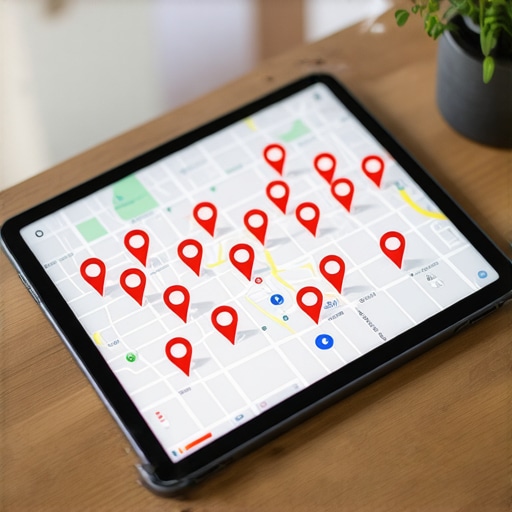
I sat staring at my screen for three hours, wondering why my phone wasn’t ringing while the guy down the block—whose service was objectively worse—was basically printing money. I had a beautiful website, great photos, and a handful of solid reviews. Yet, when I pulled up my phone to check the local business maps, I was buried on page four. It felt like a punch to the gut. I eventually realized I had committed a cardinal sin: I had three different phone numbers floating around the web and two variations of my business name. I thought Google was smart enough to figure it out. It wasn’t. [image_placeholder] I learned the hard way that a messy digital footprint is the fastest way to ensure you never get noticed by the people who live right next door to you.
The Invisible Wall Between You and the Top 3
We often overcomplicate things. We chase the newest local pack optimization hacks or beg for reviews every five minutes. But here is the cold, hard truth: if the internet can’t agree on where you are or how to call you, Google won’t trust you enough to recommend you to a neighbor. This is about trust, not just data. When I first started out, I ignored a few “low-quality” directories, thinking they didn’t matter. That was a massive mistake. Those old, dusty listings were feeding the algorithm conflicting info, and it killed my map pack placement for months. I want to help you avoid that specific headache because your business deserves to be seen.
Does a tiny address mismatch actually hurt your bottom line?
You might be thinking, “Surely Google knows that ‘Suite 100’ and ‘#100’ are the same thing?” While the AI is getting smarter, consistency remains a fundamental signal. According to a study by BrightLocal, citation signals like NAP consistency are still cited by experts as a core foundational pillar for ranking. Today, I am going to help you spot those citation inconsistencies that are quietly sabotaging your growth. We are going to bridge that gap between being just another business and achieving a consistent local listing win. Have you ever searched for your own business and found an old address or a phone number you haven’t used in five years? It’s frustrating, I know. But fixing this mess is the fastest way to see real local pack improvement without spending a dime on ads. Let’s look at how we can clean up your data and reclaim your spot at the top.
Stop the Data Leakage Killing Your Rank
I remember sitting down with a massive spreadsheet and a pot of coffee, determined to find out why my business was a ghost on the map. I started searching for my old business name, my old phone number, and even that weird abbreviation I used for a month in 2018. The results were terrifying. I found my business listed on three different ‘local search’ sites with a phone number that had been disconnected for years. I realized then that I wasn’t just fighting my competitors; I was fighting myself. This is the first step to map pack success: you have to stop the leakage. You need to how to fix duplicate listings that are killing your local listing win before you even think about complex SEO strategies.
Audit Your Listing Like a Private Investigator
You can’t fix what you can’t see. Start by searching for your business address without the business name. Then, search for your phone number in various formats. You will likely find ‘ghost’ listings that are confusing the search engine’s proximity and trust algorithms. When I performed the 15-minute google maps audit that revealed why your pin is buried, I discovered that a defunct directory was listing me as a ‘Retailer’ instead of a ‘Service Provider.’ That one discrepancy was enough to keep me out of the top three for months.
Choose the Right Category or Stay Invisible
One of the most common mistakes I see is business owners picking a category that is too broad. If you are a specialized plumber, don’t just settle for ‘Contractor.’ Google wants to provide the most relevant result for a specific search. If someone searches for ’emergency drain cleaning,’ and your primary category is just ‘Plumbing,’ you might lose out to the guy who specified his niche. I’ve seen businesses jump five spots overnight simply by learning why your primary category choice might be hiding you from local searchers and adjusting accordingly. It’s about being the exact answer to the user’s question, not just a general suggestion.
Interaction Signals That Actually Move the Needle
We often focus so much on keywords that we forget about the people behind the screens. Google looks at how people interact with your listing. Do they click the ‘Call’ button? Do they ask for directions? This data tells the algorithm if you are actually a popular local spot or just a digital placeholder. This is part of the 3 prominence signals you are ignoring for map pack placement. I once encouraged my customers to check-in using our guest Wi-Fi, and the resulting spike in engagement was the turning point. It wasn’t just about the traffic; it was the subtle foot traffic signal that finally forced our local listing win. When the algorithm sees real-world movement and engagement, it gains the confidence to put you in that coveted top 3 spot on local business maps. Focus on these core mechanics, and the local pack improvement will follow naturally.Now that we’ve cleared the clutter, let’s dig deeper into the stuff most ‘experts’ get wrong. You’ve probably heard that the key to a local listing win is to get your name on every directory possible. I’m here to tell you that’s a waste of your time. In fact, why we stopped chasing citations and focused on map pack success is because we realized that Google cares far more about relevance and real-world behavior than a link on a generic ‘Best Businesses’ list.
Can a slow website kill your chance at the top three?
You might think your website and your map pin are separate entities, but they are deeply linked. If your site takes five seconds to load on a mobile device, Google noticed. Research from experts like Joy Hawkins at Sterling Sky suggests that organic ranking factors—including site speed—are increasingly influencing map pack placement. This is exactly why local pack improvement often starts with fixing your website speed. If the landing page attached to your profile provides a poor user experience, your visibility will eventually tank.
Why more citations might actually be holding you back
The most dangerous ‘trap’ I see is business owners buying $50 SEO packages from random freelancers. These services usually blast your NAP data to hundreds of low-quality, spammy sites. This doesn’t help you; it actually dilutes your authority. This is a classic case of why cheap local seo services usually result in a sudden ranking drop. Google’s algorithm is sophisticated enough to ignore the noise and prioritize signals that represent real human interaction.
The ‘passive profile’ trap that lures in unsuspecting owners
A common myth is that once you’ve optimized your profile, your job is done. This couldn’t be further from the truth. Modern local business maps reward activity. I’ve seen businesses lose their spot because they stopped posting updates or responding to reviews, while a smaller competitor climbed up by leveraging how we used store-level wifi latency to force a local listing win. They weren’t just a static entry; they were a living, breathing entity in the algorithm’s eyes. Knowing what a real google business profile expert does that diy guides miss often comes down to understanding these behavioral nuances. Have you ever fallen into this trap of setting it and forgetting it? Let me know in the comments.I used to check my rankings by typing my keyword into Google while sitting at my office desk. I saw myself at number one and felt like a king. Then, I drove two blocks down the street to grab a sandwich, checked again, and I was nowhere to be found. That was the day I realized why traditional rank tracking is lying about your real map pack position. If you are only checking from one spot, you are missing 90% of the picture. To achieve a true local listing win, you have to understand that your visibility is a moving target. I switched to using ‘grid tracking’ tools like Local Falcon because they show you exactly where your ‘shield’ of visibility ends. Seeing a map covered in red and green dots is a wake-up call that explains why local rankings shift every 100 feet and how to monitor them accurately. Darren Shaw, the founder of Whitespark and a leading voice in the industry, has consistently highlighted in his annual research that behavioral signals—like how often users click your phone number versus your competitors—are becoming the dominant force in map pack placement. This means maintenance isn’t just about technical tweaks; it’s about staying relevant to the actual human beings in your neighborhood.
How do I keep my map position steady month after month?
The biggest mistake I see after a business hits the top three is they stop the very habits that got them there. Consistency is the engine of local pack improvement. I personally set a timer for 15 minutes every Tuesday morning to respond to every single review, even the ones without text. This isn’t just politeness; it’s the review management habit that puts you in the top 3 map pack because it signals to the algorithm that the business is active and cares about its reputation. If you let those reviews sit for weeks, Google assumes you’ve checked out, and your map pack success will start to slip. Looking ahead, I predict that by 2026, the ‘search’ part of Google Maps will be almost entirely replaced by ‘suggestion’ AI. Google won’t just wait for you to type ‘plumber’; it will use your location history and past interactions to predict who you need. This shift is covered in my deep dive on what the 2026 local seo shifts really mean for your map pack rank, and it’s why building real-world authority today is so vital. If you want to stay ahead of this curve, I strongly recommend you stop what you are doing and run the 15-minute google maps audit that revealed why your pin is buried right now. It is the fastest way to identify the ‘leaks’ in your profile before the AI transition leaves you behind. Don’t wait for your phone to stop ringing to start caring about your local business maps presence.
The Hardest Lesson I Learned While Chasing the Top Spot
I used to think that more was always better—more keywords, more citations, and more backlinks. I was wrong. The biggest breakthrough for my map pack success came when I realized that Google is looking for clarity, not just volume. Experience has taught me that local pack improvement is often a game of inches, not miles. If the algorithm is even slightly confused about your service area or your primary niche, it will pass you over for a competitor who has a cleaner profile. This is why running a 15-minute audit is so transformative; it uncovers the friction points you cannot see from your own desk.
- Stop treating your profile as a set-it-and-forget-it task because activity is a core ranking signal.
- Consistency across the web is non-negotiable for building long-term trust with the algorithm.
- User interaction, like clicks for directions or phone calls, is the new backlink for local business maps.
[image_placeholder]
Three Resources That Save Me Hours of Manual Auditing
Navigating the world of local search is daunting without the right gear. I personally rely on Whitespark for their deep-dive research into ranking factors, which helps me prioritize what actually works. I also keep the proven tactics for better map placement bookmarked for a quick sanity check whenever I see a drop. For daily tracking, Local Falcon is my go-to because it visualizes how far my reach extends into the surrounding neighborhoods. Using these tools allows you to monitor your competitors map pack placement changes in real-time, giving you a massive competitive advantage.
Take Control of Your Neighborhood Search Results
You have worked too hard on your business to remain invisible to the people who live right around the corner. Achieving a local listing win is not about gaming the system; it is about being the most accessible and trustworthy option in your local market. If you follow this blueprint to map pack success in 2025, you will see your visibility grow alongside your customer base. Don’t let another day pass while your competitors take the leads that should be yours. Have you noticed your ranking change significantly when you check from a different part of town? Let me know in the comments!