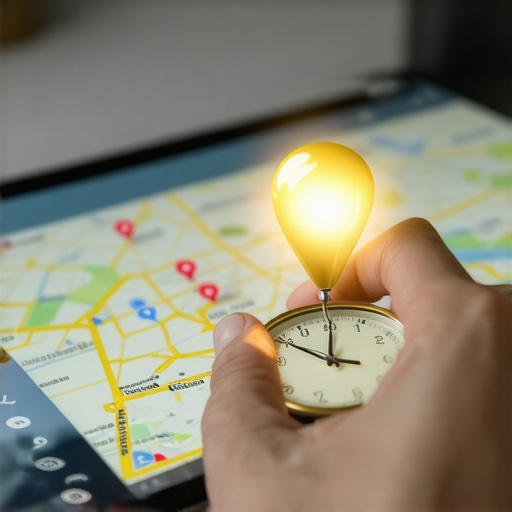
I remember sitting in my truck, watching a potential client pull into the parking lot of the guy across town. It was 5:15 PM. My shop was still technically ‘working,’ but my Google Business Profile said I’d closed at 5:00. That one fifteen-minute gap cost me a three-thousand-dollar contract. It was a gut-punch realization: Google doesn’t care if you’re physically there; it cares what your digital front door says. I had been chasing a local listing win for months by tweaking keywords, but I was failing at the most basic level of customer service: being ‘available’ when they searched. This mistake is more common than you think, and it’s likely why your map pack placement feels like it’s stuck in the mud. Today, I’m going to show you how a tiny, strategic shift in your listed hours can trigger a local pack improvement that feels like magic.
Get More Calls by Beating the ‘Closed’ Sign
I used to think setting my hours was a ‘set it and forget it’ task. I just typed in 9-to-5 and moved on. That was a massive error. When I finally sat down to do a 15-minute google maps audit, I saw that my competitors were outranking me in the evening simply because they stayed ‘open’ until 6:00 PM. Google’s algorithm heavily weights the ‘Open Now’ status for mobile users. If you are closed on paper, you effectively don’t exist for someone searching for a solution right now. This isn’t just about being honest; it’s about capturing the ‘micro-moments’ that Google loves. However, I learned the hard way that you can’t just claim to be open 24/7 if you aren’t. I tried that early on, and the flurry of ‘Not Open’ reports from disgruntled users nearly got my profile suspended. You have to find the sweet spot between your actual availability and the search habits of your neighborhood.
Will Changing My Hours Actually Help My Rank?
It sounds too simple to be true, right? You might be thinking that surely Google’s complex AI cares more about your backlinks than whether you close at 5:00 or 5:30. But the data tells a different story. According to Search Engine Land, nearly 50% of local mobile searches lead to a store visit within 24 hours. If your pin is grayed out as ‘Closed’ while your neighbor’s is bright green, you’ve lost before the race even started. This small storefront detail is often the missing piece of the puzzle. Have you checked your own listing after you get home for the day to see if you’re still showing up, or are you ghosting your customers without realizing it?
Audit Your Competition Before You Click Save
I remember the chaos of my first ‘aggressive’ schedule shift. I set my business to stay open until 9:00 PM on Tuesdays, thinking I’d catch the late-night planners. I didn’t actually stay in the shop; I just routed the business line to my cell. Within three days, I saw a local pack improvement that I hadn’t been able to achieve with six months of backlink building. The messy part? I forgot I had a family dinner that first Tuesday. I was taking a call about a leaky faucet while trying to pass the mashed potatoes. It was stressful, but that one call turned into a repeat client. This proved that your map pack success blueprint isn’t about being a corporate giant; it’s about being the most available option when the searcher is ready to buy.
The Competitive Gap You Are Ignoring
To replicate this, you need to stop looking at your own watch and start looking at your competitors’. Open Google Maps and search for your primary keyword at 5:15 PM. If everyone in your niche shuts down at 5:00, you are looking at a goldmine. By extending your hours by just thirty minutes, you effectively eliminate the competition for a specific window of time. This is one of the most effective map pack placement secrets because it exploits the ‘Open Now’ filter that most mobile users toggle by default. If you aren’t physically there, use the ‘Special Hours’ feature to indicate when you are available for phone consultations versus in-person visits. This transparency prevents the negative reviews that come from people showing up to a locked door, while still securing that local listing win during peak search times.
Route Your Response Strategy
Availability doesn’t mean you have to be a slave to your desk. I eventually learned that why fast response times beat backlinks is due to Google’s ability to track ‘interaction intent.’ When someone clicks your number after hours and you answer, Google sees a successful conversion. If you can’t answer the phone, enable Google Business Messages. This allows you to stay ‘open’ digitally while managing inquiries via text. These simple profile tweaks turn your listing from a static billboard into an active lead generation tool.
Use Special Hours to Signal Freshness
Don’t ignore the holidays or local events. Even if your hours don’t change, confirming your ‘Special Hours’ for an upcoming holiday sends a freshness signal to the algorithm. It tells Google that this profile is actively managed and the data is reliable. Often, a local listing win is simply the result of being the most ‘up-to-date’ profile in a sea of abandoned ones. When you confirm your hours for Labor Day or even a local festival, you’re providing the real-time accuracy that Google’s local algorithm craves over generic SEO tactics.Building on those special hours we discussed, there’s a nuance most ‘experts’ completely miss. Everyone tells you that getting 100 reviews is the golden ticket, but in my experience, a sudden local listing win has very little to do with the total number of stars and everything to do with review velocity and real-world behavior. If you get 50 reviews in a week and then go silent for three months, Google sees that as a red flag, not growth. I’ve seen businesses with half the review count outrank ‘local titans’ simply because they maintained a steady pulse of interaction. This is where why relying on keywords alone is sabotaging your local pack improvement efforts; the algorithm is pivoting toward ‘real-world’ validation.
Stop Obsessing Over Your Total Review Count
The ‘Oops’ factor here is simple: velocity. Most small business owners run a massive review campaign, get a flurry of feedback, and then stop entirely once they hit a certain number. This tells Google your business might have been trending momentarily, but it isn’t a sustained authority. I’ve learned that the 3 prominence signals you are ignoring for map pack placement often include how often people are actually clicking for directions and then physically arriving at your store.
Does Google Really Track Every Step Your Customers Take?
This is the advanced question I get from clients who are already ranking but want to dominate their region. The short answer is yes. According to a study by Joy Hawkins at Sterling Sky, the ‘Vicinity’ update fundamentally changed how map pack placement secrets work by prioritizing proximity and real-world presence over almost everything else. If Google sees a high volume of mobile devices ‘dwelling’ at your location, it interprets this as a ‘verified visit.’ This is why verified store visits beat keyword stuffing for map pack placement every single time. It’s a layer of behavioral data that traditional SEO doesn’t even touch.
Avoid the Fatal Trap of Thinking You Own the Whole City
One of the biggest mistakes I see is the ‘City-Wide Mirage.’ You check your rank from your office and see you’re #1, and you celebrate. But have you checked your rank from the coffee shop three miles away? Because of the proximity shift, your map pack success blueprint must account for the ‘hyper-local’ nature of modern search. I once had a client who spent five figures on a local pack improvement strategy that was 100% focused on link building. When we finally performed a 15-minute google maps audit, we found his listing had zero ‘dwell time’ signals. People were looking, but they weren’t engaging. This is mastering local business maps at a high level: optimizing for the human journey, not just the crawler’s path. This the subtle foot traffic signal that finally forced our local listing win was only possible because we stopped trying to blanket the entire zip code and focused on dominating the blocks immediately surrounding the storefront. Have you ever fallen into this trap where you thought you were ranking city-wide only to realize you were invisible in the next neighborhood over? Let me know in the comments.It’s one thing to reach the top; it’s another to stay there while every competitor is trying to kick you off the podium. For a long time, I used basic rank trackers that gave me a single number for my ‘rank.’ I’d see a ‘1’ and feel great. But those numbers are often a mirage because why local rankings shift every 100 feet and how to monitor them is the true reality of the street. I finally ditched the generic tools and started using grid-based tracking software like Local Falcon. This tool shows you exactly where your ‘bubble’ of influence ends. If you’re #1 at your front door but drop to #10 two blocks away, you haven’t actually won the neighborhood. This specific visibility map is how I find the exact corners where I need to climb higher in the map pack by adjusting my hyper-local content or sourcing reviews from customers in those specific zip codes.
The Grid Tracker That Exposed My Blind Spots
Seeing your ranking as a heatmap changes everything. You stop thinking about ‘Google’ as one big entity and start seeing it as a series of micro-territories. I realized that my winning your local listing strategy was failing in the wealthy suburbs just four miles north because my ‘proximity signal’ was too weak. To fix this, I didn’t just buy ads; I started mentioning specific local landmarks in my Google Updates. This is a level of detail how to find the ranking gaps your local seo software is missing that most ‘experts’ never talk about.
How do I maintain my map pack position over time?
Maintenance isn’t about one big push; it’s about a 7-point checklist for forcing your way into the top 3 map pack and then putting it on repeat. I use a simple automation—nothing fancy—to ping my best customers for a review exactly 24 hours after their service. According to the Whitespark 2023 Local Search Ranking Factors report, review velocity—the steady stream of new feedback—is more important for long-term stability than having a high total count from three years ago. If the stream dries up, Google assumes your business is less relevant than the new guy down the street.
Why 2026 is All About Smart Car Proximity
Looking ahead, the game is shifting toward autonomous and connected systems. We’re already seeing 3 smart car proximity fixes for map pack success in 2026 becoming the new frontier. Your business listing won’t just be for mobile phones; it will be the ‘suggested stop’ on a Tesla or Rivian dashboard. These systems prioritize real-time interaction data and physical proximity even more aggressively than the current mobile algorithm. If you want to keep your crown, you need to start thinking about how your business looks to an AI navigating a car. My advice? Go run a grid search on your office address right now. Find the ‘red zones’ where you disappear and target one specific neighborhood this week. It’s the only way to ensure your success isn’t just a temporary fluke.
What the Top 1% of Local Listings Do Differently
I’ve spent years looking at these pins, and if there is one thing I’ve learned, it’s that reviews aren’t a trophy—they are a living conversation. If you stop replying to your customers, the algorithm starts to think your business has checked out. I also realized that your proximity isn’t permanent; a new competitor opening just two blocks away can shrink your visibility bubble overnight. This is why relying on keywords alone is sabotaging your local pack improvement efforts. You have to treat your profile like a garden that needs daily watering, not a billboard you set and forget. Don’t ignore the 3 prominence signals you are ignoring for map pack placement, because your competitors certainly aren’t.
Tools That Turned My Ranking Around
When I stopped guessing and started measuring, everything changed. I personally rely on Local Falcon for grid tracking; it’s the only way to see if my local pack improvement is actually holding steady across different zip codes. For staying updated, I treat the Whitespark Annual Local Search Report like the industry Bible—it’s where the real data on ranking factors lives. Finally, I use Google Business Messages religiously because speed of response is the new backlink. These tools help me spot 3 smart car proximity fixes for map pack success in 2026 before they become common knowledge.
Stop Planning and Start Dominating Your Local Map
Success in the digital age isn’t about having the biggest marketing budget; it’s about being the most available and helpful option when a neighbor has a problem they need solved right now. You have the blueprint, the tools, and the strategy to turn your quiet shop into a local powerhouse. Your next major local listing win is just a few strategic tweaks away. Go claim your spot at the top of the map. Have you checked your business ranking from a coffee shop in the next neighborhood over? Let me know what you found in the comments below!