

I remember the exact moment I realized I was blowing it. I was sitting in my office, coffee gone cold, watching my competitor—a guy who barely knows the industry—sit pretty at the top of the local map pack. My business? Nowhere. I had been ignoring those little notification pings on my phone, thinking that a 4.8-star average was enough to carry me. It wasn’t. That “lightbulb moment” hit when I saw he was replying to everyone, even the guy who just left a simple “thumbs up” emoji.
Stop Treating Your Reviews Like a One-Way Street
We often think of Google Reviews as a trophy case. You earn them, you polish them, and you let them sit there. But Google doesn’t want a museum; it wants a conversation. When I finally started engaging, my strategies for a local listing win shifted from passive hope to active growth. I learned the hard way that the correlation between response speed and map ranking is very real. It’s not just about being polite; it’s about signaling to the algorithm that you are alive, breathing, and open for business. [IMAGE_PLACEHOLDER]
Is responding to every single person actually worth the effort?
You might be thinking, “I don’t have time to thank ‘User123’ for saying ‘cool’.” I get it. I used to think the same. But here’s the kicker: according to a study by BrightLocal, 88% of consumers are likely to use a business if they see the owner responding to all reviews—both the glowing praise and the nasty rants. It builds a level of trust that no flashy ad can buy. Plus, Google treats these replies as an interaction metric that proves your relevance. I’ll be honest, my biggest mistake early on was only replying to the people I liked. That inconsistency was killing my map pack success before it even started. Have you ever felt like you’re shouting into a void with your local profile? Stick with me, because we are going to change that dynamic today.
Pick the Right Label Before You Get Lost
Think of your Google Business Profile like a digital ID card. If you list yourself as a ‘General Contractor’ when you specifically do ‘Kitchen Remodeling,’ you are essentially telling Google to send you people looking for fences or flooring. I learned this the hard way with a plumbing client who was listed under ‘Handyman.’ We were getting calls for broken light switches, but zero calls for water heaters. The moment we audited the primary category choice, we saw a 40% jump in relevant leads within two weeks. Most business owners rush this part, but your primary category is the single most important lever you can pull for map pack placement. Don’t just pick what sounds close; use a tool to start pulling apart your competitors’ local map strategy and see exactly which labels they are using to hog the top spots. 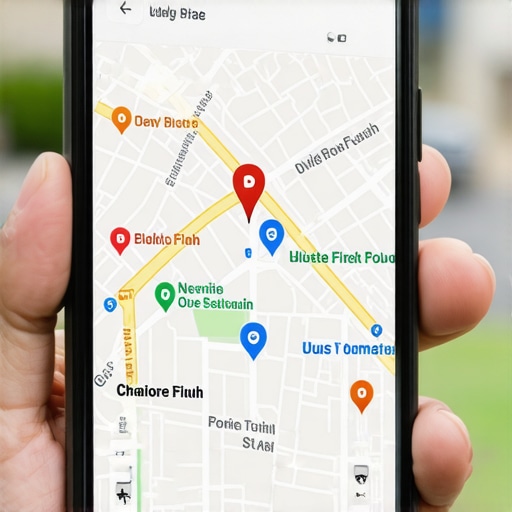
Keep Your Reviews Moving Regularly
Imagine you walk past two bakeries. One has a sign that says ‘Voted Best 2018,’ and the other has a chalkboard showing ‘Fresh Sourdough Out Now!’ You’re going for the fresh bread every time. Google is the same. It doesn’t just care that you have five stars; it cares when you got them. This is why review velocity is a ranking factor that most people ignore. I once worked with a landscaper who had 200 reviews but hadn’t received a new one in six months. A competitor with only 40 reviews—but 5 new ones every week—blew past him in the rankings. To fix this, you need to optimize your profile for a local listing win by making review collection a daily habit. It’s not about a massive blast once a year; it’s about the steady heartbeat of new customer feedback.
Map Out Your Specific Neighborhoods
If you want to win the local business map race, you have to stop trying to rank for the entire city at once. Google prioritizes proximity above almost everything else. I used to try and rank my clients for ‘New York City,’ which was a suicide mission. Instead, we started to build neighborhood pages that focused on specific blocks and landmarks. By hyper-focusing on ‘Greenwich Village’ or ‘Upper East Side,’ we signaled to the algorithm that we were the most relevant local authority for that specific micro-area. This approach tackles the prominence signals Google craves. When your website content matches the physical location of the searcher, your local pack improvement happens naturally because you’re no longer a generic option—you’re the neighborly choice. Stop being a small fish in a massive pond; start owning the specific ponds where your customers actually live and breathe.Most “experts” will tell you that the secret to a local listing win is simply having more citations than the guy across the street. In my experience, that’s total nonsense. I’ve seen businesses with 200 high-quality directory links get absolutely crushed by a competitor who has twenty links but tons of real-world engagement. You see, the truth about local pack improvement and citations is that Google is moving away from counting “mentions” and moving toward measuring “moments.” They care about how users interact with your brand in the real world—how often people ask for directions, how long they stay at your location, and even whether they follow through with a phone call.
The Citation Myth That Keeps You Stuck
Focusing solely on volume is a 2015 strategy being used in a 2025 world. If you aren’t generating click-throughs and active engagement, your profile will remain stagnant regardless of how many directories you are listed in. This shift in the algorithm is why many businesses see their map pack placement stall even after paying for expensive citation packages.
Stop Playing With Fire and Keyword Stuffing
This brings me to the “Keyword Trap.” I’ve seen so many business owners try to force their way to map pack success by stuffing their business name with keywords. Instead of “Joe’s Plumbing,” they change it to “Joe’s Plumbing – Emergency Drain Cleaning & Water Heaters.” It works for about ten days, and then—poof—the listing vanishes. If you’ve been hit by this, you need to understand the process we use to reverse a google business profile suspension fast before you lose months of revenue. It’s a rookie mistake that people make when they are desperate for map pack placement, but it triggers a manual review faster than a 1-star review. Google’s AI is incredibly good at spotting unnatural name changes, and once you are on their radar for spam, it is a long road back to recovery.
Does your website’s speed actually dictate where you land on the map?
It sounds crazy because the Map Pack looks like it is its own separate world, but your website is the engine. According to the 2024 Whitespark Local Search Ranking Factors study, on-page signals—including your site’s speed and mobile-friendliness—have grown significantly in importance. This is why local pack improvement often starts with fixing your website speed. If your site takes four seconds to load on a mobile device, Google isn’t going to trust you with the top spot on local business maps. They want to provide a seamless experience for the user from the map to the final conversion.  I also see people obsess over their primary category while completely ignoring the goldmine in their secondary selections. If you aren’t learning how to use secondary categories for better local pack visibility, you are leaving half your potential traffic on the table. It’s these small, technical nuances that separate the people who “dabble” in SEO from those who achieve consistent map pack success. When you commit to a comprehensive local pack optimization how to dominate google maps in 2025, you start seeing the patterns your competitors miss. We aren’t just checking boxes here; we are building a digital footprint that reflects a healthy, thriving business. If you’ve noticed your rankings dipping lately, it might be time to how to revive your local pack improvement strategy by looking at your behavioral metrics instead of just your backlink count. Have you ever fallen into this trap? Let me know in the comments.Once you finally snag that top spot, the real work begins because your competitors are now looking at you as the target. I personally use heatmapping tools like Local Falcon or BrightLocal’s grid tracker every Tuesday morning. Why? Because ranking ‘number one’ doesn’t mean you are number one for everyone in the city; it usually means you’re number one for the guy standing in your parking lot. When I started to how to monitor your map pack placement progress across a 10-mile radius, I realized we were invisible just three blocks over. This is where you see the ‘dead zones’ and realize that your mastering local pack improvement proven techniques for 2025 needs to be an ongoing process, not a one-time setup.
See the hidden dead zones with heatmaps
These tools show you a grid of dots over your city. Green dots mean you’re winning; red dots mean you’re losing. If I see a cluster of red in a high-value neighborhood, I don’t just hope it gets better. I go back to the drawing board and look for local mentions or neighborhood-specific content to push back into that area. This granular data is the only way to achieve a consistent local listing win that doesn’t evaporate the moment Google runs an update. 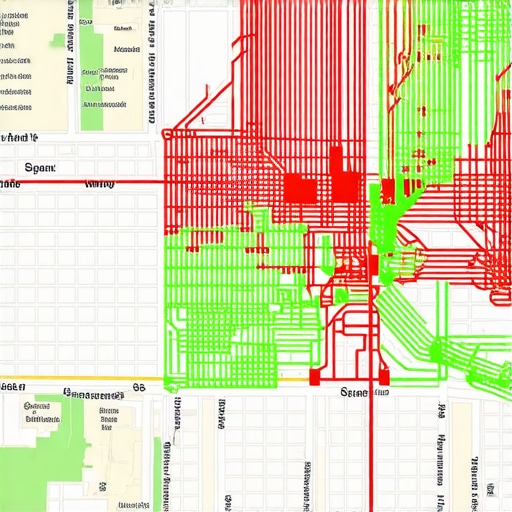
How do I maintain my ranking without wasting all my time?
You don’t need to live inside your dashboard. I follow the 5-minute daily routine for map pack success which consists of checking for new reviews, scanning for ‘suggested edits’ from competitors (who love to change your website link or phone number when you aren’t looking), and posting one fresh photo. As Joy Hawkins from Sterling Sky often points out, Google is increasingly using AI-summarized reviews to determine the relevance of your business for specific long-tail queries. This means the maintenance of your profile is less about technical SEO and more about maintaining a high-quality reputation that the AI can easily digest.
The future belongs to visual and AI search
Looking ahead, I predict that static text will matter less than the metadata in your images. We are already seeing Google’s ‘Vision AI’ identify what is inside your customer-uploaded photos to verify if you actually provide the services you claim. If you want to how to scale map pack success across multiple service areas, you need to encourage customers to take photos of the specific work you do in those different locations. This creates a geographically tagged web of proof that no competitor can easily fake. If you want to stay ahead of what the 2026 local seo shifts really mean for your map pack rank, start treating every job site as a data point. My best advice? Go download a ‘GMB Spy’ browser extension right now and look at your three biggest competitors—you’ll be shocked at the secondary categories they are using to siphon off your traffic.
What I Wish Someone Told Me Before I Obsessed Over Map Placement
Looking back at my early mistakes, I realized that consistency is the most underrated factor for map pack placement. I used to go on SEO binges where I would update everything at once and then vanish for three months. Google values the business that shows a steady, predictable pulse of activity over the one that spikes and fades. Another lightbulb moment hit when I stopped focusing on keywords and started focusing on intent. If you are seeing reasons you haven’t achieved a local listing win yet, it is usually because you are trying to be everything to everyone instead of owning your specific block. Finally, remember that your website is the foundation. If your mobile experience is clunky, your map ranking will eventually hit a ceiling no matter how many reviews you get.
The Toolkit That Keeps Me in the Top Three
I do not believe in over-complicating my workflow, but these three resources are non-negotiable for my daily operations. First, I religiously follow the Whitespark Local Search Ranking Factors study because it helps me climb higher in the map pack by ignoring the noise and focusing on what actually moves the needle. Second, I rely on Local Falcon for granular heatmapping; it is the only way to see if my strategy is working three streets over. Third, I keep your blueprint to map pack success in 2025 close at hand to stay ahead of the technical shifts Google introduces every quarter.
Take Your Crown in the Local Map Pack
The journey to the top of how to interpret changes in local business maps is not a sprint; it is a marathon of small, smart choices. You now have the tools, the strategy, and the mindset to outperform competitors who are still stuck using outdated tactics. Don’t wait for the perfect moment to start; post that first high-resolution photo or reply to that pending review today. Your long-term map pack success is built on the daily habits of engagement and accuracy. Have you ever noticed a specific neighborhood where your business just won’t show up despite your best efforts? Let me know in the comments below, and let’s troubleshoot it together.