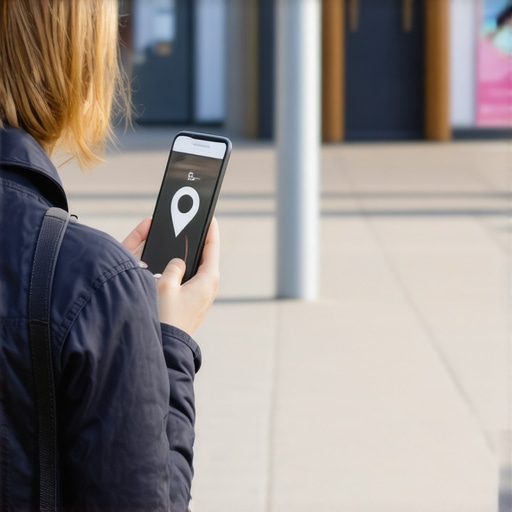
I remember sitting in my car, stomach growling, trying to find a decent sandwich shop nearby. I pulled up Google, but the results were a mess. One place had a menu that wouldn’t load on my phone, and another was miles away despite being “near me.” It hit me like a ton of bricks: I was building SEO plans for my clients that looked great on a 27-inch monitor but failed miserably on a 6-inch screen. I was failing the very people I was trying to reach.
Stop Designing for Desktops and Start Winning on the Street
Most SEO “experts” sit in air-conditioned offices staring at spreadsheets all day. They forget that mobile search behavior is the key to local pack improvement because that is where the actual “local” part of the journey happens. I used to think map pack placement was just about stuffing keywords into a business description. I was dead wrong. If your site takes five seconds to load on a shaky 4G connection, you have already lost the customer to the guy down the street. According to data from Statista, mobile devices generated over 58 percent of global website traffic recently, and for local intent, that number skyrockets. [image_placeholder] We are talking about people who are on the move and need answers right now. When we ignore the mobile experience, we aren’t just missing clicks; we are actively pushing people toward our competitors.
Is mobile-first SEO just another buzzword that won’t actually move the needle?
It is easy to be skeptical when every marketing blog is screaming about the next big thing. Early in my career, I spent months obsessing over a client’s backlink profile while sitting at my high-speed fiber-optic desk. Their desktop rankings climbed, but their actual foot traffic stayed flat. Why? Because their mobile site was a “pinch-to-zoom” nightmare that frustrated everyone who found them on a phone. I learned the hard way that true map pack success depends on how you handle the user’s immediate, frantic needs. We need to realize that proximity and speed are the lifeblood of local business maps. When someone searches for a service while they are out and about, they are in “buying mode,” not “browsing mode.” Have you ever tried to find your own business on your phone while standing in a busy part of town? If you haven’t, you might be surprised at what you see. Getting a local listing win requires us to step out of the office and look at the world through the eyes of a person with a low battery and a ticking clock.
Slash Your Load Times or Lose the Lead
Think of your website’s mobile speed as the pit crew in a Formula 1 race. If they fumble the tires, the driver loses the podium. In the world of local search, local pack improvement often starts with fixing your website speed because Google isn’t going to recommend a ‘broken’ experience to someone standing on a street corner. I once audited a landscaping client who couldn’t figure out why their rankings tanked every summer. It turned out their high-res gallery was 15MB per page. On a mobile connection, it was a death sentence. By the time the images loaded, the customer had already called the competitor.
Make Your Site Feel Instant on a 4G Connection
To secure a local listing win, you need to strip away the heavy scripts and oversized hero images that only look good on a Mac Pro. Use tools to compress every asset. If it doesn’t help a user call you or find your address, it doesn’t belong on the mobile version. 
Tell Google Exactly Where You Belong
Most businesses treat their primary category like a ‘close enough’ guess. They pick ‘Restaurant’ when they are actually a ‘Szechuan Restaurant.’ This is a massive mistake because why your primary category is destroying your map pack placement often comes down to specificity. I remember a local plumber who was listed generically as ‘Contractor.’ He was invisible for plumbing-specific searches. We refined his profile, and that how a simple category change fixed our hidden map listing problem worked almost overnight.
Use Secondary Categories to Fill the Gaps
Don’t just stop at one. If you offer emergency services, add that. If you have a physical showroom, list it. The goal is to create a digital footprint that matches the physical reality of your shop. This precision is what leads to map pack placement secrets that the big agencies usually charge thousands to reveal.
Turn Your Reviews into a Velocity Engine
Google doesn’t just look at your star rating; it looks at how fast you are getting new feedback. This is called review velocity. If you got fifty reviews three years ago and nothing since, you look like a dead business. To achieve map pack success, you need a steady stream of fresh, keyword-rich mentions from real customers.
Ask Customers to Mention the Service They Received
When a customer leaves a review saying ‘Great job!’, it’s nice. When they say ‘The best emergency pipe repair in Austin,’ it’s gold. This feeds the interaction metric Google uses to gauge map pack success. Encourage your team to ask for these specifics. It’s the difference between being a choice and being the only choice.While everyone obsesses over five-star ratings, I have noticed a dangerous obsession with proximity that actually holds businesses back. Most people believe that if they are not the closest shop to the user, they have already lost the winning the local business map race. This is a myth. I have seen businesses located three miles away outrank the shop next door simply because their engagement signals were off the charts. According to a study by Whitespark, while proximity remains a top factor, the quality of your profile and user interaction metrics can often overcome the distance gap. If you rely solely on being close, you are leaving your map pack placement secrets to chance.
Stop Wasting Hours on Tiny Citations
There is a trap I see even professional agencies fall into: the citation rabbit hole. They will charge you for a hundred listings on sites no one ever visits. In reality, the truth about local pack improvement and citations is that after the first few high-authority directories, the law of diminishing returns hits hard. I once worked with a gym that had three hundred citations but could not crack the top three. We deleted the junk, focused on three high-authority local blogs, and their visibility soared. Quality beats quantity every single time when you are aiming for a local listing win.
How Do I Know if My Engagement Signals are Actually Working?
You have to look at the interaction metric. Google is not just a phone book; it is a living map that watches how people move. If twenty people click your directions button but nobody actually drives to your store, Google notices. This is because how local business maps interpret searcher behavior is far more sophisticated than we give it credit for. They track everything from the length of time spent on your profile to whether the user actually calls you through the app. #IMAGE_PLACE_HOLDER_C#
The Hidden Danger of Messy Data
One of the biggest oops factors is the invisible duplicate. You might have an old listing from a previous owner or an accidental double-entry from three years ago. This split equity is a silent killer. Learning how to fix duplicate listings that are killing your local listing win is often the single most effective thing you can do this month. If Google sees two versions of your business, it gets confused and ends up ranking neither. I have seen so many business owners throw money at ads when their foundation was crumbling like this. Have you ever fallen into this trap? Let me know in the comments. To truly scale, you need to understand how to scale map pack success across multiple service areas without creating a messy trail of conflicting data. It is about being the most reliable answer for Google, not just the loudest.I stopped relying on generic SEO reports the moment I realized my office ranking meant nothing for a customer two blocks away. To truly understand how to monitor your map pack placement progress, you need a tool that visualizes the ‘grid.’ I personally swear by Local Falcon or the BrightLocal grid tracker because it shows exactly where my visibility drops off. If I am #1 in the North end but #7 in the South, I know exactly which neighborhood needs a hyper-local content boost. This isn’t just about vanity metrics; it’s about identifying the ‘dead zones’ where your competitors are eating your lunch. Specificity is the only way to achieve mastering local business maps. Using a grid-based tool allows you to see the actual ‘reach’ of your business profile, which is vital for any effective local pack boosts. 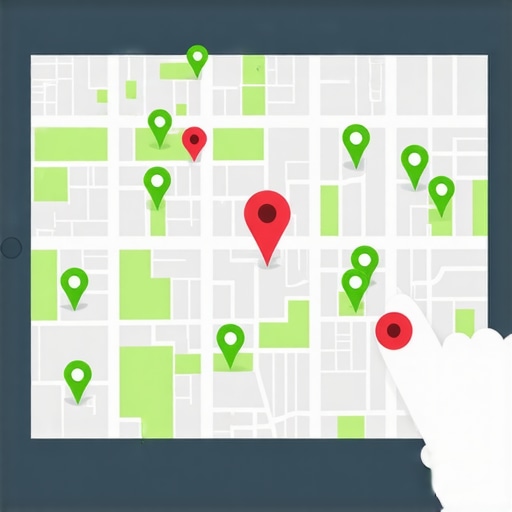
How do I maintain map pack success over the long haul?
You cannot treat local SEO like a ‘set it and forget it’ microwave dinner. It is a garden that needs daily weeding. I advocate for the 5-minute daily routine for map pack success. Every morning, while your coffee is brewing, respond to one review, post one update with a real photo from your shop, and check for any ‘suggested edits’ from the public. Google rewards active businesses because activity implies reliability. If you go dormant, your map pack placement will eventually erode as more active competitors start providing ‘fresher’ signals to the algorithm.
Stay Ahead of Googles Shifting AI Search Habits
Looking ahead, the local search landscape is pivoting toward AI-driven snapshots. According to David Mihm, a leading authority in local search, Google’s ‘Justifications’—those snippets like ‘Their website mentions…’—are becoming the primary driver of clicks. This means your local pack optimization must include on-page content that mirrors what people are searching for. I predict that by 2026, the ‘Search Generative Experience’ will favor businesses that have deep, neighborhood-specific blog posts over those with generic landing pages. You need to be building neighborhood pages that actually rank right now to survive that shift.
Master Your Multi Location Scaling Strategy
If you are trying to grow, you need to learn how to scale map pack success across multiple service areas without tripping over yourself. The biggest mistake is using the same ‘About Us’ copy for every branch. Each location needs its own unique flavor, its own local reviews, and its own unique images. Consistency in your NAP (Name, Address, Phone) is non-negotiable, but ‘unique value’ for each pin on the map is what leads to a local listing win. Go to your Google Business Profile right now and upload one ‘behind the scenes’ photo from today. Do not use a stock photo; use your phone. This simple act of ‘proof of life’ is the most advanced tip I can give you to stay relevant in a world of automated spam.
The Brutal Truth About Why Your Rankings Stalled at Three Blocks
One of the most painful realizations I had was that being the ‘best’ doesn’t matter if Google thinks you are inactive. I spent years thinking that once I hit the top three, I was safe. I wasn’t. I learned that the interaction metric Google uses to gauge map pack success is a living, breathing score. If people stop clicking your ‘Call’ button or asking for directions, you will slide down the rankings. Another hard lesson? Neglecting the basics of your profile structure. I’ve seen huge companies lose their footing because they ignored how to fix duplicate listings that are killing your local listing win, effectively splitting their authority in half. Finally, remember that specificity wins. If you are too broad, you are invisible. This is exactly why your primary category is destroying your map pack placement; you need to tell Google exactly what niche you own.
[image_placeholder_final]
The Exact Gear I Use to Audit the Neighborhood
I don’t guess when it comes to visibility; I use a specific stack of tools that give me the ‘street view’ of data. First, I rely on Local Falcon to see the ‘grid.’ You cannot improve what you cannot measure, and learning how to monitor your map pack placement progress through a visual heat map changes everything. For citation cleanup and competitor research, I look at Whitespark because they understand that the truth about local pack improvement and citations is about quality over sheer volume. Lastly, I always keep a copy of your blueprint to map pack success in 2025 handy to ensure my long-term strategy aligns with the upcoming AI shifts in search behavior.
Taking Back Your Corner of the Map
The digital world can feel overwhelming, but local search is actually about the physical world. It is about your shop, your street, and your neighbors. You don’t need a million-dollar budget to achieve map pack success; you just need to be the most active and reliable answer for someone standing on the corner with a phone in their hand. Start small, post a real photo today, and watch how those tiny signals compound into a massive local listing win. Your business deserves to be seen. Have you ever noticed your rankings drop the moment you stopped posting updates to your profile? Let me know your experience in the comments below!