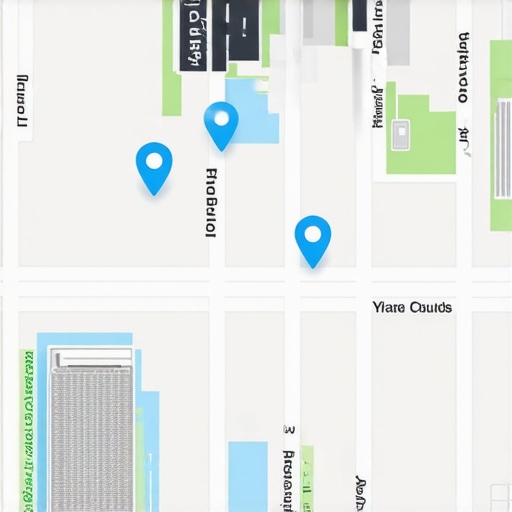
I remember standing on the sidewalk right in front of my first storefront, phone in hand, sweating through my shirt. I searched for ‘best coffee near me’ and—nothing. My own shop, three feet away, didn’t even show up in the top ten. I felt invisible. It’s a gut-punch when you’ve put your soul into a business, but the digital world treats you like a ghost. I’d spent weeks tinkering with my website, thinking that was the secret sauce. I was wrong. I was chasing a local listing win using an outdated map that didn’t even have my current coordinates on it. It took me months of trial, error, and some pretty embarrassing mistakes to realize that the algorithm doesn’t care how hard you work; it cares about specific signals you’re probably ignoring. Today, we are going to fix that. I’m going to show you exactly how to stop being ghosted by local searchers and finally secure that local listing win you’ve been working for. Have you ever stood right outside your door, searched for your service, and felt that sinking feeling when your name didn’t pop up?
Your Google Business Profile is a Living Creature Not a Static Billboard
Most people set up their profile once and treat it like a ‘set it and forget it’ crockpot. I did the same. I thought once I verified that postcard, the map pack placement would just happen. But Google’s local algorithm is incredibly sensitive to activity. If you aren’t feeding it fresh data, your competitors who are just a little bit more active will leapfrog you. I learned this the hard way when a competitor two blocks further away started stealing all my morning foot traffic. It wasn’t about who was closer; it was about who looked more ‘open’ and ‘reliable’ in the eyes of the search engine. Using specific local pack improvement tactics isn’t just about SEO; it’s about signaling to Google that you are still in business and ready for customers.
Does Consistent Posting Actually Move the Needle?
You might be thinking, ‘I don’t have time to be a social media manager for my own map pin.’ Trust me, I get it. But there’s a difference between vanity posting and strategic growth. One of my biggest early blunders was ignoring my primary category. I had myself listed under a broad term when a simple category change could have fixed my hidden listing problem overnight. According to research from Sterling Sky, even small adjustments to your primary business category can result in a ranking shift of several positions within hours—something I wish I’d known before I wasted months wondering why I was buried in the search results. We’re going to look at why your proximity advantage is being crushed and how to reclaim your spot.
Flood Your Profile with Visual Proof
Think of your Google Business Profile like a storefront window on the busiest street in the world. If that window is covered in grime and has zero lighting, nobody is coming in. When I first started, I uploaded a single, grainy photo of my office door and called it a day. I wondered why my competitors—who had bright, inviting interior shots—were getting all the clicks. Google’s AI doesn’t just see an image file; it parses the content to see if your business matches the searcher’s intent. Mastering local pack improvement starts with showing, not just telling. I worked with a local plumber who only had one picture of his rusty van. We swapped that out for twenty high-resolution shots of his team in uniform and clean pipe installations. His lead volume doubled in less than two weeks because how high resolution photos actually influence your spot on local business maps is directly tied to user trust and engagement metrics.
Stop Uploading Blurry Phone Photos
If you want a local listing win, your photos need to look professional. Google tracks how long users linger on your photos. If they see a blurry, dark mess, they bounce. If they see a bright, well-organized shop, they stay. Those extra seconds of ‘dwell time’ tell the algorithm you are a high-quality result worth showing in the top three. 
Turn Happy Customers into Ranking Fuel
Reviews are the heartbeat of the map pack, but most business owners treat them like a trophy case instead of an engine. You can’t just collect five reviews in 2019 and expect to stay on top in 2025. Google prioritizes what we call ‘velocity.’ Why review velocity is your secret weapon for map pack success is simple: it proves you are still relevant and providing good service today. I remember a month where we got zero reviews because we stopped asking. Our ranking dropped from the #2 spot to the bottom of page one. We had to implement a strict review management habit to claw our way back. Consistency beats intensity every time.
Feed the Review Beast Every Single Week
Don’t wait for a ‘review wave.’ Set a goal for two new reviews a week. It sounds small, but that steady drip of fresh data is a massive signal to the algorithm. When a customer leaves a review mentioning a specific service, it helps Google understand exactly what you should rank for. If they say ‘best latte in Denver,’ and you are a coffee shop, that is SEO gold you didn’t even have to write yourself.
Wipe Out the Ghost Data Holding You Back
Your business exists in a dozen different directories across the web—Yelp, Yellow Pages, Bing, and industry-specific sites. If your address is listed as ‘Suite 200’ on one and ‘Unit B’ on another, Google gets confused. In the world of search, confusion equals lower rankings. Why consistency across directories is still a major map pack success factor comes down to trust. I once spent an entire Saturday afternoon hunting down a single typo in a 2014 Yelp listing that had our old phone number. The very next day, our visibility ‘heat map’ turned green across three new neighborhoods. You have to fix duplicate listings and outdated information because they act like an anchor on your map pin, dragging you down regardless of how many reviews you get.The biggest lie I was ever told in the early days of SEO was that proximity is king. I spent weeks thinking that because my shop was centrally located, I’d naturally win. But here is the truth: the truth about how Google’s local algorithm weighs neighborhood proximity is that it’s only one-third of the equation. If your relevance and prominence are weak, a competitor from three zip codes away can still push you off the front page. I’ve seen businesses with ‘perfect’ locations get buried because they ignored the ‘prominence’ signal—which is essentially Google’s way of asking, ‘Is this business actually important?’ Everyone tells you to just verify your address, but why proximity alone won’t save your low Google Business engagement is because Google prioritizes ‘authority’ over a physical map pin every single time.
Stop Chasing Proximity and Start Building Prominence
One ‘oops’ factor that kills many local campaigns is treating your website and your map profile as two separate entities. This is a massive mistake. The 2023 Local Search Ranking Factors study from Whitespark confirms that your website’s organic SEO—specifically the keywords and internal linking structure—directly influences where your pin lands. If your website is slow or lacks local context, your map ranking will stall. This is why local pack improvement often starts with fixing your website speed and ensuring your on-page signals match what you’re claiming on your profile.
How Do Micro-Signals and Interaction Metrics Actually Change Your Rank?
Google is watching how people interact with your listing in real-time. They track ‘pogosticking’—when someone clicks your profile, stays for two seconds, and then goes back to a competitor. This interaction metric Google uses to gauge map pack success is the hidden nuance most agencies won’t tell you about. They also track ‘direction requests.’ If fifty people ask for directions to your shop this week, Google sees that as a massive vote of confidence that you are the ‘right’ answer for that query. 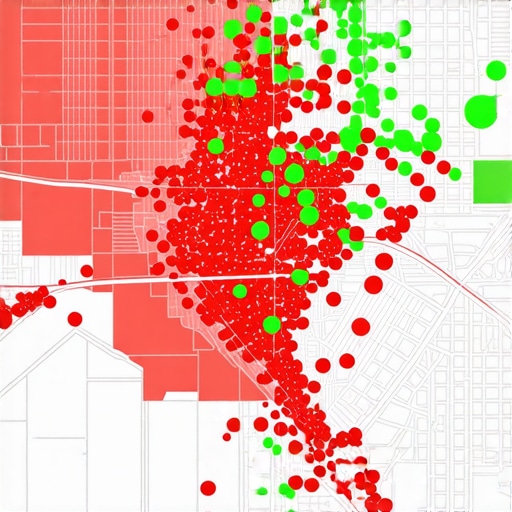
The Secret Behind Neighborhood-Level Dominance
Another nuance is the ‘Ghost Location’ error where a business vanishes despite having great reviews. This usually happens when Google detects a conflict between your physical location and the service area you’ve defined. If you’re trying to rank for a neighborhood you aren’t physically in, you need to use the secret behind neighborhood-level map pack placement most agencies ignore: hyper-local content that mentions specific landmarks or community events on your website. This creates a digital bridge between your physical address and the surrounding areas you serve.
Avoid the Keyword Stuffing Suicide Mission
I’ve seen businesses try to cheat the system by adding cities or services into their business name (e.g., ‘Joe’s Plumbing – Best Plumber Denver’). While it might give you a temporary boost, it is a high-risk gamble that leads to hard suspensions. I call this a suicide mission for your map pack rank because once you’re suspended, clawing your way back is a nightmare. Instead, focus on unlocking map pack placement through legitimate engagement. Have you ever fallen into the trap of thinking a closer location or a keyword-stuffed name was enough to keep you on top? Let me know in the comments.Avoiding the suspension trap is only half the battle; the real work begins when you start monitoring how your listing behaves in the wild. I used to think a single search from my office was enough to tell me I was winning. I was dead wrong. Rankings are hyper-local, meaning they change from block to block. To combat this, I rely on ‘local grid’ tools like Whitespark or BrightLocal. I use these specifically because they provide a bird’s-eye view of where your visibility drops off. If you don’t know how to monitor your map pack placement progress across an entire city, you’re essentially flying a plane without a dashboard. When I first saw a grid of red circles across my neighborhood on a map tracker, it was a wake-up call. It showed me that while I was ‘winning’ for my brand name, I was invisible for the keywords that actually put money in the bank. This allows for the simple way to monitor your competitors map pack placement changes without having to manually search every zip code on your lunch break. By spotting the ‘ranking gaps’—the specific streets where you need to focus your local content—you can stop guessing and start growing. 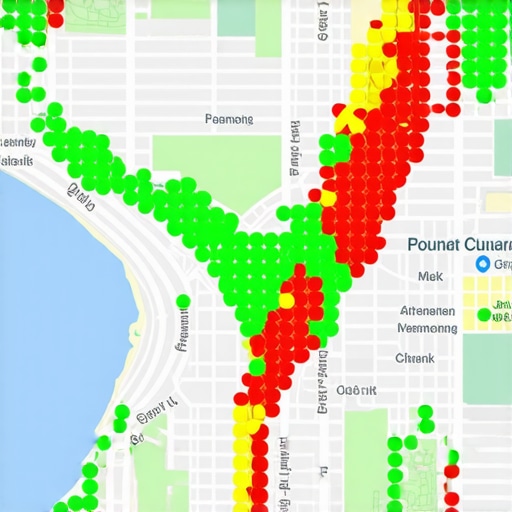
How do I maintain my map rank without working 40 hours a week?
Maintenance is where most people fail because they treat it like a sprint. In reality, it’s more like keeping a garden. You don’t need to spend all day there, but you can’t ignore the weeds. My personal routine involves a ‘Monday Morning Audit’ where I check for three things: new reviews, suggested edits from the public, and photo uploads. According to Google’s own technical guidelines on the Google Business Profile Help Center, the algorithm calculates local ranking based on relevance, distance, and prominence. Prominence is the one you can actually influence through consistent activity. To make this easier, we leaned heavily into automation. Specifically, how we automated google review collection without being annoying became our secret weapon. Instead of manually emailing clients, we set up a sequence that triggers right after a service is completed. This keeps our ‘velocity’ high without me having to lift a finger. Consistency in these micro-actions is what separates a flash-in-the-pan success from a permanent fixture on the map.
The AI Shift That Could Make Your Map Pin Obsolete
Looking ahead, we have to talk about AI. Google is rapidly integrating Search Generative Experience (SGE) into local results. This means the way people find your shop is shifting from a list of pins to a conversational answer provided by an AI. I predict that by 2026, ‘traditional’ map pins will be secondary to how well your business data is structured for AI crawlers. Understanding what the 2026 local seo shifts really mean for your map pack rank is about preparing your profile to be the ‘best answer’ in a generated summary, not just the closest pin. This means your ‘Questions and Answers’ section and your service descriptions need to be incredibly detailed to feed the machine the right context. If you’re feeling overwhelmed, don’t be. Start with a baseline. I recommend running the 15-minute google maps audit that revealed why your pin is buried right now. It’s the fastest way to see if you’re actually on the right track or just spinning your wheels.
The Raw Truth I Learned After My First Ranking Collapse
One of the hardest pills I had to swallow early on was that a local listing win is never a permanent trophy; it is more like a lease. If you do not pay your rent in the form of engagement and fresh data, Google will eventually evict you for a more active neighbor. Proximity is a baseline, not a complete strategy. I used to think being the closest shop meant I would automatically win, but I was wrong. The honest way to build local authority involves more than just an address; it is about becoming the most prominent answer in your city through real interaction. I also learned that bad reviews are actually massive opportunities. Instead of panicking when a one-star review hit, I started seeing them as a chance to show potential customers how I handle conflict, a signal that Google watches closely. Finally, never assume your categories are set in stone. I have seen how a simple category change can resurrect a dead profile in under 24 hours.
What I Use to Keep the Lights On Digitally
I do not believe in guessing when it comes to my livelihood. To stay ahead, you need a map pack success blueprint that relies on hard data rather than intuition. I personally trust Whitespark for its hyper-local grid tracking because it shows me exactly where I am losing ground on a street-by-street level. I also keep a close eye on the Google Business Profile Help Center for any technical policy shifts that might affect my rank. Lastly, I recommend performing a 15-minute google maps audit at least once a month. This ensures no ghost data or incorrect edits have crept back into your profile while you were busy running your business.
Your Move From Invisible to Local Authority
The digital landscape is shifting toward AI and conversational search, but the core principle remains the same: Google wants to provide the best experience for its users. By focusing on high-quality photos, consistent review velocity, and accurate directory data, you are making it incredibly easy for the algorithm to choose you over the competition. Do not wait for the perfect moment to start optimizing. Every small adjustment you make today brings you one step closer to a definitive local listing win. You have the tools, the strategy, and the roadmap; now it is time to put your business on the map for good and stay there. Have you ever felt like your business was doing everything right but still getting outranked by a competitor who seems less qualified? Let me know in the comments below!