I’ll never forget the Tuesday I spent four hours vacuuming the office carpet and arranging succulents just for a ‘professional’ photo shoot. I was convinced that if my business looked like a sterile IKEA catalog, I’d finally secure that elusive local listing win. I was wrong. Dead wrong. While my expensive, perfectly lit photos sat there gathering digital dust, a local competitor—whose office looked like a disorganized garage—was crushing me in the rankings. The difference? Their customers were constantly uploading raw, unfiltered photos of their work in progress. That was my lightbulb moment. I realized that how local business maps interpret searcher behavior isn’t about vanity; it’s about proof.
Stop Policing Your Gallery and Start Encouraging the Chaos
For years, I treated my Google Business Profile like a high-end art gallery. I’d delete any photo a customer uploaded if it was slightly out of focus or showed a stray coffee cup. It was a massive mistake that nearly cost me my business’s visibility. What I didn’t know then is that high-resolution photos matter, but they don’t hold a candle to the raw ‘realness’ of a customer’s perspective. Today, we’re going to fix your invisible profile by leveraging the very thing most business owners are afraid of: user-generated content. We are going to look at the map pack success secret hidden in your customers’ uploaded photos and how to make it work for you.
Wait, Does Google Really Value a Blurry Sandwich Over My Pro Shots?
It sounds counterintuitive, I know. You’ve probably spent a fortune on branding, so the idea of a grainy cell phone shot representing you feels like a punch in the gut. But here is the kicker: Google’s AI is incredibly smart. According to research by BrightLocal, businesses with more than 100 photos get 520 percent more directions requests than those without. Google isn’t looking for ‘pretty’; it’s looking for ‘active.’ When a customer snaps a photo at your location, Google gets a GPS-verified signal that a real person was actually there. That is a massive local pack improvement signal that no amount of staged photography can fake. Have you ever felt like you’re shouting into a void despite having a ‘perfect’ website? I’ve been there, and I promise you, the solution is simpler than you think. Let’s dive into how we can turn those customer uploads into a map pack placement engine that your competitors won’t even see coming.
Turn Your Storefront into a Content Machine
You have to stop viewing your profile as a static billboard and start seeing it as a communal campfire. People want to gather around something that feels alive. When I ran my first small agency, I was obsessed with control. I’d spend hours on local pack optimization by tweaking keywords, but the needle didn’t move until I started a simple ‘Customer Photo of the Month’ campaign. This wasn’t about professional quality; it was about frequency and relevance.
The Four-Word Text That Triggers a Local Listing Win
Most business owners fail because they make the ‘ask’ too complicated. If you send a three-paragraph email asking for a favor, it goes straight to the trash. I discovered that the 4-word text message that actually gets google reviews also works wonders for photos. Just ask: ‘Got a quick photo?’ when the project is done or the food is served. #IMAGE_PLACE_HOLDER_B# This small nudge turns a passive transaction into a local listing win because it generates those crucial GPS-stamped images. I remember a plumber friend who started doing this; his profile went from three stale photos of his truck to forty vibrant ones of actual pipe repairs in a month. His phone started ringing twice as much because his profile finally looked like it was ‘active’ and ‘open for business.’
Why GPS Pings Outrank Professional Lighting
Every time a customer uploads a photo from your shop, they are essentially ‘checking in’ with a level of authority you cannot buy. This is why local business maps use wifi signals and GPS data to verify your location’s popularity. Google sees the metadata attached to that ‘grainy’ phone photo and thinks, ‘If people are taking photos here right now, this place must be important.’ This is the foundation of map pack placement that actually sticks over time. You aren’t just getting a picture; you’re getting a digital verified-arrival stamp.
Manage the Flow Without Killing the Momentum
It’s tempting to start micromanaging these uploads the moment a customer posts something slightly blurry or off-brand. Resist that urge. Instead, focus on mastering local pack improvement by engaging with every single upload via the ‘owner response’ or by liking the photo.
Handle the Occasional Photographic Disaster
If a customer posts a photo that truly looks terrible—like a half-eaten sandwich or a dark corner of your storage area—don’t delete it immediately. Instead, upload three better ones yourself that same day. This dilutes the ‘bad’ content without losing the ‘active’ signal. I’ve seen businesses panic and try to scrub their profiles, only to find their local pack improvement efforts stalled because Google noticed a sudden drop in user interaction. You can also use google questions and answers to clarify any confusion that a weird photo might cause. The goal is a living, breathing profile that reflects the real-world pulse of your business.Most ‘experts’ will tell you that NAP (Name, Address, Phone) consistency is the holy grail. I’m here to tell you that while it’s a baseline requirement, it’s no longer the engine of map pack success. If you’re spending weeks hunting down every obscure directory listing, you’re chasing a ghost. In my experience, a single mention on a relevant local blog or a neighborhood news site does more for your local listing win than fifty entries on generic business directories. This is one of the key 3 shifts in how local pack improvement works now that many agencies are too slow to admit. The logic behind modern map pack placement has moved toward ‘local prominence’—which means Google wants to see that people in your specific zip code are actually talking about you, not just that your phone number is correct on a site nobody visits.
Can your website’s loading speed actually move your pin?
The answer is a resounding yes. It’s the hidden nuance that separates the pros from the amateurs. A study by the experts at Whitespark confirms that organic ranking signals—like your site’s authority and speed—are heavily weighted in the local algorithm. If your site is sluggish, Google is hesitant to give you that coveted local pack improvement because they don’t want to send mobile users to a page that won’t load. This is why local pack improvement often starts with fixing your website speed rather than just tweaking your Google Business Profile.  One of the most dangerous traps I see business owners fall into is the ‘keyword-stuffing’ suicide mission. You see a competitor ranking for ‘Plumber Chicago’ because they literally named their business ‘Plumber Chicago,’ and you think you should do the same. Don’t. It’s a fast track to a suspended profile. Instead, focus on the relationship between review keywords and visibility. Encourage customers to mention specific services in their feedback. This builds local authority without violating Google’s terms of service. Have you ever fallen into this trap or tried to ‘hack’ your name for a quick boost? Let me know in the comments. Another nuance people ignore is the proximity paradox. You might think you have the best shop in the county, but why local business maps prioritize proximity over fame is a hard pill to swallow. Google will almost always favor the ‘good’ business two blocks away over the ‘great’ business five miles away for most searchers. To fight this, you need to build neighborhood-specific content that proves you are a fixture in each specific area you serve. It’s about winning the local business map race one block at a time, not trying to blanket the whole state with a single generic page. Finally, remember that review velocity is your secret weapon; it’s not just about the total count. This is often one of the 3 reasons you haven’t achieved a local listing win yet—your feedback has gone stale.Stale feedback is a silent killer for your hard-won visibility. I used to think that once I hit 50 reviews, I could coast on my reputation and watch the leads roll in. I was wrong. Google’s ‘freshness’ filter is brutal, and if your profile looks like a ghost town, your rankings will follow. To stay on top, I rely on a small stack of tools that I actually use daily to keep the momentum going. I don’t just guess where I’m ranking; I use local grid trackers to see the raw data. Seeing a map of my city covered in green and red dots tells me exactly where my authority drops off and where I need to focus my efforts. This is a crucial part of how to monitor your map pack placement progress without losing your mind or your budget.
Trust the Grid Not the Average
If you aren’t looking at your rankings from different street corners, you’re flying blind. I’ve seen my own business rank #1 when I’m standing at my front door and drop to #12 just three blocks away. This is why local rankings shift every 100 feet and how to monitor them effectively. I personally use BrightLocal’s Local Search Grid because it visualizes the ‘proximity paradox’ in real time. It’s not enough to be ‘good’ in your city; you have to be the dominant choice in your specific neighborhood. When I see a cluster of red dots in a high-value zip code, I know it’s time to double down on neighborhood-specific content for that area.
How do I keep my map position steady month after month?
Consistency is the most boring part of this job, but it’s easily the most rewarding. I set a recurring calendar alert for a how to audit your own google business profile in under-10-minutes session every Monday morning. During this time, I check for ‘suggested edits’ from competitors—yes, people will try to change your hours or website link to sabotage you—and ensure my latest posts are live. I’ve found that why consistency is the most underrated factor for map pack placement comes down to proving to the algorithm that your business is a reliable, active entity. Mike Blumenthal, a leading expert in local search, has often highlighted the ‘Openness’ signal; essentially, if Google suspects your hours are inaccurate, you risk being filtered out of the map pack during peak search times. 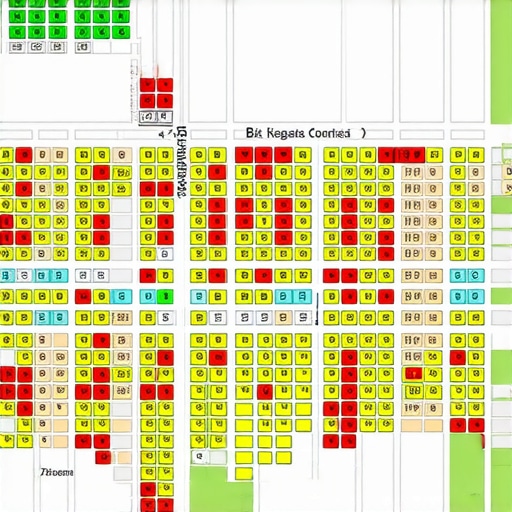
The Coming Era of Visual Search Signals
Looking ahead, I predict that ‘visual search’ is going to eat traditional keywords for breakfast. We are already seeing the early stages of this. Soon, Google will rank you based on the specific objects its AI identifies in your customer photos. If you’re a coffee shop, Google’s AI is already ‘seeing’ the latte art, the industrial lighting, and the cozy seating arrangements. This is what the 2026 local seo shifts really mean for your map pack rank—your profile needs to look like a lived-in, authentic space, not a curated stock photo gallery. The algorithm is moving toward ‘visual proof’ over written claims. Start today by running your own grid search for your primary keyword. See exactly where your green zone ends and where the red dots begin. That’s your roadmap for local listing win strategies for consistent map pack promotions. If you can push that green circle just one block further every month by engaging with your customers and keeping your profile fresh, you are winning the long game that most of your competitors aren’t even playing yet.
What I Finally Realized After Years of Losing to Messier Competitors
One of the biggest shifts in my mindset happened when I stopped trying to ‘game’ the algorithm and started trying to serve the neighbor. Looking back at my journey toward consistent map pack success, there are a few hard truths I wish someone had told me earlier. First, perfection is actually a red flag. When your profile looks too curated, users stop trusting it and Google’s AI notices the lack of authentic interaction. Second, you can’t fake proximity signals. If you are trying to rank in a town where you have zero physical footprint or local engagement, you’re fighting an uphill battle that even the best SEO can’t win. Third, the real magic happens in the ‘noise’—those small, daily interactions, blurry customer photos, and quick responses are what actually climb higher in the map pack rankings.
The Only Tools You Actually Need to Stay at the Top
I’ve wasted thousands on ‘shiny object’ software, but these are the few that actually contribute to a local listing win. I personally trust Whitespark for cleaning up citation messes because they understand that manual accuracy beats automated guesswork every time. For monitoring my actual progress, I don’t rely on the basic Google dashboard; I use Local Search Grid tools to see how my business performs street-by-street. Finally, if you’re looking for a step-by-step path, I always recommend the map pack success blueprint to keep your strategy focused on what actually moves the needle today. These resources take the guesswork out of the equation and let you focus on running your business.
Your Map Position Is a Living Asset Not a To-Do List
If there is one thing I want you to take away from this, it’s that your local presence is never ‘finished.’ It’s a living reflection of how your community perceives you. Don’t be afraid of the occasional bad photo or the slow weeks; instead, use them as fuel to engage even more deeply with your customers. When you prioritize unlocking map pack visibility through real human proof, you build a moat around your business that no competitor can easily cross. Your journey to the top of the map pack starts with the very next customer you serve. Have you ever noticed your ranking drop when you stop posting for a few weeks? Let me know in the comments below!