

I remember sitting in my home office last Tuesday, staring at my phone in absolute disbelief. I had spent six months meticulously tweaking every detail of my business profile, but when I searched for my own services from the coffee shop just two blocks away, I was nowhere to be found. I was buried under three competitors who—let’s be honest—had worse reviews and messier websites than I did. It felt like a personal insult from the algorithm. If you have ever felt like you are shouting into a void while your competitors enjoy all the phone calls, I want you to know I have been exactly where you are. I used to think that winning was just about having the most keywords stuffed into a description, but that mistake cost me months of visibility. Today, I am going to show you how to stop fighting the old battles and start winning the new ones.
Stop Chasing Keywords and Start Watching Your Pin Move
For the longest time, we were told that more citations and more keywords equaled a better map pack placement. I fell for it too. I spent way too much time and money on citation services that failed to move the needle even an inch. The truth is, the way Google sees our businesses has fundamentally shifted toward real-world signals rather than just digital breadcrumbs. Have you ever noticed your ranking drop the moment you step a few blocks away from your office? That is not a glitch; it is the new reality of how neighborhood proximity governs our success. According to search experts at Whitespark, proximity remains the top ranking factor, yet most business owners are still trying to rank for an entire city while ignoring the block they actually live on.
Is local SEO even worth the headache anymore?
I hear this from my neighbors all the time. They see the big franchises with massive budgets and assume the little guy has no chance. It is a valid fear. Why bother when the deck feels stacked? But here is the secret: the big guys are slow. They cannot pivot to the new ‘human-first’ signals that Google is looking for. I learned the hard way that a local listing win does not come from outspending the competition, but from out-engaging them. You can actually audit your own profile in ten minutes and find gaps that even the biggest marketing agencies miss.
The Three Big Changes Hiding Under the Surface
We are entering an era where interaction metrics matter more than almost anything else. It is not just about being seen; it is about what people do when they see you. If people see your pin but never click to call or ask for directions, Google thinks you are irrelevant. I realized this after months of high impressions but zero phone calls. I was technically ‘ranking,’ but I was failing the human test. We need to focus on the three major pillars: hyper-local relevance, real-time engagement, and verified physical signals. These shifts are the difference between being a ghost on the map and being the first call a customer makes.
Fix Your Basic Info or Stay Invisible
I once worked with a local bakery that was pulling their hair out in frustration. They had over 400 five-star reviews, yet they were consistently outranked by a gas station two miles away that sold stale muffins. It made no sense until we actually sat down and performed the 15-minute Google Maps audit. We discovered they were listed under the primary category of “Wholesale Bakery” instead of “Bakery & Cafe.” To a human, the difference is negligible, but to Google’s algorithm, they were serving two completely different audiences. Within forty-eight hours of correcting that single dropdown menu, their phone started ringing for local brunch orders. This is the level of precision required for a local listing win in today’s environment.
Sort Out Your Categories Immediately
Google is essentially a matchmaker. If you tell the matchmaker you are a plumber but you only do specialized irrigation, you are going to get the wrong dates—or no dates at all. Your primary category is the strongest signal you have for map pack placement. Most business owners pick one and forget it, but the pros know that secondary categories are where you capture the long-tail traffic. If you haven’t looked at your category list in the last six months, you are likely missing out on niche searches that your competitors are currently gobbling up.
Stop Uploading Grainy Cell Phone Pictures
Visual proof is no longer optional. I’ve seen data on how high resolution photos actually influence your spot on local business maps, and the correlation is undeniable. When a potential customer scrolls through the map, they are looking for a reason to trust you. A blurry photo of the back of your work van does the opposite. High-quality, geo-tagged images of your storefront, your team, and your actual work create “dwell time.” When a user lingers on your photos for ten or fifteen seconds, Google interprets that as a high-value interaction, which directly aids your local pack improvement efforts.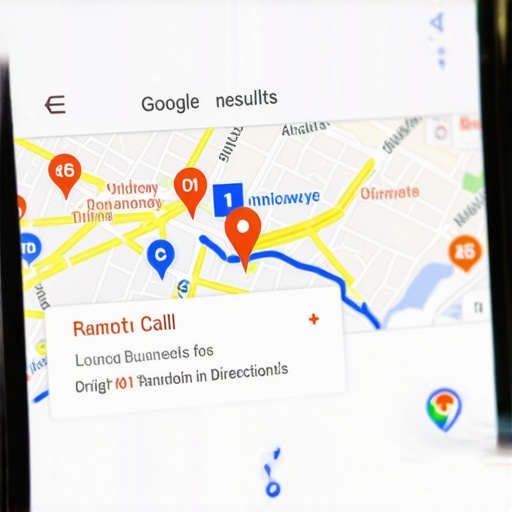
The Real Secret Behind Clicks and Calls
It is easy to get obsessed with rankings, but a rank is just a number. What actually moves the needle is the interaction metric Google uses to gauge map pack success. If one hundred people see your pin but nobody clicks to call or asks for directions, Google will eventually demote you. You have to give people a reason to engage. Sometimes, the most effective move isn’t a complex SEO strategy, but rather the small tweak to your business hours that triggers a local listing win. If everyone in your area closes at 5:00 PM and you update your listing to show you are open until 5:30 PM, you become the only relevant option for that thirty-minute window. Google rewards the business that is actually available to solve the user’s problem.
Write for Your Neighbors Not the Whole State
One of the biggest mistakes I see is businesses trying to rank for an entire metropolitan area while their own neighborhood is neglected. Proximity is a harsh mistress, but you can lean into it by creating hyper-local content. This is why neighborhood-specific content beats generic city pages for local searchers every time. If you mention local landmarks, nearby intersections, or even the high school down the street on your website, Google begins to associate your physical address with that specific micro-region. You aren’t just a business in a city; you are the business on that specific corner. That level of relevance is what creates a sustainable and dominant local presence.While most people are still following the 2018 playbook, the real winners are looking at signals that aren’t even visible on the surface of a profile. Everyone tells you that you just need more reviews to secure a map pack placement, but in my experience, the volume is often a vanity metric that hides deeper issues. I have seen profiles with five hundred reviews get absolutely crushed by a competitor with fifty. Why? Because Google is now prioritizing review velocity and the ‘sentiment’ of those reviews over the raw number. If you get twenty reviews in one week and then nothing for three months, you are signaling to the algorithm that your business might not be consistently relevant.
Stop obsessing over your total review count
According to the most recent Whitespark Local Search Ranking Factors survey, the diversity of keywords within your reviews and the steady cadence of new feedback are far more influential than just having a high score. It is a classic ‘oops’ factor: business owners launch a massive campaign to get reviews, hit a milestone, and then stop. This stagnation tells Google that the ‘buzz’ has died down, often leading to a sudden drop in visibility. This is where mastering local pack improvement requires a shift toward long-term consistency rather than short-term bursts. Have you ever fallen into this trap of ‘sprinting’ your SEO and then wondering why your rankings vanished? Let me know in the comments below. 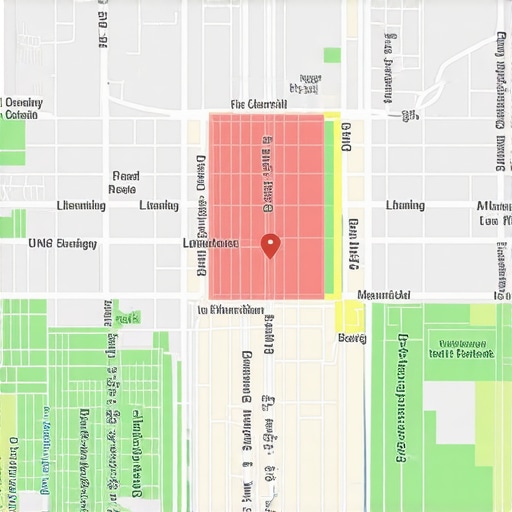
Can mobile dwell time really force a local listing win?
The answer is a resounding yes, but not in the way you might think. We are seeing a massive trend where the interaction metric Google uses to gauge map pack success is tied directly to how long a user stays on your listing compared to your neighbors. If a searcher clicks your profile, looks at your photos for twenty seconds, and then clicks ‘Call,’ you have just sent a powerful ‘relevance’ signal. Conversely, if they click and instantly bounce back to the map, you are losing ground. This is why proximity alone won’t save your low google business engagement. You can be the closest shop to the user, but if your profile is a desert of information, Google will eventually stop showing you first.
The hidden danger of generic citation services
I see this mistake every single month: a business owner pays $500 for a massive ‘citation blast’ that creates three hundred listings on obscure directories no human has visited since 2012. I have realized that most citation services fail to move your pin on the map because they focus on quantity over quality. Google is smart enough to know that a mention on a high-traffic local news blog or a neighborhood association site is worth more than a thousand low-tier directory links. To secure a consistent local listing win, you need to stop acting like a robot and start acting like a local authority. Focus on fewer, higher-quality connections that actually prove your physical presence in the community.
Get a Real View of Your Neighborhood Rank
I used to think that checking my rankings meant typing my business name into Google from my desk. I was wrong, and honestly, I was lying to myself. Google knows exactly where you are sitting, which is why your results look great while your customers across town see someone else entirely. This is why traditional rank tracking is lying about your real map pack position. To scale, I started using grid-based tracking tools like Local Falcon. It doesn’t just give you a number; it gives you a map of green and red dots showing where you actually win and where you vanish. If you aren’t seeing your ranking on a street-by-street level, you are flying blind. I personally set these reports to run every Monday morning because why local rankings shift every 100 feet is a puzzle you have to solve if you want to dominate an entire zip code.
Stop Managing Your Profile by Gut Feeling
Maintenance isn’t just about checking boxes; it’s about responding to the market in real-time. I make it a habit to spend ten minutes every day checking for ‘suggested edits’ from the public. Sometimes, competitors—or even well-meaning customers—will suggest changes to your hours or services that can ghost your profile overnight. To keep a local listing win active, you need to be the one telling Google what is true. I also prioritize speed above almost everything else. I’ve found that how responding to negative reviews faster drives a sudden local listing win is one of the most underrated signals in the playbook. It shows the algorithm that the lights are on and somebody is home. 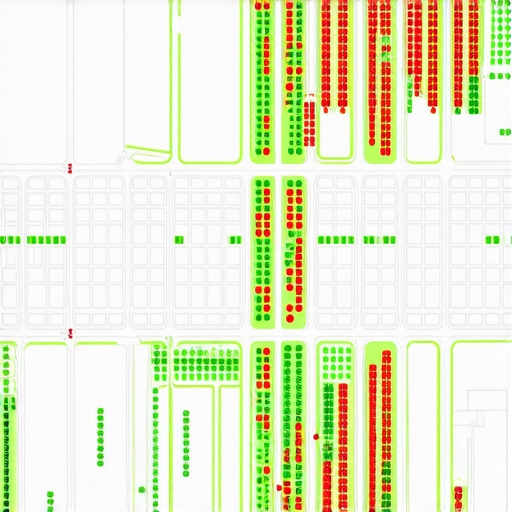
How do I maintain my map pack position without burning out?
The key is automation for the busywork and manual touch for the high-value interactions. I use simple scripts to monitor my competitors because the simple way to monitor your competitors map pack placement changes is to let software tell you when they move, rather than hunting for them manually. Joy Hawkins from Sterling Sky recently highlighted how ‘Openness’ has become a massive ranking signal—meaning businesses that are actually open during the search time get a massive boost. This is a technical nuance that requires you to keep your hours 100% accurate, especially during holidays. If you are ‘closed’ on a day your competitor is ‘open,’ you lose the map pack placement battle for that entire day.
Predicting the Shift Toward AI Search
Looking ahead, we need to talk about what the 2026 local SEO shifts really mean for your map pack rank. We are moving away from simple keyword matching and toward ‘entity’ recognition. Google is trying to understand if you are a ‘trusted local authority’ or just a guy with a website. This means your local pack improvement strategy must include mentions on local news sites, sponsorships of neighborhood events, and digital footprints that prove you exist in the physical world. If you want to stay ahead of the curve, I challenge you to do one thing today: Go into your Google Business Profile and use the ‘Questions and Answers’ section to post—and answer—the three most common questions your customers ask. It’s an instant relevance boost that most of your competitors are too lazy to do.
Hard lessons from the local listing trenches
Winning the local map game isn’t about being the biggest player in the city; it’s about being the most reliable neighbor. Looking back at my own journey, the ‘lightbulb moment’ happened when I realized that Google rewards authenticity over optimization. First, remember that your profile is a living conversation, not a static billboard. If you treat it like a digital chore, the algorithm will treat you like a digital ghost. Second, I learned that local authority is built through small, consistent wins rather than one-time massive overhauls. Third, the biggest risk you can take is ignoring the data. If you aren’t tracking your progress with a 15-minute Google Maps audit regularly, you are essentially driving with your eyes closed. Finally, don’t let a single setback like a missed review response or a temporary ranking dip discourage you. Consistency is the primary fuel for a local listing win that actually lasts.
The resources I trust for sustained growth
Building a dominant presence requires more than just willpower; you need a toolkit that provides clarity. For grid-based tracking that shows the real truth about your proximity, I always rely on Local Falcon. To stay updated on how the algorithm is shifting, I keep a close eye on the research from Sterling Sky, as they are the gold standard for testing new theories. When you are ready to move from theory to execution, I highly recommend following our step-by-step guide to winning the map race. If you ever find yourself hitting a technical wall or facing a suspension, don’t waste time guessing—learn how to reach Google Business support properly to resolve issues before they tank your leads. And if you’re still wondering why your lead generation strategy is failing, it’s usually time to look at the human engagement metrics rather than just the technical SEO. #IMAGE_PLACE_HOLDER_E#
Your journey to the top starts right here
The gap between where your business is now and where you want it to be is filled with the small actions we discussed today. You don’t need a massive agency budget to dominate your neighborhood; you just need to be more helpful and more engaged than the shop across the street. The future of local search is leaning toward real-world signals, so get out there, take better photos, talk to your customers, and keep your data accurate. Your path to map pack success is a marathon, but the view from the top three is worth every step of the effort. If you find yourself stuck or need a personalized roadmap to move your pin, please feel free to contact us directly for support. Have you noticed a specific street or neighborhood where your ranking suddenly disappears? Let me know your experience in the comments below.