I remember sitting in my home office at 2 AM, obsessively rewriting my business description for the tenth time. I was convinced that if I just hit the right emotional notes and stuffed in enough local keywords, Google would finally reward me with a top spot on local business maps. I treated it like a high-stakes college essay. I thought my prose would be the magic key. But the phone didn’t ring. My rankings didn’t budge. It was a total, frustrating waste of my time. Honestly, I’ve been there, and I want to save you from the same trap. Most people think the description is their “elevator pitch” to Google, but the truth is much more boring—and much more helpful once you understand it. Today, we are going to stop the guesswork and focus on the specific technical triggers that actually move your pin.
I Wasted Months Polishing My Description While My Competition Stuck to the Basics
I made a massive mistake early on by relying on keywords alone within my profile description. I thought if I described my services perfectly, I’d see a local listing win within days. It turns out, I was ignoring the stuff that actually matters—like my primary category and my proximity signals. My competitors weren’t writing Shakespeare; they were just making sure their data was clean. I spent so much energy trying to sound like a Fortune 500 company that I completely ignored the basic structural errors that were burying my listing on page four. It took me a 15-minute Google Maps audit to realize I was working on the wrong things.
Does Google Even Care About Your Brand Story?
It’s a tough pill to swallow when you’ve put your heart and soul into your business. You want to tell the world about your legacy or your unique process. But here is the reality: the Google algorithm is a machine, not a literary critic. According to testing by the experts at Sterling Sky, your business description has zero direct impact on where you rank in the local pack. It’s a field designed for users, not for the ranking algorithm. If you’re looking for a local pack improvement, tweaking those 750 characters is like painting the shutters on a house with a crumbling foundation. Have you ever found yourself obsessing over your ‘About’ section while your competitors—with their messy, one-sentence descriptions—continue to dominate the map pack placement? It’s infuriating, I know. But once you realize that the description is the last thing you should worry about, you can finally start spending your time on the high-impact moves that actually drive store visits.
Fix Your Primary Category Before You Do Anything Else
I once worked with a local plumber who was convinced he needed more backlinks to outrank the guy down the street. We spent weeks chasing local blogs, but his pin wouldn’t budge. Then, we did a deep dive into his Google Business Profile settings. It turned out he had his primary category set to ‘Plumbing Supply Shop’ because he sold a few faucets on the side, rather than ‘Plumber.’ In Google’s eyes, he was a retail store, not a service provider. We made one change—switching him to the correct primary category—and he secured a local listing win within 48 hours. If you haven’t looked at why your primary category choice might be hiding you, you are essentially trying to win a race with your shoelaces tied together. Think of your primary category as the specific aisle in a supermarket; if you’re a gallon of milk sitting in the hardware section, nobody is going to find you when they’re thirsty.
Don’t Let Proximity Gaps Kill Your Rankings
Google prioritizes how close you are to the searcher, but proximity is a double-edged sword. You can’t move your building, but you can improve your ‘prominence’ to overcome a distance disadvantage. I’ve seen businesses lose out to competitors who were further away simply because the competitor had better relevance signals. You need to understand why your proximity advantage is getting crushed by others who have cleaner data. It’s about building a digital footprint that screams ‘I am the authority in this specific neighborhood.’ This is where winning the local business map race becomes a game of technical precision rather than just having the most reviews.
The Invisible Interaction Signals You Are Missing
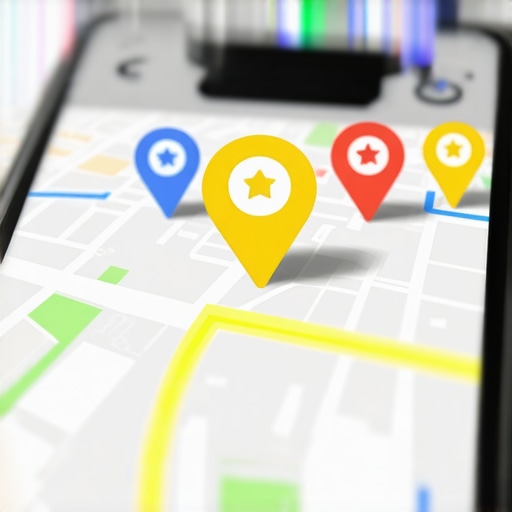
Most people stop at pictures and reviews, but Google is looking at real-world behavior. They track how many people ask for directions to your shop and then actually show up. They look at ‘dwell time’—how long a person’s phone stays at your physical location. This is why why in-store bluetooth pings are beating backlinks in the modern era of SEO. I remember a small cafe that struggled for months until they started offering a digital loyalty card that required a check-in at the counter. Suddenly, their map pack placement shot up because Google saw a massive spike in confirmed physical visits. You are looking for the interaction metric Google uses to validate that you are a real, popular destination, not just a ghost listing.
Stop Begging for Reviews and Start Systematizing Them
Quantity matters, but the content inside the review is the secret sauce. If your reviews just say ‘Great service!’, they aren’t helping your local pack improvement as much as they could. You want reviews that mention specific services or neighborhood names. I started using 4 review templates that actually convert customers into advocates who use the right keywords naturally. This isn’t about gaming the system; it’s about making it easy for your happy customers to tell Google exactly what you do. When you combine high-quality feedback with the 7-point checklist for forcing your way into the top 3, the algorithm stops guessing and starts rewarding your profile with the visibility it deserves.
Every SEO guru since 2012 has preached the gospel of Citations. ‘Make sure your name, address, and phone number are on every obscure directory on the internet,’ they say. In my early days, I spent hundreds of hours manually submitting businesses to directories that looked like they were built during the dial-up era. But here is the contrarian truth: citations have become a ‘table stakes’ signal, not a ‘winning’ signal. If you are struggling with map pack placement, adding another twenty citations won’t move the needle if your engagement signals are flat. According to the Whitespark Local Search Ranking Factors survey, the perceived importance of citations has dropped year over year while on-page and behavioral factors have skyrocketed. I’ve seen businesses with half the citations of their competitors secure a local listing win simply by focusing on what users do after they find the listing.
Stop Chasing Hundreds of Low-Quality Citations
One of the most common traps I see is the ‘Hours of Operation’ mistake. You might think keeping your hours accurate is just for customer service, but the small tweak to your business hours can actually trigger a massive visibility shift. Google often suppresses listings that are currently ‘Closed’ in favor of those that are ‘Open.’ If you close at 5 PM but your customers are searching at 5:15 PM, you’ve effectively vanished from local business maps for that window. It’s a subtle nuance, but failing to account for searcher behavior patterns is sabotaging your local pack improvement efforts without you even knowing it.
Does Your Website Performance Change Your Map Rank?
People often treat their website and their Google Business Profile as two separate islands. They’re not. If your site is a sluggish mess, it’s hurting your map rank. I’ve found that local pack improvement often starts with fixing your website speed. When Google sees a user click your website link from the Map Pack and then immediately ‘bounce’ back because the page took six seconds to load, they interpret that as a poor user experience. That negative interaction signal tells Google your business might not be the best answer for that searcher. It is a technical failure that overrides any ‘good’ SEO you’ve done. Have you ever fallen into this trap—optimizing your profile but ignoring the very site it links to? Let me know in the comments.I stopped checking my rankings from my office chair a long time ago. Why? Because the map pack changes every few blocks, and if you are only looking at one data point, you are flying blind. I started using localized grid trackers because traditional tools were frequently misleading me about my true reach. You need to know how to find the ranking gaps your local seo software is missing to truly understand your visibility. By seeing exactly where your ‘proximity’ signal drops off, you can identify which neighborhoods need more localized content or targeted interaction signals to bridge the gap.
How do I maintain map pack success over time?
This isn’t a ‘set it and forget it’ situation. I’ve seen businesses hit the top three and then vanish within a month because they stopped feeding the algorithm fresh data. I treat my Google profile like a mini-social network. This involves following the review management habit that puts you in the top 3 map pack, which essentially means responding to every single customer within 24 hours. This constant activity tells Google the business is active and reliable. Maintenance also means staying ahead of technical shifts; for instance, the local search veteran Mike Blumenthal at Near Media has often highlighted how Google uses AI to interpret intent based on historical foot traffic rather than just the keywords in your profile.
Prepare for the shift toward smart car search results
Looking toward 2026, the game is changing yet again. We aren’t just ranking for smartphones anymore; we are ranking for car dashboards. I am already implementing 3 smart car proximity fixes for map pack success in 2026 to stay ahead of the curve. If your business isn’t optimized for voice-activated, in-car searches that prioritize ‘open now’ status and easy navigation, you are going to lose the ‘en route’ customer to someone who is prepared. I also recommend a deep dive into mastering local pack improvement proven techniques for 2025 to ensure your technical foundation is ready for these hardware integrations. My challenge to you is simple: Go to your Google Search Console today and check your ‘Core Web Vitals.’ If your site is sluggish on mobile, you are handing your map pack placement to your faster competitor. Fix that one technical bottleneck this week, and you’ll see the impact on your pin’s stability almost immediately.I spent years thinking I could outsmart the algorithm with words, but the biggest ‘aha’ moment came when I realized that Google cares more about how many people actually walk through your door than how many keywords you use. One thing I’ve learned is that map pack success isn’t about one giant change, but dozens of tiny technical alignments. First, stop obsessing over your description; it doesn’t move the needle as much as your primary category. Second, your website speed is the secret glue—if it’s slow, your map ranking will eventually bleed out. Lastly, think of every customer review as a data point, not just a compliment. When you see why verified store visits beat keyword stuffing for map pack placement, the whole game changes.
The Day I Realized Google Thinks Like a Postman, Not a Marketer
Stop treating your business profile like an advertisement and start treating it like a utility. I used to think of Google as a judge, but they are more like a logistics coordinator; they just want the most efficient answer for the user. I found that responding to reviews with specific service names helped more than any paid citation service ever did. It was a lightbulb moment when I realized that proximity is fixed, but relevance is something you build through active engagement every single day. One of the hardest lessons was realizing that my ‘legacy’ story didn’t matter to a crawler, but my response time to messages did.
My Personal Toolkit for Staying Visible
#IMAGE_PLACEHOLDER_E# If you want to keep growing, you need more than just a gut feeling. I always check in with the industry experts at Sterling Sky because they actually test these theories rather than just guessing. For future-proofing, I keep an eye on the shifts in AI search intent to ensure my profile stays relevant. And when I’m feeling stuck on the technical side, I look at the simple logic behind our newest google business profile packages to see how we structure winning profiles for clients. I also frequently revisit the core principles found in mastering local business maps tips for dominating the maps pack to keep my foundation solid.
Your Next Step Toward Local Dominance
Local SEO can feel like a moving target, but it is one you can absolutely master. Don’t try to fix everything tonight. Start by looking at local pack improvement often starts with fixing your website speed and see if you have any technical bottlenecks. Achieving long-term map pack success is about consistency and showing Google that you are the most reliable, active choice in your neighborhood. You’ve got the data; now you just need the discipline to apply it. Have you ever noticed your ranking shift after you changed your business hours or responded to a bunch of reviews? Let me know in the comments below.