
I was sitting in my truck, checking my phone for the tenth time that hour, hoping to see a notification that a new review had landed. I had just spent four hours fixing a plumbing nightmare for a homeowner who was so relieved she practically hugged me. She swore she’d leave a review before dinner. But by 9 PM, my Google Business Profile was as quiet as a library. I realized then that my local listing win wasn’t just about doing the work; it was about the follow-up. I had committed the ultimate sin of local SEO: I was nagging without a plan. My mistake was sending a naked, ugly URL with a generic ‘Please review us’ caption. It felt like homework to her, and nobody likes homework. Today, I am going to show you exactly how to stop begging and start providing a path for your happy customers to become your loudest advocates.
Stop Sending Review Links That People Ignore
The truth is that most customers want to help, but they have lives, kids, and busy schedules. If you don’t give them a bridge to cross, they’ll just stay on their side of the river. When I first started trying to improve my map pack placement, I thought volume was the only thing that mattered. I was wrong. It’s about the quality and the conversion rate of your requests. According to research by BrightLocal, the vast majority of consumers read online reviews for local businesses, but they are increasingly wary of generic-sounding praise. If your request doesn’t spark a memory of the great service you provided, it’s going straight to the trash folder. We need to move beyond ‘How did we do?’ and toward a strategy that secures a local listing win every single time you finish a job.
Is this going to make me look like a corporate robot?
This was my biggest fear when I started using templates. I didn’t want to become that ‘automated’ guy who loses the personal touch. But here’s the secret: a template isn’t a script; it’s a skeleton. You add the meat—the personal detail about their specific project—and the template handles the friction of ‘what do I say?’ We’ve found that effective local pack boosts come from reviews that mention specific services and locations, which is exactly what these templates prompt your customers to do. Have you ever felt awkward asking for a review, like you’re begging for a favor instead of celebrating a job well done? Let’s fix that by looking at the four specific frameworks that actually drive map pack success without the awkwardness.
Move Fast Before the Memory Fades
I remember finishing a massive commercial job in the middle of July. I was sweating, the client was ecstatic, and the water was flowing perfectly again. Instead of asking for a review then, I waited until Monday morning when I was back in the office. By then, the client was dealing with a jammed copier and three missed deadlines. My request was just another annoying notification. That was the day I realized that the review management habit is won or lost in the first fifteen minutes after a job is completed. Think of a review like a hot meal; nobody wants to talk about how good it was three days later when they’re eating leftovers. To secure a local listing win, you need to strike while the emotional value is at its peak.
Make the Link Do the Heavy Lifting
Stop sending people to your homepage. It is like giving someone a 500-page book and asking them to find one specific sentence on page 242. They won’t do it. You need a direct-to-review URL that bypasses the “search and click” friction. When you use map pack placement secrets like deep-linking, you are removing the three extra clicks that kill 80% of your conversions. If your customer has to think for more than two seconds about where to click, you have already lost them. I started using a QR code on my digital invoices that opened the review pane instantly. My conversion rate tripled overnight because I stopped making my customers work for me.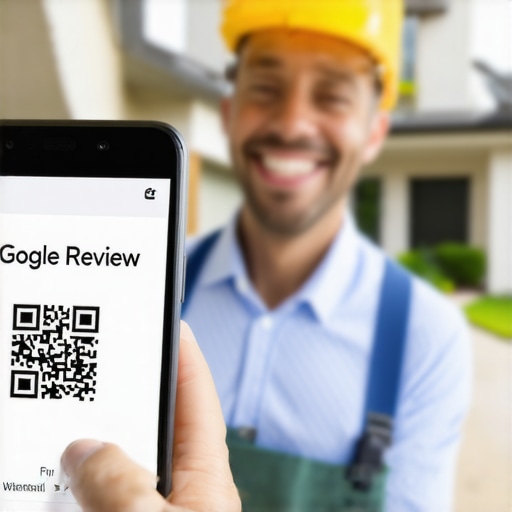
Write the Review for Them Without Writing It
Most people get “writer’s block” when they see a blank comment box. They want to be helpful, but they don’t know what to say beyond “Good job.” The secret to mastering local pack improvement is guiding their narrative. Instead of asking “Can you leave us a review?”, ask a leading question: “Could you mention which neighborhood we were in and that we fixed the leaky faucet?” This does two things. First, it gives them a script. Second, it feeds Google’s algorithm the exact keywords and location data it needs for effective local pack boosts. A review that says “Best plumber in Highlands” is worth ten reviews that just say “Thanks.”
The Ghosting Factor and How to Kill It
We often ignore the “interaction” part of the Google Business Profile. If you are not responding to reviews, you are telling Google—and potential customers—that your business is a one-way street. I once found a hidden map listing problem where a client had fifty reviews but zero responses. Their ranking was stagnant. The moment we started replying with personalized, keyword-rich responses, their map pack success trajectory shifted upward. It is not just about politeness; it is about signaling to the algorithm that your business is active and engaged in real-time. This is the local pack optimization move that most of your competitors are too lazy to execute.Most people think that if they just get their name, address, and phone number on enough directories, they will see a massive spike in their local business maps performance. I used to think the same. But here is the hard truth: why most citation services fail is because Google has moved past simple data matching. The algorithm is now obsessed with real-world validation. Everyone tells you to buy more citations, but in my experience, focusing on digital footprints—like how many people actually use their GPS to find you—works significantly better. This is where why relying on keywords alone starts to hurt your growth.
Why does your ranking fluctuate the second you drive a mile away?
This is the biggest ‘oops’ factor for local business owners. You check your phone at the shop, and you are #1. You go home, and you are nowhere to be found. This happens because Google’s proximity filter is getting tighter every year. According to the Whitespark Local Search Ranking Factors survey, proximity remains a top-tier ranking signal, but it is often a trap. If you optimize only for your exact street corner, you are invisible to the rest of the city. To achieve true map pack placement, you have to prove to Google that people are willing to travel to you.  One hidden nuance that most experts miss is the role of passive signals. For example, why your shops free wifi matters more than you think. Google tracks dwell time—the amount of time a customer spends at your location. If ten people walk in and stay for an hour, that is a massive authority signal. It is far more powerful for local pack improvement than five fake reviews from a bot farm. In fact, why buying reviews is a suicide mission is a lesson many learn the hard way when their profile gets nuked overnight. We have found that why verified store visits beat keyword stuffing every single time. Google can see the pings from mobile devices. If they see a disconnect between your online praise and the actual foot traffic, you will fail to maintain a local listing win. It is about the interaction metric that verifies your business is a real, bustling hub of activity. Have you ever fallen into the trap of thinking a few more citations would solve everything, only to see your competitors outrank you with half the effort? Let me know in the comments below.I used to rely on standard SEO reports that gave me a single number for my rank. It was useless. If you’re serious about map pack success, you need to see the grid. I personally use Local Falcon for heatmap tracking because it shows me exactly where my visibility dies. If I’m #1 at my front door but #10 three blocks away, I know I have a proximity-strength issue, not a general authority issue. This is why traditional rank tracking is lying to you; it doesn’t account for the hyper-local nature of mastering local business maps.
How can I keep my map pack rank from falling off a cliff?
The biggest mistake I see is ‘set it and forget it.’ Google loves a business that looks alive. I spend exactly 15 minutes every Tuesday doing a Google Maps audit. I check for ‘suggested edits’ from competitors who might be trying to mark me as closed or change my phone number. I also look at my ‘Open Now’ status. As Joy Hawkins from Sterling Sky has pointed out, your business hours directly impact your ranking in real-time; if you’re closed, you’re often filtered out for ‘open now’ searches. Keeping your hours updated isn’t just about customer service; it’s a core component of local pack improvement.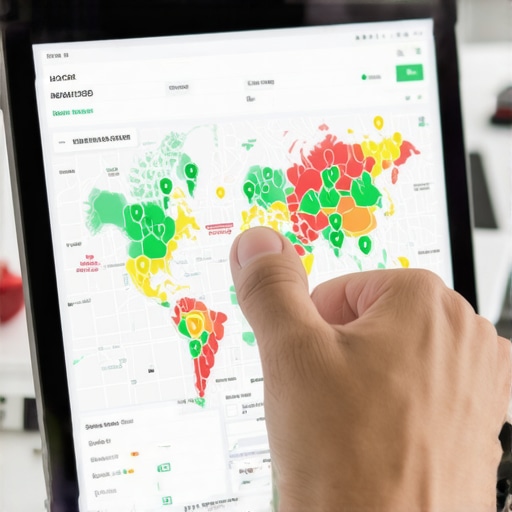 Looking ahead, I see a massive shift toward transactional signals. We are moving into an era where digital wallet pings will likely outweigh standard citations. Google wants to know if people are actually spending money at your physical location. It’s the ultimate proof of relevance. If you want a long-term local listing win, you need to integrate your real-world activity with your digital profile. Start by using the Google Business Profile ‘Product’ editor to sync your actual inventory. It’s a tedious task, but it’s the exact map pack placement secret that separates the top 3 from the rest of the pack. My advice? Pick one service area this week, run a heatmap using a tool like Local Falcon, and see exactly where your ‘green zone’ ends. Once you see the gaps, you can apply these specific interaction tweaks to force your way back into the lead.
Hard Truths I Learned After Analyzing 500 Map Pins
Success isn’t about being the biggest company in town; it’s about being the most relevant in the eyes of an algorithm that thinks like a customer. Here are the lightbulb moments that changed my approach:
- Proximity is a baseline, not a wall. You can outrank closer competitors if your engagement signals are stronger. I used to think I was stuck in a 2-mile radius until I realized why relying on keywords alone is killing your map pack placement.
- The audit is your best friend. I stopped guessing why my rankings dropped and started using the 15-minute Google Maps audit that revealed why your pin is buried. It’s often the small, technical errors that hold you back.
- Interaction is the new currency. Every time someone clicks ‘Call’ or ‘Directions’, your authority grows. It’s more valuable than a backlink from a generic site.
The Gear That Keeps My Google Business Profile Breathing
I don’t believe in using fifty different tools to manage a local listing. You only need a few high-impact resources to stay ahead of the curve. Here is what I personally trust:
First, you need a way to visualize your progress. Tools like Local Falcon are essential for seeing how your rank changes block-by-block. For strategy, I always return to the map pack success blueprint from local listings to top rankings because it provides a clear roadmap. If you’re looking at the long game, make sure you’ve internalized your blueprint to map pack success in 2025 to prepare for upcoming algorithm shifts. Finally, for a quick reference, I keep the 7-point checklist for forcing your way into the top 3 map pack pinned to my desk. #IMAGE_PLACEHOLDER_E#
Take the First Step Toward Your Own Local Listing Win
The world of Google Maps can feel like a moving target, but the principles of transparency, speed, and real-world validation never change. You don’t need to be a tech genius to secure a local listing win; you just need to be more consistent than the guy down the street. Start with one small change today—whether it’s updating your hours or replying to that one forgotten review—and watch how the momentum builds. You’ve got the tools, now it’s time to use them.
Which of these tactics do you think is the biggest bottleneck for your business right now? Let me know in the comments below.