
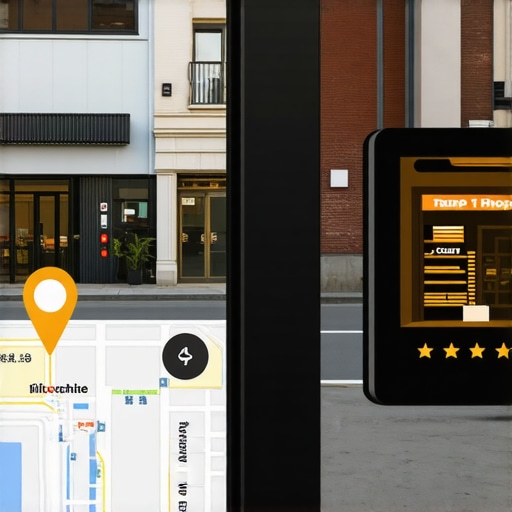
I remember staring at my business dashboard back in 2019, feeling absolutely defeated. I had done everything the “experts” told me to do for my shop. I was listed, I had reviews, and I was even showing up in the local pack, yet my phone stayed silent. It was a brutal realization: being seen is not the same as being chosen. I was winning the visibility battle but losing the war for actual customers because my search results looked like a garbled mess of auto-generated text. That was the moment I realized why meta descriptions are the unsung heroes of a local listing win.
Stop Letting Your Snippets Waste Space
For the longest time, I treated meta descriptions as an afterthought—or worse, I didn’t treat them at all. I made the classic mistake of thinking Google would just “pick the best part” of my page to show potential customers. Spoiler alert: it didn’t. Instead, it showed a random string of my navigation menu and a partial address. It looked broken. When I finally sat down and wrote a compelling, human-centered description, my click-through rate didn’t just crawl up; it spiked. This is where the real connection between CTR and map pack success becomes undeniable. If people aren’t clicking, Google assumes you aren’t relevant, and you will start sliding down the rankings faster than a dropped ice cream cone in July.
Does a tiny box of text really move the needle?
I get the skepticism. You are busy running a business, and worrying about 160 characters feels like obsessing over the color of the screws in your front door. But here is the kicker: according to research by BrightLocal, nearly 60% of consumers feel that high-quality, relevant information in search results is the primary driver for their trust in a local business. If your meta description is blank or boring, you are essentially handing your leads over to the guy down the street who took five minutes to write a decent pitch. We are not just talking about SEO here; we are talking about your digital storefront’s first impression. Have you ever looked at your own listing and thought, “I would not even click on that”?
The Sales Pitch Before the Sale
Think of your meta description as the elevator pitch for your business. When someone searches for a service and you pop up, you have about two seconds to convince them you are the answer to their problem. If you are struggling with low local click-through rates, the fix usually starts here. I spent years neglecting this, and it cost me thousands in potential revenue. Today, we are going to walk through how to stop that leak and ensure your listing is not just a ghost in the machine, but a lead-generating powerhouse. [image_placeholder_1]
Master the Art of the Click
I once worked with a local plumber who had a meta description that simply read, ‘Plumbing services for the greater metro area. Licensed and insured. Call now.’ He was technically doing everything right, but his phone was essentially a paperweight. We spent twenty minutes rewriting that snippet to focus on a specific pain point: ‘Burst pipe? We’ll be at your door in 30 minutes or the labor is free.’ Within ten days, his call volume jumped by 40% without changing his rank by a single spot. This is the power of a the content strategy that drives more clicks from your local listing. When you focus on the user’s immediate crisis, you stop being a choice and start being the solution.
Write for Humans First and Algorithms Second
The biggest mistake I see is ‘keyword stuffing’ the meta description. If your text looks like ‘Best Pizza NYC, Pizza Delivery, New York Pizza,’ people will skip over you because you look like a bot. Instead, use your 155–160 characters to tell a story. Think of your meta description as a movie trailer for your business. You need to include your primary keyword naturally, but your main goal is to trigger an emotional response. This is one of the 3 small adjustments for instant local pack visibility that many business owners overlook. You aren’t just trying to rank; you are trying to earn a click, and clicks are a massive signal to Google that you deserve a higher map pack placement.
Why Specificity Wins the Local Game
If you serve multiple neighborhoods, don’t use a generic city-wide description. People in Brooklyn don’t care if you also serve Queens; they want to know you are around the corner from them. Mentioning specific landmarks or neighborhood names can significantly improve your local pack optimization efforts. I remember a boutique gym that struggled to compete with national chains until they started mentioning the local park they were next to in their meta descriptions. Suddenly, they weren’t just a gym; they were the neighborhood gym. That level of why consistency is the most underrated factor for map pack placement applies to how you present your location data as well. You want the user to feel like you are a part of their daily commute.
Test Your Snippet Like a Scientist
You shouldn’t just write a description and leave it for three years. I treat my meta descriptions like a living document. Every few months, I check my Search Console to see which pages have high impressions but low clicks. If a page is showing up 1,000 times but only getting 10 clicks, the meta description is failing. Change the call to action, try a different benefit, or mention a seasonal discount. Google is constantly watching the interaction metric google uses to gauge map pack success, and if you can prove that users prefer your listing over the guy in the #1 spot, Google will eventually swap your positions. It’s a meritocracy of relevance, and your snippet is your primary tool for proving that relevance in real-time.Now that we’ve covered the click, let’s talk about why your overall strategy might still be stuck in 2015. Most ‘experts’ will tell you that to secure a local listing win, you need to go out and buy five hundred citations from every directory under the sun. In my experience, that is a colossal waste of time and money. While why consistency across directories is still a major map pack success factor to some degree, the weight Google gives these generic mentions is cratering. According to the Whitespark Local Search Ranking Factors study, citations are no longer the powerhouse they once were. Today, Google cares far more about how users interact with your listing than how many times your name appears on a low-quality directory site. If you are obsessing over citations while ignoring your the interaction metric google uses to gauge map pack success, you are fighting yesterday’s war.
Why your primary category might be your biggest enemy
Here is the ‘oops’ factor that most business owners miss: the category trap. I’ve seen businesses lose 50% of their traffic overnight just because they changed their primary category to something they thought was more accurate but was actually less searched. If you are a ‘Personal Injury Attorney’ but you set your primary category to ‘Legal Services,’ you are effectively burying yourself. This is why your primary category is destroying your map pack placement without you even realizing it. You need to be hyper-specific. Google’s AI doesn’t want to guess what you do; it wants to see a direct match for the user’s intent. 
Wait, can your category choice actually delete your visibility?
Yes, it absolutely can. When you pick a broad category, you are competing with everyone. When you pick a niche category, you are competing with the specialists. The advanced move is to use secondary categories to fill the gaps, but never let them dilute the power of your main focus. I see so many businesses fail at mastering local pack improvement because they try to be everything to everyone. They add ten secondary categories and wonder why their rank for their main service starts to wobble. Focus is a ranking signal in itself. If you’re struggling, it might be time for how a simple category change fixed our hidden map listing problem.
Stop ignoring the physical proximity myth
The most common myth I hear is that if you have the ‘best’ business, you will rank across the whole city. That’s simply not how local business maps work anymore. Google is biased toward proximity, sometimes to a fault. You can be the highest-rated plumber in the state, but if the searcher is five miles away, Google might still show the mediocre guy who is two blocks from them. This is why why local rankings shift every 100 feet and how to monitor them is the most important concept to grasp for 2025. You aren’t ranking for a city; you are ranking for a series of small radiuses. If you want to expand that reach, you need the 3 prominence signals you are ignoring for map pack placement to work in your favor: relevance, distance, and prominence. Have you ever fallen into this trap of trying to rank too far from your physical office? Let me know in the comments.
Stop Guessing and Start Tracking Your Grid
I am a firm believer that you cannot manage what you do not measure. If you are just searching for your own business name while sitting in your office, you are getting a biased result. This is why I rely on grid tracking tools like Local Falcon or BrightLocal’s Local Search Grid. These tools show you exactly where your winning the local business map race stands at every intersection. If you see a sea of green dots around your shop but red dots just three blocks away, you know exactly where your authority ends. I use these maps to decide where to run local ads or where to gather more neighborhood-specific reviews. It is how to monitor your map pack placement progress without losing your mind to manual searches. This granular data lets you see if a competitor is eating your lunch in a specific zip code and allows for much more mastering local pack improvement based on geography rather than just keywords.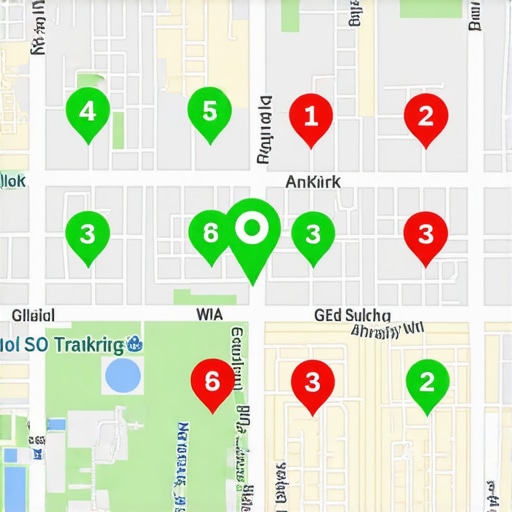
What the Next Two Years Look Like for Local Maps
If I had to bet my career on the next big shift, it’s going to be visual search equity. Google is already using AI to scan the photos your customers upload to see if they match the search query. If someone searches for ‘industrial style cafe’ and your listing has five high-res photos of your exposed brick and metal stools, you win. This isn’t just about keywords anymore; it’s about what the 2026 local seo shifts really mean for your map pack rank. We are moving toward a world where your physical atmosphere is indexed as much as your text. Joy Hawkins of Sterling Sky, a leading voice in local search, has frequently noted that Google’s AI-powered summaries are now pulling directly from review text and photo metadata to decide who gets that coveted top spot. High-quality imagery is no longer optional; it is a fundamental part of your map pack placement secrets.
How do I maintain my map pack position without going crazy?
Maintenance isn’t about doing a massive overhaul every week; it’s about a concept I call the digital dusting. I see so many owners get a local listing win and then walk away, thinking the job is done. But Google rewards activity. I make it a point to upload at least three new photos a month—real ones, not stock—because how high resolution photos actually influence your spot on local business maps is a signal that your business is still open and thriving. I also set a calendar reminder for the first Tuesday of every month to do a 15-minute audit. I check for the simple way to monitor your competitors map pack placement changes and ensure no one has suggested a malicious edit on my profile. Consistency is the boring part of map pack success strategies, but it’s the difference between a one-month spike and a five-year reign. If you want to learn how to scale map pack success across multiple service areas, you have to treat each location like its own tiny ecosystem that needs feeding with fresh photos and high why review velocity is your secret weapon for map pack success. My challenge to you is simple: Download a grid tracker today and see where your ranking radius actually ends—it is the most eye-opening ten minutes you will spend this month.
The Hard Truth About Staying Relevant on Google Maps
Experience is a brutal teacher, and my biggest takeaway is that your local listing win isn’t a trophy you keep forever; it’s a spot you rent with consistent effort. I once saw a client lose their top spot simply because they didn’t update their holiday hours, which is why I now obsess over the impact of your store hours on map pack placement. Another hard lesson? Stop over-optimizing. When you try too hard to please the bot, you lose the human. I have found that using the simple text template that actually gets 5-star google reviews without nagging works ten times better than any ‘hack’ ever will. Finally, remember that your competitors are watching you just as closely as you watch them—staying humble and active is the only way to stay on top.
The Toolkit I Use to Stay Visible
I don’t believe in guessing when it comes to your livelihood. To keep my edge, I rely on a few specific resources that provide clarity in the chaotic world of local SEO. First, I always recommend performing the 15-minute google maps audit that revealed why your pin is buried at least once a month to catch technical glitches or malicious edits. For tracking my actual footprint in the neighborhood, I use grid tools like Local Falcon to see how to monitor your map pack placement progress across every block in the city. I also keep a close eye on BrightLocal’s annual consumer surveys to see how trust signals are shifting. These tools take the emotion out of the process and give you the data needed for long-term map pack success.
Start Winning Your Local Game Today
It is easy to feel overwhelmed by all the technical jargon, but at the end of the day, Google just wants to show the best local answer to a neighbor’s question. If you provide great service and keep your digital house in order, you are already ahead of the vast majority of your competition. Take the first step today by auditing your categories or refreshing your business photos. You have the tools, the knowledge, and the strategy to claim your map pack placement and grow your business sustainably. Have you ever noticed your ranking drop suddenly after making a small change to your profile? Let me know in the comments below!