
I sat there, cold coffee in hand, watching a competitor with three reviews leapfrog my shop—which had fifty—right into the top spot on the map. It felt like a personal insult. I had done everything the gurus said: I optimized my profile, I uploaded photos of my office, and I begged every customer for a five-star rating. Yet, there I was, buried on page two. My lightbulb moment did not come from a fancy tool or a paid consultant; it came when I realized my own website was a disorganized mess of orphan pages. I was treating my site like a brochure instead of a roadmap for Google. Today, I am going to show you exactly how to tighten up your internal links to secure that elusive local listing win without spending a dime on ads or fake boosters.
Stop Ignoring Your Website’s Map-Boosting Power
When I first started out, I made the classic mistake of thinking that my Google Business Profile and my website were two completely different islands. I poured all my energy into the map stuff and left my service pages to rot. Big mistake. Your website is actually the foundation that proves your relevance to the local area. By connecting your city-specific content to your main service pages, you create a web of local authority that the algorithm cannot ignore. This is not just about map pack placement secrets; it is about basic digital architecture. A surprising finding from a Backlinko analysis suggests that internal linking is one of the most underutilized strategies for distributing link equity across a domain. If you are not pointing your blog posts back to your local landing pages, you are essentially throwing away free power that could be boosting your visibility.
Can Simple Links Really Fix a Ghosted Listing?
You might be skeptical. I was too. I thought, how can a link from my blog to my contact page help me show up for a local search? But here is the kicker: Google uses your website structure to determine what your business is actually about. If you want a local listing win, you have to guide the bots through your site correctly. When I finally fixed my navigation, my rankings did not just crawl up; they jumped significantly within weeks. Have you ever felt like you are doing everything right for your SEO, but your phone just is not ringing? It is likely because map pack success is dependent on local authority, and your internal links are the primary way you build that authority. It is time to stop treating your site like a dusty filing cabinet and start treating it like a high-performance engine for your modern map pack placement.
To start, you need to think of your website as a physical store layout. If a customer walks in looking for shoes, you do not hide the shoe section in the basement behind a door labeled ‘Misc.’ Yet, that is exactly what most business owners do with their city pages. They bury them in the footer and wonder why they are not seeing any climb higher in the map pack results. Your internal links are the signs hanging from the ceiling telling Google’s crawl bots where the most important local aisles are.
Build a Fortress Around Your Service Area
The first step is creating what I call ‘Local Silos.’ This means grouping your content so that every piece of information about a specific location points toward that location’s main landing page. If you have a service page for ‘Roof Repair,’ it must link directly to your ‘Roof Repair in Denver’ page. This creates a clear path of relevance. I once worked with a local bakery that had a stunning blog about sourdough techniques but did not link a single post to their Seattle landing page. It was like having a billboard in the middle of a desert. We spent an afternoon mapping those blog posts to their location pages. Within eighteen days, they secured a local listing win for three different high-volume keywords because Google finally saw the connection between their expertise and their physical location.
Why Your Link Text Needs Local Keywords
Stop using ‘click here’ or ‘read more’ as your anchor text. These are wasted opportunities. When you link from a blog post to a service page, use descriptive, location-heavy anchors. Instead of saying ‘check out our services,’ use ‘our plumbing services in Phoenix.’ This tells the algorithm exactly what the destination page is about and where that service is offered. This is a fundamental part of local pack improvement because it reinforces your proximity and relevance. If your website speed is dragging these transitions down, you might be losing the bot’s attention before it can even index the link, which is why local pack improvement often starts with fixing your website speed.
Bridge the Gap Between Blog and Map
Your blog is not just for sharing news; it is a tool to win your local listing. Every time you write a post about a community event or a project you completed in a specific neighborhood, link it back to your primary map-facing page. This creates a web of ‘neighborhood authority.’ When I started doing this for a small landscaping client, we focused on specific neighborhood names rather than just the city. By linking these hyper-local stories to their main service page, we were able to spot the ranking gaps your local competitors are ignoring. They were all fighting for the city-wide term, while we dominated every individual neighborhood pin by showing Google a dense network of local internal links.
Audit Your Link Web for Better Placement
You cannot fix what you do not see. Take ten minutes to look at your top five most visited pages. Do they link to your Google Business Profile or your local landing pages? If not, you are leaking authority. This is not just ‘nice to have’ SEO; it is the core of the truth about organic SEO and its role in map pack placement. Use these links to guide users toward your contact page or a booking form, ensuring that the traffic you generate actually turns into a lead. By consistently auditing these paths, you ensure that every new piece of content serves your goal of local dominance.
Everyone tells you that reviews are the holy grail of map pack success. I am here to tell you they are only half the story. I have seen businesses with five hundred reviews get crushed by those with fifty simply because the smaller shop had better keyword relevance and recency in their feedback. This is a hard truth to swallow, but map pack success requires more than just good reviews. It is about the quality of the interaction, not just the quantity. If your reviews do not mention specific services or neighborhood names, they are not working as hard as they could for your rankings.
Ditch the Reviews are Everything Myth
In my experience, focusing solely on the star rating is the fastest way to hit a plateau. The real magic happens in the sub-categories and attributes. One massive ‘oops’ factor I see business owners fall into is keyword-stuffing their business description. Here is the kicker: Google’s own documentation and detailed industry research by local SEO leaders like Joy Hawkins at Sterling Sky have consistently shown that the business description field has zero direct impact on your ranking position. It is there for the human reader, not the algorithm. If you are spending hours obsessing over the perfect ‘about’ text instead of auditing your primary categories, you are essentially painting the windows of a house with a crumbling foundation. Have you ever fallen into this trap? Let me know in the comments.
Does Google actually care about the photos your customers upload?
Many people assume their own professional photography is what moves the needle. While high-res shots are great, the photos uploaded by your customers carry a weight that your own images never will. This is the map pack success secret hidden in your customers uploaded photos. These images act as metadata-rich proof of presence. When a customer snaps a photo of your office, Google extracts ‘entities’ from that image to verify you actually do what you say you do. 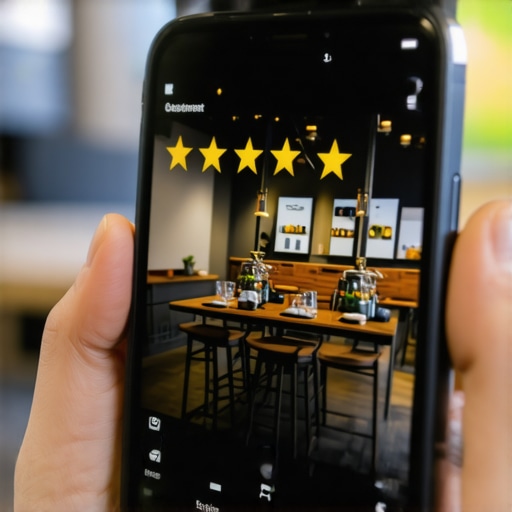 It is a level of transparency that an AI-generated or stock photo cannot replicate. If you want a consistent local listing win, you need to encourage your clients to document their experience visually right at your place of business.
The Category Trap That Keeps You Invisible
Choosing your primary category is the most important decision you will make on your profile, yet most people treat it like a quick checklist item. If you pick a category that is too broad, you will be competing with every massive corporation in the city. If you are too narrow, nobody will find you. This is why your primary category choice might be hiding you from local searchers. I once helped a specialty law firm move from ‘Lawyer’ to ‘Personal Injury Attorney.’ They saw a 40% spike in map views in three days. It was not magic; it was just removing the noise. Once you have that locked in, you can use secondary categories for better local pack visibility to capture those ‘near me’ searches that your competitors are missing. It is about being the most relevant answer to a specific question, not the loudest voice in a crowded room.
I have learned the hard way that map pack success is not a trophy you win once; it is a lease you have to renew every month. I used to think that once I hit the top three, I could kick back and watch the leads roll in. Then, a competitor two blocks away started running a hyper-local campaign and bumped me within weeks. That is when I realized that local pack improvement strategies that outperform competitors are built on consistency, not just one-off tweaks. If you are not watching your data, you are flying blind in a very crowded market.
The Tech Stack That Shows Your Real Rankings
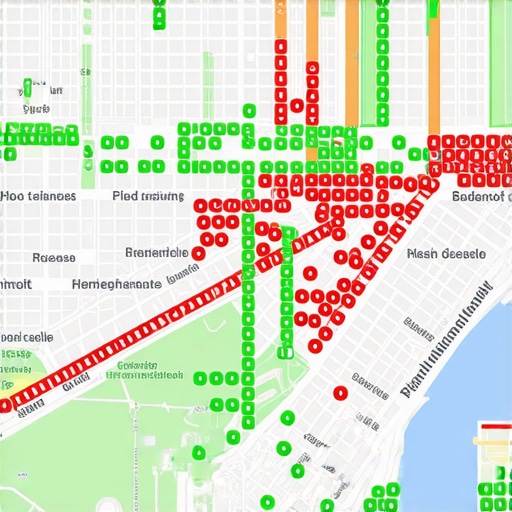
I rely heavily on grid-tracking tools like Local Falcon or BrightLocal. Most business owners look at a single ranking number in their dashboard and think they are doing fine. However, why local rankings shift every 100 feet is the real mystery you need to solve. By seeing exactly where your ‘green pins’ turn into ‘red pins’ on a map grid, you can identify which neighborhoods need more local backlinks or specific landing pages. This level of detail is the only way to effectively monitor your map pack placement progress without getting blindsided by a sudden drop in calls.
How do I maintain map pack success over the long term?
The secret is not adding more keywords; it is consistent activity. Google loves a business that looks alive. I make it a point to post a new update to my profile at least once a week—think of it like a mini social media feed for your shop. This consistent rhythm is part of the reason why review velocity is your secret weapon for map pack success. If you get ten reviews in January and then zero until June, the algorithm assumes your quality has dipped or you have gone out of business. Keep a steady drip of interaction going, and you will maintain that local listing win for years.
Where Local Search is Heading by 2026
Looking ahead, I am keeping a close eye on how generative AI and Search Generative Experience (SGE) are changing the map layout. According to the Whitespark 2023 Local Search Ranking Factors, behavioral signals like ‘click-to-call’ and ‘check-ins’ are becoming more dominant than traditional citations. By 2026, I predict the map pack will be even more personalized based on a user’s exact past physical movements. You can prepare for this by understanding what the 2026 local SEO shifts really mean for your map pack rank. If you are growing, you will also need to learn how to scale map pack success across multiple service areas without losing the neighborhood trust you worked so hard to build. My advice? Go to your profile right now and identify which day of the week gets the most direction requests—then schedule your next profile post for that specific morning.
The Hard Truths I Learned While Chasing the Top Three
Looking back at my early struggles, I realized that I spent way too much time obsessing over technical settings and not enough time on the human element. I used to think the algorithm was a locked vault, but it is actually more like a conversation. Here are the shifts that actually moved the needle for me:
- Activity over Perfection: A slightly messy profile that is updated twice a week beats a ‘perfect’ profile that hasn’t been touched in three months. Google rewards the pulse of a business, which is why local pack improvement requires fresh profile posts consistently.
- The Proximity Myth: While distance matters, you can often ‘out-rank’ your closer competitors simply by having a faster, more reliable website. I learned that local pack improvement often starts with fixing your website speed, a technical hurdle many small shops ignore.
- The Ghost of Duplicates: I once lost half my traffic because of a rogue duplicate listing created by an old phone number. You must learn how to fix duplicate listings that are killing your local listing win before you spend a penny on new marketing campaigns.
My Daily Drivers for Dominating Local Results
I don’t believe in using fifty different tools. I keep my ‘war room’ simple so I can focus on what actually drives revenue. Here are the resources I trust to keep my business at the top of the pile:
Local Falcon: This is my go-to for visual grid tracking. It stops the guesswork by showing you exactly why local rankings shift every 100 feet. Without a grid, you are just looking at a single data point that does not represent your real reach.
Whitespark: Their annual ranking factor report is the gold standard for this industry. If you want to stay ahead of the curve and understand what the 2026 local SEO shifts really mean for your map pack rank, this is the research you need to read.
BrightLocal: I use this primarily for its citation cleaner. It is the fastest way to clean up messy citations for a local listing win, ensuring your data is ironclad across the entire web. #IMAGE_PLACEHOLDER_E#
Claim Your Spot and Stop Being the Neighborhood’s Best Kept Secret
You have the tools, the strategy, and the roadmap. The only thing left is to start the work. Don’t feel like you have to change every single setting tonight. Pick one service page, fix the internal links, and post one authentic photo of your team. Real, lasting map pack success isn’t built on a single viral moment; it is built on being the most reliable, visible choice for your neighbors day after day. You’ve got this, and the top spot is yours for the taking. Have you ever noticed your rankings drop significantly just by moving a few blocks away from your office? Let me know your experience in the comments below!