I spent six months obsessing over my backlink profile and meta descriptions, thinking I’d finally cracked the code. I hit the top spot for my main keyword in the blue links, popped a bottle of cheap champagne, and waited for the phone to ring. It didn’t. While I was celebrating my organic rank, my competitors were sitting pretty in the Map Pack, hogging every single lead. It felt like I’d won a marathon only to realize the trophy was handed out at a different finish line. That was my ‘aha’ moment: organic SEO isn’t just a separate goal; it is the fundamental foundation for map pack placement success. Today, I’m going to show you how to stop treating your website and your map listing like estranged cousins and start making them work together.
Why Your Website Authority Is Actually a Map Magnet
In my early days, I made the classic mistake of thinking that as long as my Google Business Profile was filled out, I was golden. I completely ignored how my website’s health influenced my pin. I eventually realized that relying on keywords alone was sabotaging my efforts. Google looks at your website to verify that you are who you say you are. If your site has high organic authority, Google feels much safer ‘recommending’ you in the local pack. Think of your organic SEO as your reputation and the Map Pack as the invitation to the party; you aren’t getting in without a good name. You need to focus on prominence signals that prove your business is a pillar of the community. Many people don’t realize that traditional rank tracking often hides the truth about how these two worlds collide.
Does Ranking on Page One Actually Move the Needle?
You might be skeptical. You’ve probably seen a ‘trash’ website with a 1990s design sitting in the top 3 of the maps. It happens, but it’s becoming rarer by the day. According to a comprehensive study by BrightLocal, organic ranking remains one of the top three factors that determine whether you show up in the local pack. When I finally fixed my site’s technical errors and started building local-heavy content, my map ranking didn’t just crawl up; it leaped. Have you ever felt like you’re doing everything right on your profile, but you’re still stuck behind a competitor who hasn’t updated their photos in three years? It’s frustrating, but usually, the answer lies in the organic signals you’re currently ignoring. We are going to dive into the exact technical tweaks that bridge this gap.
Feed Google the Data It Craves with Local Schema
To get your pin moving, you need to treat your website code like a digital GPS beacon. Most business owners think they are done once they put their address in the footer, but Google’s crawlers are looking for structured data to confirm your location’s legitimacy. I call this the ‘Digital ID Card’ strategy. When I first started consulting for a small HVAC company in Austin, they were ghosted by the local pack despite having dozens of five-star reviews. The culprit? Their site had no LocalBusiness schema, making it hard for Google to sync their organic authority with their map listing. We implemented the schema markup tweaks that actually move the needle on Google maps, and the results were almost immediate. By explicitly defining your latitude, longitude, and service area in the code, you eliminate the guesswork for the algorithm. It is about creating a rock-solid link between your ‘blue link’ existence and your physical storefront.
Why Your Site Speed is Secretly a Map Signal
You might wonder what a loading bar has to do with a map pin. Think about it: Google’s goal is to provide the best user experience. If a user clicks your listing on a mobile device and your site takes six seconds to load, they are going to bounce. Google tracks that behavior. In my experience, why local pack improvement often starts with fixing your website speed is a lesson learned the hard way. I once had a client who was technically perfect on their Google Business Profile, but their high-resolution, unoptimized hero images were dragging their mobile performance into the gutter. As soon as we optimized those assets, their map position climbed because their dwell time improved. Google saw that users were actually finding the answers they needed on the site, which signaled that this business deserved a local listing win.
Stop Competing for the Whole City and Win Your Neighborhood
If you are trying to rank for a massive metropolitan area, you are fighting a losing battle against the big-box brands. The secret to map pack success strategies is hyper-locality. Instead of one generic ‘Service’ page, you need to create neighborhood-specific landing pages. I remember a specific project where we shifted focus from ‘Los Angeles Plumber’ to ‘Silver Lake Plumbing Specialists.’ By including hyper-local landmarks, street names, and even local community events in the copy, we signaled to Google that this business wasn’t just *in* the city, it was a part of that specific community. You need to know how to build neighborhood pages that actually rank for high value search terms because these pages act as local authority hubs. They prove to the algorithm that your business is the most relevant result for a searcher standing three blocks away. This is how you reclaim your map pack placement from competitors who are too lazy to do the granular work. It is a messy, time-consuming process to build out these pages, but when you see your pin finally sticking to the top for the highest-intent searches, you’ll realize it’s the only way to play the game in 2025.Now that we’ve covered the technical basics, let’s peel back the curtain on what actually happens inside the algorithm. Everyone tells you that building hundreds of directory citations is the secret sauce for local SEO, but in my experience, focusing on volume is a fool’s errand. I’ve seen businesses with 200+ citations get crushed by a competitor who has ten high-quality mentions and better engagement. This is exactly why we stopped chasing citations and focused on map pack success through real-world signals. Google is much smarter than a spreadsheet of Yelp-clones. It is looking for ‘brand prominence,’ which comes from how often your business is mentioned in local news, community blogs, and even neighborhood social groups. If you are still paying for ‘citation blast’ packages, you are likely just shouting into a void that Google has already muted.
Ditch the Keyword Stuffing Trap Before It’s Too Late
I need to give you a serious warning: the temptation to add keywords to your Google Business Profile name is the single most dangerous ‘trap’ in local SEO. It works brilliantly for three weeks, and then you vanish. I’ve consulted for dozens of business owners who thought they were geniuses for renaming their shop ‘Best Los Angeles Plumber – Emergency Drain Cleaning.’ It’s a short-term dopamine hit that leads to a long-term suspension. Google’s latest AI updates are aggressive about identifying unnatural business names. Instead of trying to game the system, focus on the interaction metric Google uses to gauge map pack success. They want to see how many people click ‘Call,’ how many ask for directions, and how many people actually spend time reading your posts. These behavioral signals are much harder to fake and significantly more rewarding in the long run. Why relying on keywords alone is sabotaging your efforts is a lesson that usually costs people thousands in lost leads before they finally listen.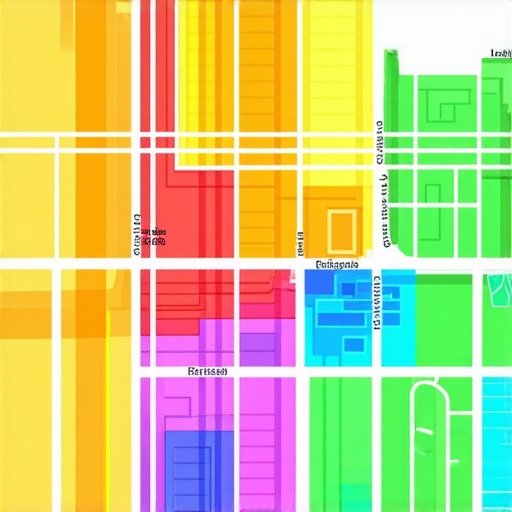
Why Does My Rank Drop When I Move Two Blocks Away?
This is the question that keeps sophisticated marketers up at night. You might rank #1 while sitting in your office, but your employee three miles away sees you at #10. This is the ‘Proximity Paradox.’ According to the Whitespark Local Search Ranking Factors study, proximity to the searcher remains the heaviest weighted signal, but it is also the one you have the least control over. However, you can ‘stretch’ your proximity radius by improving your site’s localized authority. Have you ever fallen into this trap where you thought you were winning, only to realize you were only winning in your own parking lot? Let me know in the comments. To combat this, you need a 7-point checklist for forcing your way into the top 3 map pack that emphasizes ‘prominence’ over ‘proximity.’ When your prominence is high enough, Google will show your listing even if the user is further away, effectively expanding your digital footprint. This level of local pack improvement requires a shift from ‘SEO hacks’ to becoming a true authority in your niche.
Stop Guessing Your Position and Start Using a Heatmap
I used to rely on those fancy SEO dashboards that gave me a single number for my rank. It told me I was #1, so I stopped worrying. Then a client called from the coffee shop across the street and asked why they couldn’t find us on the map. That’s when I realized that traditional rank tracking is lying about your real map pack position. Now, I exclusively use grid-tracking tools like Local Falcon. Instead of one number, it gives me a visual heatmap of the neighborhood. If I see a sea of green dots around my office but red dots two blocks away, I know exactly where my ‘authority’ ends. It’s a reality check that every business owner needs. You should perform the 15-minute google maps audit that revealed why your pin is buried at least once a month. This visual data allows you to see the ‘Proximity Paradox’ in action, and it’s the only way to measure if your neighborhood-specific content is actually working to expand your reach beyond your own front door.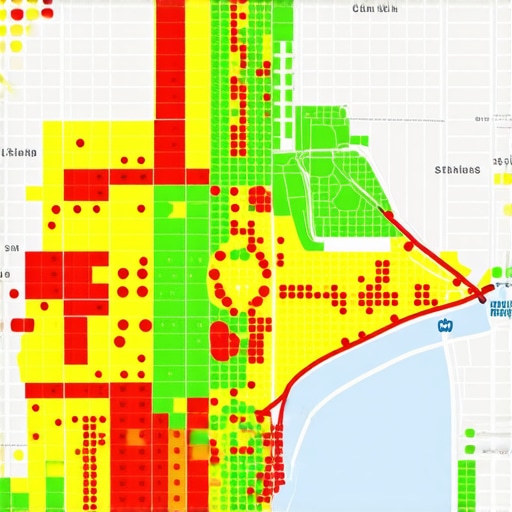
How do I keep my map position from sliding?
Consistency is the most boring but effective secret in this industry. I’ve developed what I call the ‘Coffee and Comments’ routine. Every morning, before I check my email, I open my Business Profile and respond to every single new review or question. Why? Because why fast response times beat backlinks for map pack success is becoming the new standard for Google’s engagement metrics. This isn’t just about being polite; it’s about signaling to the algorithm that you are an active, reliable business. This is the review management habit that puts you in the top 3 map pack and keeps you there while your competitors go dormant for weeks at a time. If you treat your listing like a ‘set it and forget it’ project, you’ve already lost. Google rewards the ‘freshness’ of interaction more than it rewards the age of the listing.
Why Bluetooth and Digital Wallets are the New Backlinks for 2026
Looking ahead, the game is shifting from what you say on your website to what people do with their phones in your store. We are moving toward an era of ‘Verified Presence.’ According to Google Patent US 10,242,404 B2, the algorithm is increasingly using location history and dwell time to verify that a business is a popular, real-world destination rather than just a well-optimized digital ghost. This means that things like 4 digital wallet pings for a local listing win in 2026 will likely carry more weight than a hundred directory citations. If Google sees people regularly paying with their phones at your register, your ‘prominence’ score skyrockets. We are entering a phase where the physical and digital worlds are perfectly synced. To get ahead of this, I want you to try one advanced move tonight: check your Google Business Profile ‘Insights’ and look specifically at the ‘Direction Requests’ trends. If they are dipping while your ‘Website Visits’ are rising, your map listing is losing its local ‘pull.’ Don’t wait for a total ranking collapse to fix it.
The Brutal Truth About Why My Best Strategy Failed at First
I spent years thinking SEO was a math problem. I thought if I just added enough keywords to the right spots, the algorithm would bow down. But the most painful lesson I learned is that Google cares more about how people interact with your brand than how many times you mention your city. After performing the 15-minute google maps audit that revealed why your pin is buried, I realized my site was technically sound but emotionally dead. I wasn’t engaging; I was just existing. Consistency is your greatest weapon. If you stop responding to reviews or updating your photos, you are telling Google you’re closed for business, even if your hours say otherwise. Also, don’t ignore how live customer interaction data speeds up your local listing win; those real-world pings are the new gold standard for effective local pack boosts. Real prominence is earned through activity, not just optimization.#IMAGE_PLACE_HOLDER_E#
My Go-To Resources for Real World Results
If you’re serious about moving your pin, you can’t fly blind. I personally swear by Local Falcon for those eye-opening heatmaps that show you exactly where your authority drops off. For deep dives into citation cleanup, Whitespark remains the industry standard for accuracy and finding hidden gaps. And if you’re looking for a structured way to keep your team on track, I always recommend BrightLocal’s research reports for staying current on the ever-changing local search landscape. These aren’t just tools; they are the eyes and ears of my operation. I also recommend checking out mastering local pack improvement proven techniques for 2025 to keep your strategy ahead of the curve.
The Road to a Lasting Local Listing Win
The shift from being a ‘blue link’ to a ‘Map Pack powerhouse’ doesn’t happen overnight, but it is the most rewarding transition your business will ever make. It takes a shift in mindset from chasing rankings to chasing relevance. When you focus on serving your immediate neighborhood with precision and speed, the algorithm has no choice but to follow your lead. This is how you secure a sustainable winning your local listing status. Every small adjustment, from site speed to review response times, builds the foundation for your ultimate map pack placement success. Have you ever noticed your map rank plummet the second you stepped outside your office door? Tell me your ‘Proximity Paradox’ stories in the comments below!