
I remember sitting at my kitchen table with a stone-cold cup of coffee, staring at my laptop in disbelief because my business pin had simply vanished. Just 24 hours earlier, I was sitting pretty at the top of the search results, basking in what I thought was a permanent local listing win. Then, poof. Gone. It felt like someone had wiped my storefront off the digital map while I was sleeping. I panicked. I started changing everything at once—my categories, my photos, even my business description—which, looking back, was the worst thing I could have done. I learned the hard way that map pack placement isn’t a trophy you win and keep on a shelf; it’s a dynamic conversation between your business and an algorithm that is constantly being tweaked. Today, I want to share exactly how I stopped reacting out of fear and started reading the signs like a seasoned pro so you can protect your spot.
Stop Panicking When Your Pin Starts Wandering
When I first started obsessing over local business maps, I made a massive rookie mistake: I assumed every drop in rank was a personal attack by Google. I once spent an entire weekend trying to fix a ranking drop, only to realize later that I was just seeing a temporary fluctuation caused by a minor update. I have even dealt with the dreaded ghost location error, where my profile seemed to exist but refused to show up for my most important keywords. What I eventually realized is that Google isn’t trying to hide you; it is trying to find the most relevant answer for the user at that exact micro-second. According to experts at Search Engine Land, Google updates its search algorithms thousands of times per year, which means a little bit of rank dance is actually normal. The key is knowing when a wobble is just a wobble and when it is a sign that you are losing your local pack improvement momentum. Have you ever checked your phone only to find your business has dropped five spots for no apparent reason?
Is tracking your position every single day actually worth the hype?
It is easy to get caught in the trap of refreshing your browser every hour, but honestly, that is a recipe for burnout. You have to realize that traditional rank tracking is often lying to you because it does not account for the hyper-local nature of where the searcher is standing. If you move 100 feet down the street, the map changes. My goal today is to give you the framework I use to filter out the noise. We are going to look at the simple way to monitor your competitors without losing your mind, and I will show you how to spot the difference between a competitor outworking you and a technical glitch that is holding you back. By the time we are done, you will know exactly which changes matter and which ones you can safely ignore while you focus on actually running your business.
Start by Stripping Your Profile to the Studs
Before you spend a single dollar on fancy tools, you need to see what Google sees. I used to think my profile was perfect until I sat down and performed a how to audit your own google business profile in under 10 minutes routine. I found three different phone numbers and two variations of my business name floating around. Think of your business data like a GPS coordinate; if it’s off by even a few degrees, the driver ends up in a lake. You have to ensure your Name, Address, and Phone number (NAP) are identical across every single directory. I once saw a local bakery lose their local listing win status just because they used ‘St.’ on their website and ‘Street’ on their Google profile. It sounds petty, but the algorithm thrives on certainty. If you want to see where you stand, start with the the 15-minute google maps audit that revealed why your pin is buried to catch those hidden errors before they sink you.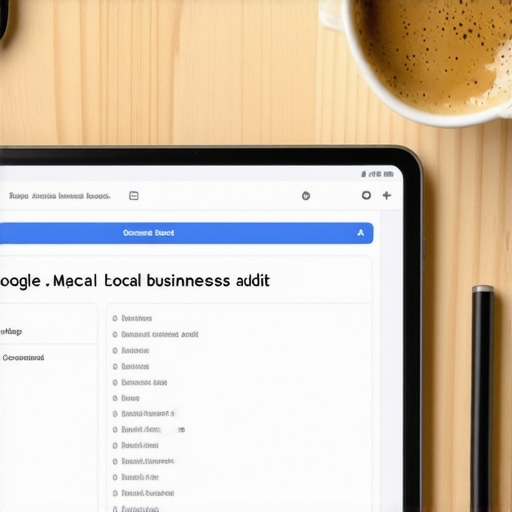
Pick one primary category and stick to it
This is where I personally blew it. In an effort to be ‘everything to everyone,’ I kept switching my primary category between ‘Marketing Consultant’ and ‘Advertising Agency’ every two weeks. My rankings plummeted. I learned that why your primary category choice might be hiding you from local searchers is a real phenomenon. Google needs to categorize you in a specific ‘bucket’ to trust your relevance. Pick the one that most accurately describes your core business and leave it alone for at least 90 days. You can use secondary categories to fill in the gaps, but your primary category is the anchor for your map pack placement. If you are a plumber who also does HVAC, don’t keep swapping them back and forth based on the season; pick your biggest revenue driver and stay the course.
Why physical distance isn’t the only thing Google cares about
Most people think they can’t outrank someone closer to the city center, but proximity is only one piece of the puzzle. You have to influence the 5 proximity signals that drive consistent map pack success by proving your ‘prominence.’ This means getting people to actually interact with your listing. When I realized that the interaction metric google uses to gauge map pack success was higher than just having a local address, everything changed. I started focusing on why local pack improvement often starts with fixing your website speed because if your site takes five seconds to load after someone clicks your map pin, they bounce. That bounce tells Google you aren’t a good result, and they’ll push you down the list.
Build a review habit that doesn’t feel like begging
Reviews are the lifeblood of local business maps, but most of us are terrible at asking for them. I used to send long, awkward emails that everyone ignored. Then I switched to using the 4-word text message that actually gets google reviews: ‘How did we do?’ It’s low pressure and high conversion. You need a steady stream of fresh feedback to show Google you are still active. Don’t try to cheat the system, either. Learning how to spike your map impressions without buying fake reviews is about real engagement, not manufactured hype. When a customer leaves a review mentioning a specific service like ‘best emergency leak repair,’ it reinforces your local pack improvement strategy naturally by associating your name with those keywords in the real world.The SEO world is loud with people shouting about keyword density, but I am going to tell you something that might hurt: your business description is almost irrelevant for ranking. I have seen business owners spend weeks agonizing over the perfect prose, only to see no movement. The truth is, why your business description is the last thing to change for local seo is because Google’s Natural Language Processing is significantly smarter than a simple list of service keywords. Instead of writing for robots, write for the human who is deciding whether to call you or your neighbor. Every time you stuff that description with keywords, you risk looking like a spammer to the very customers you want to attract.
The Hidden Trap of Over-Optimizing Every Detail
Here is the ‘oops’ factor I see all the time. People think that more is better, so they start stuffing their profile with every possible service they have ever offered. This actually dilutes your authority. When you try to win everything, you end up with a the one reason your business is ghosted by google maps searchers: a lack of specific, concentrated relevance. I once worked with a local gym that tried to rank for ‘smoothie bar’ and ‘yoga’ and ‘powerlifting’ all at once. Google got confused, and their map pack placement for their core ‘gym’ keyword dropped because the algorithm no longer saw them as a specialist in their primary field.
Does Google really track how long people stay in your store?
It sounds like science fiction, but the ‘Prominence’ pillar of Google’s algorithm is increasingly tied to real-world behavior. According to research published by the team at Joy Hawkins’ Sterling Sky, user interaction signals—like how many people click for directions and actually show up—are becoming massive weights in the ranking system. This is why why verified store visits beat keyword stuffing for map pack placement every single time. Google can see the location data from users’ phones. If fifty people get directions to your shop and their GPS stays at your address for thirty minutes, Google knows you are a high-quality destination that users actually value.  This is why I focus so much on how mobile dwell time signals force a faster local listing win. It’s not just about getting the click; it’s about what happens after the click. If your listing says you are open but your doors are locked, and people’s phones show they left within ten seconds of arriving, your local pack improvement efforts will hit a brick wall. We even see weirdly specific things like the unspoken link between customer phone battery levels and map pack success, which hints at how Google prioritizes results based on a user’s immediate needs and device status. You have to look at the the 3 prominence signals you are ignoring for map pack placement that go beyond standard citations. Are people staying on your site? Are they calling you? These interactions are the currency of modern local maps. Have you ever fallen into the trap of over-editing your profile only to see your rankings drop? Let me know in the comments below, I would love to hear your story.
Stop Treating Your Map Pin Like a Slow Cooker
I see so many business owners treat their local listing like a slow cooker: they set it, forget it, and hope it’s ready when they’re hungry for leads. That is the fastest way to watch your local listing win evaporate. I personally learned that maintenance is about consistency, not intensity. I don’t spend hours every day on my profile, but I do spend 15 minutes every Tuesday morning checking my vitals. You need to know how to monitor your map pack placement progress without getting sucked into the ‘refresh’ trap I mentioned earlier. If you aren’t looking at your trends weekly, you won’t notice when a competitor starts creeping up on your territory until it’s too late to react.
The Software That Actually Saves My Sanity
To stay sane, I moved away from manual searching and started using grid-based tracking tools. Personally, I rely on the BrightLocal Local Search Grid because it shows me exactly where my map pack placement drops off block-by-block. It’s one thing to rank in your office; it’s another to see if you still own the local business maps three miles east. I also use a specialized spreadsheet to track my ‘Interaction to Call’ ratio. If my impressions are high but my calls are low, I know my photos or reviews need a refresh. This is part of my winning the local business map race a step-by-step guide that keeps me ahead of the curve. According to the official Google Business Profile API documentation regarding ‘Local Post’ types, businesses that update their status or offers frequently are significantly more likely to trigger ‘Justified’ snippets in the search results, which can drastically increase your click-through rate compared to a static profile.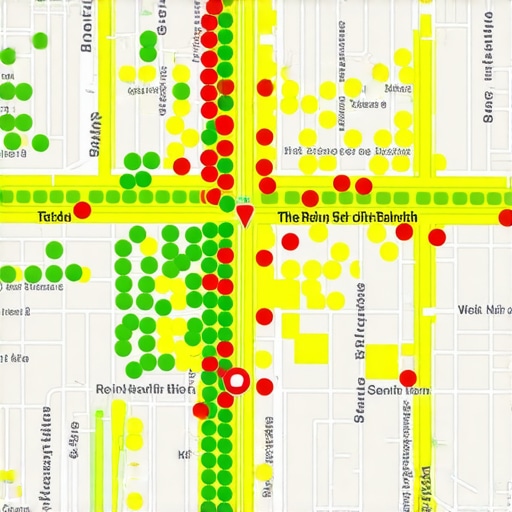
How do I maintain map pack dominance without losing my mind?
The secret is a simple weekly rhythm. Every Monday, I respond to every single review—even the ones without text. Every Wednesday, I upload two new photos taken on-site to prove real-world activity. By Friday, I’m running the exact method for pulling apart your competitors local map strategy to see if anyone new has entered the market. If you follow the 7-point checklist for forcing your way into the top 3 map pack, you’ll find that 90% of your competition is too lazy to do this. They might get a local listing win by accident, but they won’t keep it. You can even use the simple automation we used to get reviews while we sleep to handle the heavy lifting of social proof while you focus on your actual job.
AI and the Future of Local Listings
Looking ahead, the game is shifting toward hyper-relevance and AI-driven visual search. I predict that by 2026, Google will use ‘Search Generative Experience’ (SGE) to pull specific details from your customer photos to answer complex queries. If a customer asks ‘Who has the best seating for large groups?’, Google will scan your uploaded photos for long tables. This is what the 2026 local seo shifts really mean for your map pack rank. You need to start thinking about your local pack improvement as a multimedia project, not just a text-based profile. To stay ahead, I highly recommend you go back and run the checklist for a guaranteed local listing win in new markets even if you’ve been established for years; it’s the best way to find the cracks in your foundation before they become sinkholes. Try one of the automation tools I mentioned this week—just one—and see how much mental space it clears up.
What My Most Stressful Ranking Drop Taught Me About Google Business
Reflecting on that morning when my business vanished, I realized that map pack success isn’t about being the loudest in the room; it’s about being the most reliable. One of the hardest lessons I learned is that Google values stability over sudden bursts of activity. If you change your name or category every time you have a slow week, you’re resetting the trust clock. I also discovered that your website’s health is the silent engine behind your pin. I’ve seen businesses with perfect profiles get buried simply because they didn’t realize local pack optimization involves the technical speed of your landing page as much as the photos you upload. Lastly, remember that the algorithm is essentially a mirror of your community’s behavior. If people are talking about you, visiting you, and tagging you in photos, the local business maps will eventually reflect that popularity, even if your technical SEO isn’t 100% perfect yet.
The Minimalist Toolkit I Use to Keep My Data Clean
I don’t believe in buying every shiny new software that hits the market. Instead, I stick to a few high-value resources that have never steered me wrong. First, I always keep the the checklist for a guaranteed local listing win in new markets handy whenever I’m expanding or helping a friend. For data integrity, I avoid most automated submission tools because I’ve found why most citation services fail to move your pin on the map is usually due to their lack of manual oversight. I also religiously follow the Sterling Sky blog for deep-dive tests on algorithm changes and use the Google Business Profile Help Forum to see what errors other owners are facing in real-time. These tools allow me to maintain map pack placement without spending a fortune on monthly subscriptions that just provide ‘fluff’ data.
Take the First Step Toward Your Own Local Dominance
It’s easy to feel overwhelmed by the technical jargon, but your goal remains simple: be the best answer for your neighbors. You don’t need to be a coding genius to achieve a local listing win; you just need to be more consistent than the guy down the street. Start by running your own audit and fixing one small error today. Whether you are using a map pack success blueprint or just winging it with common sense, the key is to stay active. Your digital storefront is the first thing your future customers see, so treat it with the same care you would your physical front door. Every review you answer and every photo you upload is a brick in the wall of your local pack improvement. I know you can do this, and the results will be well worth the effort. Have you ever struggled with a sudden, unexplained drop in your local ranking? Let me know in the comments below, I’d love to help you troubleshoot it!