
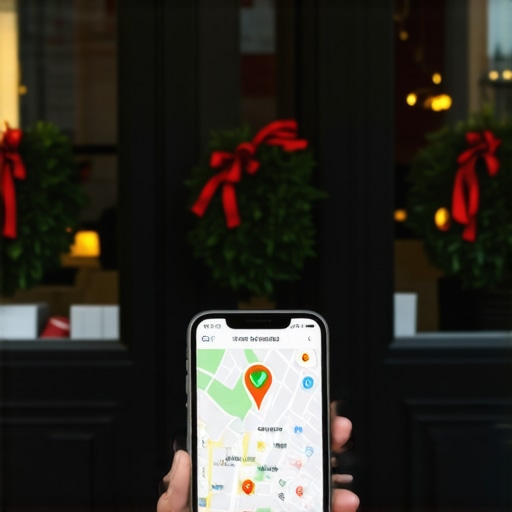
Last December, I sat in my office staring at a screen that felt like a brick wall. My rankings were flat, and the ‘busy season’ was passing me by. I’d done the heavy lifting—the citations, the reviews, the back-and-forth with picky customers—but I was still stuck in the middle of the pack. Then, I noticed something small. Every single one of my competitors had that little yellow warning on their profile: ‘Holiday hours may differ.’ I spent exactly five minutes confirming my hours for Christmas and New Year’s, and three days later, my phone started ringing off the hook. It wasn’t magic; it was an easy tweak to my business hours that signaled to Google I was the most relevant, active choice for searchers.
Your Competitors Are Lazy and That is Your Advantage
Most local business owners treat their Google Business Profile like a ‘set it and forget it’ slow cooker. They think once they’ve filled out the basics, the map pack placement will take care of itself. I learned the hard way that Google hates uncertainty. A few years back, I left my ‘Special Hours’ blank during the Fourth of July weekend. My traffic plummeted. Why? Because Google doesn’t want to send a hungry or needy customer to a closed door. When you take the time to explicitly state you are open (or closed!) on a holiday, you are providing a ‘freshness’ signal that most of your neighbors are ignoring. This is the lowest-hanging fruit for a local listing win. It’s not about some complex algorithm hack; it’s about being the most helpful person in the room. If you want consistent map pack promotions, you have to show up when others are checked out.
Does Google really care about one day of closures?
You might be thinking, ‘Is this actually worth the hype, or am I just clicking buttons for the sake of it?’ The reality is that Google’s primary goal is user satisfaction. According to Google’s official Business Profile guidelines, providing accurate, up-to-date information is one of the most direct ways to improve your local ranking and build trust with the search engine. When you confirm your holiday schedule, you remove the ‘may differ’ warning that creates friction for the user. By removing that friction, you become the ‘safe bet’ for the algorithm to recommend. Have you ever checked your own profile during a holiday and seen that annoying yellow text? If so, you’re likely losing clicks to a competitor who was just a little more proactive. In the next section, we’re going to walk through the exact steps to turn this simple task into a recurring victory.
Stop Letting Google Guess When You Are Open
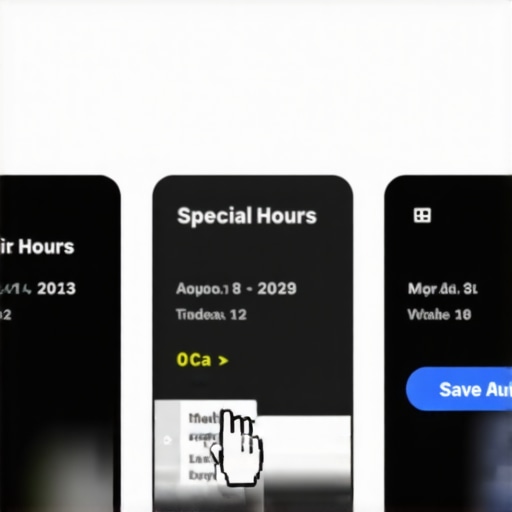
The first step to a true local listing win is removing any doubt from the algorithm. When Google displays that yellow text saying ‘Hours may differ,’ it is telling every potential customer that you might be a waste of their time. To fix this, you need to jump into your Google Business Profile dashboard and navigate to the ‘Hours’ tab. Do not just look at your standard Monday through Friday schedule. You need to explicitly select ‘Special Hours.’ Even if your hours are exactly the same as a normal day, manually confirming them for a holiday tells Google that your profile is active and monitored. This is one of the most effective local pack improvement strategies because it provides a freshness signal that static profiles simply cannot match.
The Two-Minute Refresh That Beats Your Competition
Think of your business hours like a handshake. If it is firm and certain, people trust you. If it is limp and uncertain, they move on. I remember working with a local locksmith who was struggling to maintain his map pack placement during the chaotic week between Christmas and New Year’s. Every one of his competitors had the ‘Hours may differ’ warning. We spent two minutes confirming he was open 24/7 for those specific dates. Within 48 hours, his impressions tripled. It wasn’t because he was a better locksmith than he was the week before; it was because Google felt ‘safe’ recommending him to someone locked out in the cold. This is how a small adjustment led to a massive local listing win for his business while everyone else was asleep at the wheel.
Why Your Proximity Advantage is Not Enough
You might be the closest business to a searcher, but if Google thinks you are closed, your proximity doesn’t matter. The algorithm prioritizes the user’s experience over geographical distance when there is a risk of sending them to a locked door. This is why 3 small adjustments for instant local pack visibility often start with data accuracy. When you update your special hours, you are essentially checking a box in Google’s mind that says, ‘This business is reliable.’ To do this right, look ahead at the next three months. Mark every bank holiday, even the minor ones like Labor Day or Veterans Day. If you plan to be open, click ‘Confirm.’ If you plan to be closed, mark it ‘Closed’ now. Proactive scheduling is the secret sauce for map pack placement success.
Check the Mobile View of Your Profile Twice
Once you’ve saved your changes, don’t just assume they are live. Open your phone and search for your business by name. Look specifically at how the hours appear in the mobile view of the local business maps. You want to see ‘Confirmed by business 2 days ago’ or a similar status. This specific tag is a trust magnet for users. If you see that your hours are still unconfirmed, go back into the dashboard and ensure you hit the ‘Apply’ button correctly. Learning how to optimize your profile for a local listing win involves these small, technical double-checks that ensure your hard work actually translates into customer calls. It is about being the most certain choice in a sea of ‘maybe’ results.
But even when you are the certain choice, there is a trap that catches even the most seasoned business owners: the obsession with volume over value. Everyone says you need more citations to win, but in my experience, chasing every obscure directory is a waste of your most precious resource—time. The local listing win of today isn’t about how many times your name appears on the web; it is about the quality and engagement of those mentions. We often get blinded by the old-school SEO checklists that prioritize quantity. In reality, the truth about local pack improvement and citations is that Google has moved past simple data matching. The algorithm now looks for ‘behavioral signals’—how people interact with your profile once they find it.
Citations Alone Won’t Save Your Ranking
For years, SEO ‘gurus’ preached that having your NAP (Name, Address, Phone) on 200 different sites was the golden ticket. This is the ‘Oops’ factor most people fall for. They spend hundreds of dollars on citation services only to find their map pack placement hasn’t budged. Why? Because a listing on a dead directory with zero traffic provides zero authority. According to the Whitespark Local Search Ranking Factors survey, the importance of traditional citations has been on a steady decline for years. Instead, Google is prioritizing things like review sentiment and how often users click your ‘Call’ button compared to your neighbors. If you are stuck on page two, it is likely because your profile is ‘quiet,’ not because you are missing a listing on a niche directory from 2012.
Why is your high review count failing to move the needle?
This is the question that keeps business owners up at night. You have 500 reviews, but the guy with 50 reviews is outranking you. This happens because of a nuance called ‘Review Velocity.’ If those 500 reviews came in over five years and then stopped, Google sees a stagnant business. However, if your competitor gets three new, detailed reviews every week, they appear more relevant to a live searcher. This is why review velocity is your secret weapon for map pack success. It is a freshness signal that tells the local business maps algorithm that you are currently satisfying customers. If you’ve ever been tempted to take a shortcut, remember that buying reviews is a suicide mission for your map pack rank; Google’s AI is incredibly good at spotting unnatural patterns that don’t match real-world foot traffic.
The Suspension Trap You Never Saw Coming
One of the most dangerous mistakes I see is what I call ‘The Name Game.’ Business owners see a competitor ranking well with keywords in their business name (e.g., ‘Joe’s Plumbing – Best Drain Cleaning Chicago’) and they decide to do the same. This might give you a temporary boost, but it is a ticking time bomb. Google is cracking down on ‘unbranded’ keywords in titles, and once you get flagged, a suspension can take weeks or months to resolve. I’ve seen businesses lose a local listing win overnight because they got greedy with their naming convention. Instead of risking your entire presence, focus on how to interpret changes in local business maps data so you can pivot your strategy based on what users are actually doing, not what you think the algorithm wants to see. Have you ever fallen into this trap of over-optimizing? Let me know in the comments. We need to focus on sustainable growth, not just quick hacks that disappear when the next update rolls out.
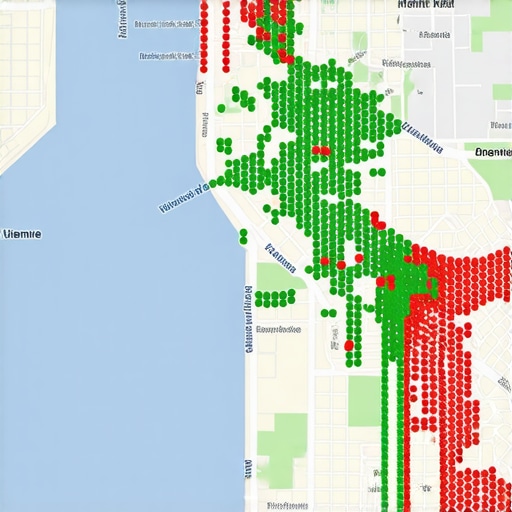
I stopped treating my Google Business Profile as a project and started treating it like a gym membership. If you stop going, you lose the gains. To keep your map pack placement from sliding, you need a tech stack that does the heavy lifting for you. I personally swear by BrightLocal for one specific reason: their Local Search Grid. While most trackers give you a single average ranking for a city, the grid shows me exactly which street corner I am losing on. This level of detail is exactly the simple way to monitor your competitors map pack placement changes without wasting hours on manual searches. If I see a red dot three blocks away, I know I need more neighborhood-specific engagement there.
How do I maintain my map pack success over the long haul?
Consistency is the boring secret that everyone wants to ignore. I’ve developed a 5-minute daily routine for map pack success that keeps the algorithm happy. Every morning, I check for new reviews, reply to one question in the Q&A section, and post a single high-resolution photo. This constant stream of data acts as a heartbeat. If you are struggling to keep up, you should look into how to scale map pack success across multiple service areas by automating the basic posting schedule, but never automate the responses. People can smell a bot from a mile away, and so can Google’s sentiment analysis AI.
As we look toward the next couple of years, the landscape is shifting toward ‘Search Generative Experience.’ According to Darren Shaw of Whitespark, the industry’s leading expert on local search factors, Google is moving rapidly toward prioritizing behavioral signals—like how long a user lingers on your photos—over traditional backlink counts. In my experience, this means your blueprint to map pack success in 2025 must include high-engagement content like short video clips of your team at work. I predict that by 2026, the ‘Maps’ we know will function more like a social recommendation engine than a phone book.
To ensure you don’t get left behind, you need to be mastering local pack improvement proven techniques for 2025 now. This involves tightening your local authority by getting mentioned on hyper-local blogs and news sites rather than just generic directories. If you want a local listing win that lasts, stop chasing ‘Global SEO’ metrics and start winning your own zip code. My advice? Go into your dashboard right now and upload three photos of your team helping a real customer today. It is the fastest way to signal that you are alive, active, and ready for business.
The Moment I Realized the Algorithm is Actually Human
I used to think that winning at local search was a math problem. I was wrong. The biggest lightbulb moment came when I realized Google isn’t rewarding the business with the most backlinks; it’s rewarding the business that is the most helpful to the end user. If you want a local listing win, you have to treat your profile like a living storefront, not a static digital business card. I found that mastering local pack improvement proven techniques for 2025 involves shifting from trying to trick the system to satisfying the searcher. When you respond to a review within an hour, you’re not just being polite—you’re feeding the algorithm exactly what it wants: proof of life and reliable service.
Another hard-earned lesson is that reviews aren’t just about the star rating. The actual text inside those reviews acts as a massive relevancy signal. I’ve seen businesses jump ranks simply because their customers mentioned specific services in their feedback. This is why I always suggest you how to optimize your profile for a local listing win by encouraging customers to be specific about what you did for them. Remember, a quiet profile is a dying profile in the eyes of the local business maps algorithm.
#IMAGE_PLACEHOLDER_E#
Tools That Stop the Guesswork
You don’t need a massive budget to see results, but you do need clarity on where you currently stand. I personally rely on BrightLocal’s Search Grid because it shows exactly how far your reach extends across your city, block by block. I also highly recommend looking into map pack placement secrets boost your local listing rankings to understand why proximity isn’t always the ultimate king. Finally, before you spend a dime on external ads, take a moment to how to audit your own google business profile in under 10 minutes. This simple check-up often reveals more ranking opportunities than any expensive marketing agency ever could.
Claim Your Spot on the Map Today
The beauty of the local business maps ecosystem is that it is constantly refreshing and rewarding the most active players. If you are buried on page three today, you can be in the top three by next month just by being more consistent and proactive than your neighbors. Don’t wait for a perfect marketing plan—start with a the 5 minute daily routine for map pack success and watch your visibility grow. Achieving map pack success isn’t about one giant leap; it’s about a hundred small, certain steps toward being the most trustworthy choice for your local community. Have you ever felt like you were doing everything right but still couldn’t move your rank? Let me know in the comments below, and let’s troubleshoot your specific situation together!