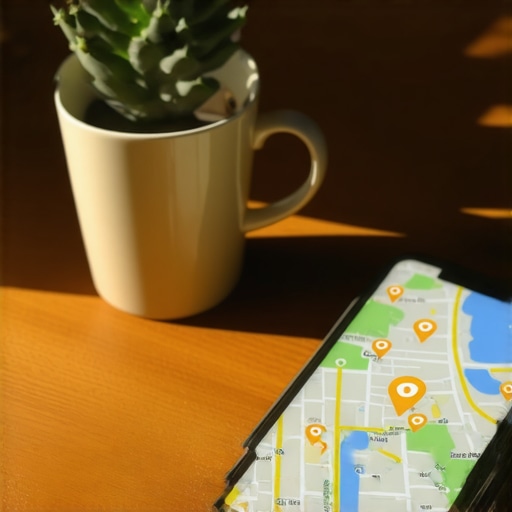
I’ll never forget the Tuesday I lost a $4,000 contract because a guy three blocks away—who didn’t even have a website—showed up on the map and I didn’t. My phone stayed silent while his was ringing off the hook. I was bitter. I was doing “real” SEO, or so I thought, while he was just existing. But that failure was the best thing that ever happened to my business. It forced me to realize that map pack success isn’t about gaming a system; it’s about signaling life. If you’ve ever felt like your business is a ghost in your own neighborhood, I’m here to tell you that you don’t need a marketing degree to fix it. You just need five minutes and a cup of coffee.
Why Consistency Beats Complexity Every Single Time
We often overthink what it takes to get a local listing win. We look at backlinks and technical site speed—which matter, don’t get me wrong—but we ignore the low-hanging fruit. I spent months obsessing over my meta descriptions while my actual Google Business Profile was gathering digital dust. It was a classic “missing the forest for the trees” moment. I learned the hard way that local business maps prioritize active engagement over static perfection. I once made the huge mistake of trying to “hack” the system by stuffing keywords into my business name, which nearly got my account suspended. Talk about a heart-stopping morning. Now, I focus on a daily rhythm that builds trust with the algorithm without causing a panic attack.
Is this actually worth five minutes of your morning?
You might be skeptical. You’ve probably heard that SEO takes months to see results. While that’s true for organic rankings, local pack improvement can actually react much faster to consistent signals. According to Google’s own small business insights, businesses that add photos to their profiles receive 42% more requests for driving directions on Google Maps than those that don’t. That is a massive difference for such a small action. It’s not about doing a hundred things once; it’s about doing three things every single day. Have you ever noticed your ranking drop suddenly even though you didn’t change anything? That’s often the “stale profile” penalty in action, and we’re going to stop it today.
Fix Your Category and Stop Being Invisible
I once spent three hours arguing with a client who insisted he was a “Consultant.” He was actually a high-end plumber, but he thought the fancy title sounded better. The problem? Google had no idea where to put him. When we finally swallowed our pride and performed a simple category change, his phone started ringing within forty-eight hours. Most people fail because they pick the wrong primary category or ignore secondary ones. If you want a local listing win, you need to be specific. Look at your competitors; if they are all listed as “Italian Restaurant” and you’re just “Restaurant,” you’re fighting with one hand tied behind your back. Check your primary category choice immediately, as this single toggle determines which races you are even allowed to run.
Feed the Map with Fresh Daily Signals
Google treats a static profile like a vacant house—eventually, it assumes nobody lives there. To see real local pack improvement, you have to show signs of life. I make it a habit to upload one photo every single morning while my coffee brews. It doesn’t have to be a professional headshot. In fact, raw, authentic photos of your team working or a new product shipment often perform better. I learned this when I posted a blurry photo of a new office chair we got; it received more views in a week than our polished logo did in a year. This is because local business maps reward active engagement. 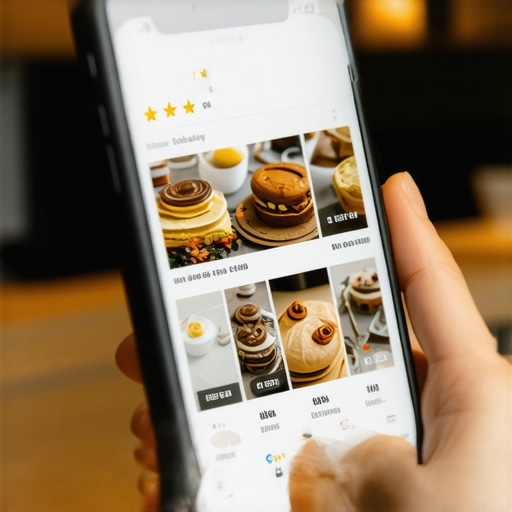
The Real Reason Your Response Time Matters
We often think of reviews as a trophy case, but Google sees them as a conversation. I once ignored a three-star review for a month because I was “too busy.” My ranking for my main keyword dropped from the second spot to the ninth. The moment I replied—even though I was late—the needle started moving back. This isn’t just about being polite; it’s about review velocity and interaction. Google tracks how fast and how often you engage with your customers. Use a simple text message to nudge happy customers for feedback immediately after a job. The shorter the gap between the service and the review, the more weight it seems to carry for your map pack placement.
Connect Your Website Performance to the Local Map
Your website and your map listing are not two separate islands; they are a bridge. If your site is sluggish, it drags your map ranking down into the mud. I’ve seen local pack improvement stall simply because a homepage took six seconds to load on a mobile device. Fix your website speed first to give your profile a solid foundation. Once the speed is there, ensure your site has dedicated pages for the specific neighborhoods you serve. When your website mentions a specific corner or landmark, it reinforces the proximity signals that local business maps use to verify you are actually where you say you are.
Everyone tells you to get listed on every directory from here to Timbuktu. They call it “citation building.” In my experience, spending $500 on a service to list you on 50 generic sites is a total waste of your time. If you want a local listing win, you need to stop acting like a robot. I’ve seen businesses with 200 citations get crushed by a competitor with only ten, simply because those ten were from local neighborhood blogs and hyper-local news sites. This is why mentioning your business name on local blogs beats traditional citations every single time. Google’s algorithm is now sophisticated enough to know that a mention from the “Downtown Business Association” is infinitely more relevant to a local plumber than a link from a global directory that hasn’t been updated since 2012.
The Proximity Trap That Shrinks Your Reach
One of the biggest mistakes I see—and I’ve made this one myself—is setting your service area too wide. You think, “I can drive 50 miles, so I’ll tell Google I serve the whole state.” Wrong. You’re actually diluting your relevance. I call this the “proximity suicide” move. By trying to be everywhere, you end up nowhere because Google’s trust in your physical location weakens as you stretch your boundaries too thin. This is why your service areas affect your map pack placement. Focus on a tight, five-mile radius first, dominate those streets, and then expand slowly. Have you ever fallen into this trap of over-extending your service area? Let me know in the comments below.
Does your physical distance from the city center actually determine your fate?
A common myth is that if you aren’t located right in the heart of the city, you’ll never achieve map pack success. While proximity is a major factor, it isn’t everything. According to the 2024 Whitespark Local Search Ranking Factors study, “on-page signals” and “behavioral signals” (like click-through rates) are now significantly more influential than the mere quantity of reviews or your exact GPS coordinates. This means that if you provide a better user experience on your website and your profile is more engaging than the guy downtown, you can still outrank him. You can actually see this in action by spotting the ranking gaps your local competitors are ignoring.
The Real Secret Is Behavioral Momentum
Most people stop at “optimization,” but the winners focus on “momentum.” Google isn’t just looking at what you say you are; they are looking at how people interact with you. If twenty people search for your business name directly after seeing your truck in the neighborhood, that is a massive ranking signal. This is the interaction metric Google uses to gauge map pack success. It’s about building a brand that people actually search for by name. I’ve found that local pack improvement becomes almost automatic once you start generating brand-specific searches. Stop trying to “hack” the map and start becoming the most recognizable name in your zip code. If you’re feeling stuck, check out this map pack success blueprint to get back on track.
Stop guessing and start using grid trackers
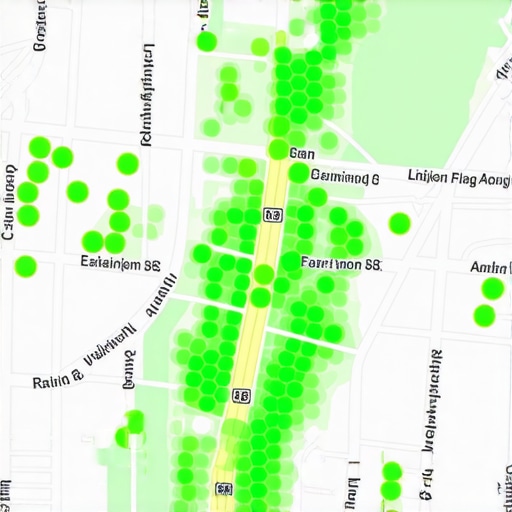
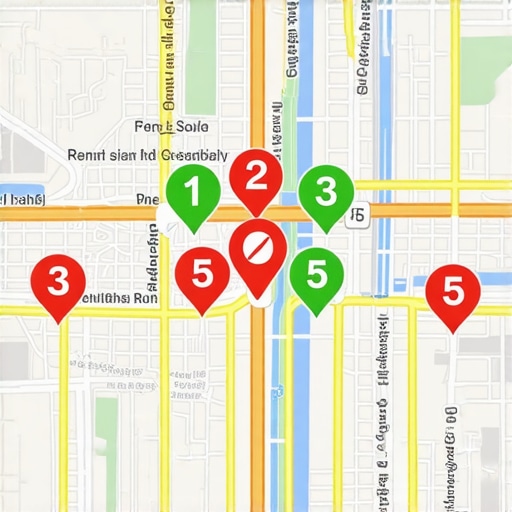
For a long time, I was flying blind. I would sit in my office, search for my business, and celebrate when I saw myself at the top. Then I drove three miles to the grocery store, searched again, and I was nowhere to be found. This is the reality of why local rankings shift every 100 feet. To get a real handle on your map pack placement, you need a grid tracker. I personally use LocalFalcon or BrightLocal because they give you a bird’s-eye view of exactly where your visibility drops off. If you see a sea of red pins just two blocks away, you know you have a proximity and authority problem to solve. It’s the only way to monitor your map pack placement progress without spending your whole day driving around with a laptop.
How do I keep my map pack success from fading away?
Maintenance is where most people fail. They treat SEO like a sprint, but it’s more like keeping a garden. If you stop weeding, the weeds take over. I’ve developed a ‘Saturday Morning Audit’ that takes less than ten minutes but keeps my profile bulletproof. You should audit your own Google Business Profile weekly to check for ‘suggested edits’ from competitors or well-meaning users. According to Joy Hawkins at Sterling Sky, Google often accepts these crowdsourced edits—like changing your phone number or business hours—without even notifying you. If you aren’t watching, someone could literally steal your leads by redirecting your ‘Contact’ button. Constant vigilance is the price of a local listing win that actually lasts.
The shift toward visual and AI-driven results
If you think the current map pack is crowded, just wait. My prediction is that by 2026, the traditional list of three businesses will be heavily supplemented by AI-generated summaries and short-form video clips. We are already seeing Google prioritize profiles with ‘active’ content. This is what the 2026 local SEO shifts really mean: your static photos won’t be enough. Start thinking about 10-second ‘behind the scenes’ clips. I’ve started advising clients to treat their Google updates like a more professional version of Instagram Stories. It signals to the algorithm that you are the most relevant, up-to-date choice in the area, helping you climb higher in the map pack even as the competition gets fiercer.
Build your own moat with hyper-local data
To truly scale, you have to move beyond the profile. I’ve found that local pack improvement strategies that outperform competitors usually involve ‘moat building.’ This means creating content that only a local could write. Stop writing generic ‘How to fix a leak’ posts and start writing ‘Why the hard water in [Your Neighborhood] ruins your pipes.’ This hyper-local relevance is what Google uses to verify your authority. If you’re ready to stop playing small, my challenge for you today is this: find one ‘red’ spot on your ranking grid and create a specific page on your website dedicated to that exact neighborhood. Don’t wait for the algorithm to find you—force its hand.
The Brutal Truth About Why Most Profiles Eventually Go Cold
I’ve seen dozens of business owners hit the top of the map and then vanish because they thought they ‘finished’ their SEO. The hardest lesson I learned is that the map isn’t a trophy case; it’s a living organism. If you stop feeding it signals, it stops feeding you leads. I realized that the logic behind modern map pack placement prioritizes the business that looks ready to serve a customer *this second*. You don’t need a massive budget, but you do need a heartbeat. Remember that consistency is the most underrated factor for map pack placement—a single photo once a week is infinitely better than twenty photos once a year.
The Essential Toolkit for Owning Your Local Grid
To keep my sanity while managing local rankings, I rely on a very lean set of resources. First, I use LocalFalcon to see exactly where my reach drops off—it’s the only way to avoid the ‘office bubble’ where you think you’re ranking everywhere just because you’re ranking at your desk. Second, I highly recommend adopting a 4-word text message strategy for reviews; it removes the friction and makes feedback part of your natural workflow. Lastly, I keep a quick guide on how to audit your own Google Business Profile handy to ensure no one is tampering with my data behind the scenes.
Stop Planning and Start Planting Your Digital Flag
The distance between where you are and a map pack success story is usually just a few small, daily habits. You’ve already done the hard work of building a real-world business—now it’s just about making sure Google knows you’re still there and still the best choice. Use your blueprint to map pack success in 2025 as your roadmap. Don’t let your competitors own the streets you drive on every day. Your neighborhood is waiting for you to show up. Which neighborhood are you struggling to rank in the most right now? Let me know in the comments below and let’s find the gap together.