Why Your Google Maps Lead Generation Strategy is Failing at the Finish Line
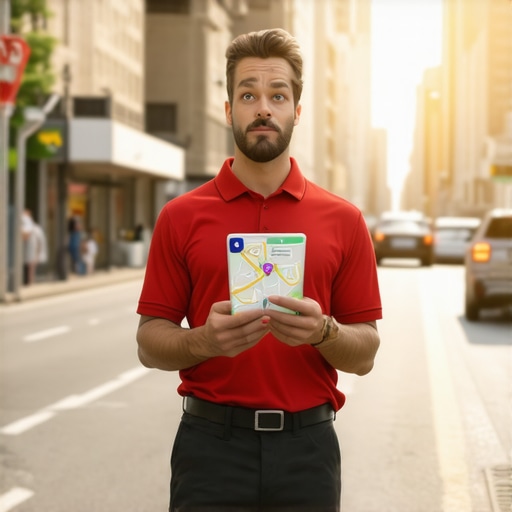
You have done everything the “gurus” told you to do. You’ve claimed your listing, you’ve sprinkled keywords into your description, and you’ve begged your last ten customers for reviews. Perhaps you have even achieved the holy grail of local search: a spot in the Top 3 of the Google Map Pack. But there is a nagging problem that keeps you up at night. The phone isn’t ringing. Your dashboard shows “impressions” and “views,” but your bank account shows a different story. You are winning the ranking race, but you are failing at the finish line.
As a Local SEO Consultant, I see this paradox daily. Business owners and agency professionals are obsessed with the “where” of ranking – where do I show up on the map? – while completely ignoring the “why” of the lead. Google maps lead generation is not a byproduct of ranking; it is a deliberate result of technical infrastructure and psychological validation. If your phone isn’t ringing, it’s not because your SEO is “bad” in the traditional sense; it’s because your conversion infrastructure is broken. We need to stop treating Local SEO as a marketing gimmick and start treating it as the foundational business system it actually is.
The “Ranking vs. Revenue” Paradox: Why Local SEO Isn’t Just Marketing
The first mistake most businesses make is viewing their Google Business Profile as a digital billboard. It isn’t. As Rashid Rehman famously noted on LinkedIn, “Local SEO isn’t marketing. It’s infrastructure.” When you think of it as infrastructure, you realize that a ranking is merely a pipe. If the pipe is disconnected at the end, the water – your potential customers – never reaches the tap. You can have the widest pipe in the city, but if there is a massive leak at the finish line, you are just wasting resources.
According to research from OnlineProxy, “Google Maps is the undisputed king for reaching the ‘hidden middle’ of the economy.” We are talking about the manufacturing plants, the logistics hubs, and the specialized service-based enterprises that keep the world moving. These users aren’t browsing; they are searching with high intent. If you aren’t converting them, you aren’t just losing a click; you are losing a high-value contract. To understand how to bridge this gap, you should start with our Map Pack Success Blueprint: From Local Listings to Top Rankings. But even with a blueprint, you must realize that google maps lead generation requires more than just visibility. It requires a seamless transition from the search result to the phone call. Many businesses use specialized google maps lead generation tools to identify these gaps, but the solution often lies in the data you provide to Google before the search even happens.
The Infrastructure Gap: Why Your Foundation is Broken
Bobby Offterdinger once said, “Most companies fail before they start… If your foundation is broken, Google Ads [and organic maps] will fail.” This is the cold, hard truth of google business profile seo. If your technical foundation is shaky, no amount of “rank juice” will save your ROI. One of the most common technical failures is what we call “Centroid Bias.” According to data from RankTracker, “Centroid Bias and business hour gaps” are the primary reasons for “bad SEO decisions.” If your business is physically located too far from the searcher or the city’s economic center, Google may rank you for general terms but hide you when the user adds “near me.” This creates a “Ghost Location” effect where you appear to rank in your own office, but vanish three blocks away. To fix this, you need to understand The Ghost Location Error: How to Troubleshoot a Vanishing Google Map Pack Rank.
Another infrastructure killer is the “Business Hour Gap.” If a plumber is needed at 6:00 PM and your profile says “Closed” while your competitor’s says “Open,” you lose that lead 100% of the time. It doesn’t matter if you are ranked #1 and they are #3. The user needs a solution *now*. Furthermore, many businesses fail to utilize a google business profile audit tool to check for NAP (Name, Address, Phone) consistency. If your data is fragmented across the web, Google loses trust in your “infrastructure,” and your rank google business profile efforts will plateau. We use what I call the “Triple-Layer Extraction Framework”: Discovery (finding where you are), Validation (confirming the data is correct), and Augmentation (adding the signals that drive trust). Without this framework, you are just guessing. You can see how this plays out in our guide on A Guide to Local Citations and NAP Consistency.
Conversion Killers in the Top 3: Why They Choose Your Competitor
Let’s assume your infrastructure is solid and you are ranking in the Top 3. Why is the guy at #2 getting all the calls? This is where local seo services often fail to deliver because they focus on the algorithm instead of the human. The first conversion killer is “Review Velocity vs. Review Quality.” Most business owners think having a 4.8-star rating is enough. It isn’t. If your last review was from six months ago, and the guy at #2 got three reviews this week, the user perceives your business as “stale.” You need a consistent stream of feedback, and you need to know 7 Tactics for Getting More Google Reviews Without Nagging Your Customers. It is also vital to know How to Handle Fake Negative Reviews on Your Profile to maintain that hard-earned reputation.
The second killer is “Photo Psychology.” I cannot stress this enough: stock photography kills google maps lead generation. When a user looks at a local listing, they want to see “steel-toed boots and scrubs.” They want to see your actual trucks, your actual team, and your actual office. This creates “visual proof” of your existence. If you use the same stock photo of a smiling receptionist that five other competitors use, you have zero brand equity. We have found that The Impact of Geo-Tagged Photos on Local Rankings and conversions is massive because it anchors your business in the physical world. Proper google business profile optimization must include high-quality, authentic imagery that reflects the reality of your service. Finally, there is the “Near Me” alignment. Your website’s service pages must match the intent of the Map Pack listing. If the user clicks through and finds a generic homepage instead of a specific service page, the friction causes them to bounce. This is a core part of local map pack seo that many overlook. You must ensure you are Optimizing Google Business Profile Services for Better Conversions.
The 2026 Horizon: New Signals You Aren’t Tracking
As we look toward the 2026 algorithm, the signals that define rank higher on google maps are shifting from static data to behavioral and environmental data. If you are still only worried about keywords, you are already behind. One of the most significant emerging signals is “Store-Level WiFi Latency and Mobile Dwell Time.” Google can now measure how long a customer stays at your location and the quality of the digital experience while they are there. This is why I tell my clients that Why Your Map Pack Placement Needs Real-Time WiFi Data in 2026 is going to be a major ranking factor. If Google sees that people enter your shop and leave immediately, or if their devices struggle to connect to the local network, it signals a poor user experience, and your rank will drop.
Furthermore, we are seeing the rise of “Smart-Car Proximity” and “UWB (Ultra-Wideband) Pings.” As more vehicles become connected, Google is integrating EV charging signals and transit data into the local algorithm. If your business is conveniently located near high-traffic smart-car routes or transit hubs, your visibility will increase – but only if your profile is optimized to receive these “device-to-device” trust signals. This is the future of google business profile seo. To stay ahead, you need to use advanced local seo ranking tools that can track these micro-movements in the SERPs. You also need to understand Understanding the Proximity Factor in Google Maps as it evolves from a simple radius to a complex web of behavioral signals. Don’t forget that The Role of Backlinks in Local Map Pack SEO remains a pillar, even as these newer signals emerge.
The 15-Minute Audit to Save Your Strategy
You don’t need a month-long consulting engagement to find out why your google maps lead generation is failing. You can perform a 15-minute audit right now. First, check your NAP consistency across your top five citations. If your suite number is missing on Yelp but present on Google, you have a data conflict. Second, audit your “Services” menu. Most businesses leave this blank or let Google’s “Auto-Accept” feature fill it with irrelevant junk. You need to manually curate these services to match the high-intent keywords your customers actually use. If you are a contractor, check out our guide on Local SEO for Contractors: A Step-by-Step Guide to see how this is done properly.
Third, you must use a google maps rank tracker to see your “real-time” positions. Do not rely on your own phone’s search results; they are cached and biased by your own location. A professional tool will show you a grid of your rankings across the entire city, revealing exactly where your “Ghost Locations” are. This is a key part of any google maps ranking service. If you find that your pin is buried despite having good reviews, you likely have a technical suppression issue. You should read The 15-Minute Google Maps Audit That Revealed Why Your Pin Is Buried for a deeper dive into this process. Additionally, if you are Managing Multiple Google Business Profiles Without Getting Suspended, this audit becomes even more critical to ensure one bad listing doesn’t take down your entire network. Finally, make sure you know How to Optimize Your Google Business Profile for Maximum Reach by filling out every available field in the dashboard.
The Checklist for Map Pack Dominance
- Verify Business Hours: Ensure they are 100% accurate, including holiday hours.
- Audit Services Menu: Remove auto-generated “junk” and add custom, keyword-rich services.
- Update Photos Weekly: Aim for at least 3-5 new, authentic photos every month.
- Response Time: Respond to all reviews (positive and negative) within 24 hours.
- NAP Consistency: Use a tool to sync your data across the primary local aggregators.
- Behavioral Signals: Optimize your in-store experience to encourage longer dwell times.
Conclusion: Stop Chasing Vanity, Start Chasing Calls
At the end of the day, a #1 ranking is just a number. If that number doesn’t translate into a customer, it is a vanity metric that serves your ego rather than your business. The “finish line” of google maps lead generation is the moment of trust. It is the split second when a user looks at your listing and decides whether you are a legitimate, active, and reliable business or just another digital ghost. By fixing your infrastructure, eliminating conversion killers, and preparing for the behavioral signals of 2026, you can turn your Google Business Profile into a lead-generation machine that works while you sleep.
Stop settling for “visibility” and start demanding ROI. If you are ready to take the next step and force your way into the top spots with a strategy that actually converts, I invite you to explore The 7-Point Checklist for Forcing Your Way Into the Top 3 Map Pack. Local SEO is a game of inches, and the businesses that pay attention to the technical “infrastructure” are the ones that will dominate the next decade of local search. Don’t let your strategy fail at the finish line. Build a foundation that Google – and your customers – can’t ignore.