I’ll never forget the rainy Tuesday I stood outside ‘Sal’s Sandwiches,’ soaked to the bone and staring at my phone in pure disbelief. I knew Sal was right there—I could smell the toasted ciabatta—but Google Maps insisted the nearest deli was three blocks away. It felt like Sal’s shop didn’t exist in the digital world. That was my lightbulb moment. I realized that while Sal had a great menu, he had zero ‘digital pulse.’ No customer photos, no recent check-ins, and definitely no chatter. He was invisible because he wasn’t letting his customers do the talking. [image placeholder]
The Moment I Realized My Phone Was Ignoring My Favorite Local Spot
The truth is, I spent years thinking map pack success came down to some secret code or paying a wizard to tweak my meta tags. I even made the rookie mistake of changing my business name to include a bunch of keywords, thinking it would trick the system. Spoiler: it didn’t. It just made me look desperate. Real local pack improvement happens when you stop trying to game the system and start inviting your customers to participate in it. User-generated content (UGC) is the lifeblood of modern local business maps. When a customer uploads a grainy photo of their pasta or leaves a quick ‘best service ever’ review, they are sending a high-voltage signal to the algorithm. According to Search Engine Journal, consumer reviews are consistently a top-tier ranking factor for the local pack. It tells the map that you aren’t a ghost town; you are a living, breathing part of the neighborhood.
Is letting strangers control your brand actually worth the risk?
I get it. The idea of ‘letting go’ is terrifying. What if they take a bad photo? What if the review is mediocre? I used to stay up late worrying about this. But here’s the reality: a perfectly curated, sterile profile looks fake. People trust the messiness of real human experiences. If you want a local listing win, you need to embrace that chaos. We are going to dive into how you can turn your casual visitors into your most powerful SEO team. Have you ever felt like your business was being hidden by the maps even though you’re doing everything right? Drop a comment or reach out—I’d love to hear your story. Let’s look at why active profile management and your customers’ phones are your new best friends.
Stop Treating Your Profile Like a Static Billboard
Imagine your Google Business Profile is a storefront window. If you never change the mannequins or wash the glass, people eventually stop looking. The algorithm works exactly the same way. When you ignore your profile, you are basically telling the map that you have gone out of business. To achieve consistent local pack improvement, you need to treat your digital presence like a living, breathing entity. I learned this the hard way with a client who ran a local garage. They had 4.8 stars but had not posted an update in six months. They were bleeding visibility to a guy down the street with 4.2 stars who posted daily oil change specials. This is why local business maps reward active profile management—it proves you are open and ready for business today, not just five years ago.

Turn Your Regulars into a Content Machine
You do not need a professional photographer to win. In fact, while high resolution photos are great, the grainy, honest shot of a sandwich on a customer’s lap is often more powerful for conversions. Why? Because local business maps use customer photos to rank you by verifying that real people are actually visiting your physical location. I once told a local bakery owner to stop stressing about his own curated posts and just put a small sign by the register that said, ‘Show us your pastry pic!’ Within two weeks, his User Photos section exploded, and his map pack success was undeniable. He jumped from number seven to number two without spending a dime on ads. This is the heart of a local listing win: leveraging the crowd to do the heavy lifting for you.
Focus on the Speed of Your Feedback
Most people think total reviews are the only thing that matters. They are wrong. Review velocity is your secret weapon for map pack success. If you get ten reviews in one day and then nothing for a month, the algorithm thinks you ran a one-time promotion. It wants to see a steady, consistent heartbeat. Think of it like a conversation; if you only speak once a year, people forget you exist. You need to create a 5-minute daily routine for map pack success where you respond to every single person who takes the time to write. Even the ‘just okay’ reviews deserve a personalized thank you. When you engage, you are not just being polite; you are feeding the machine the data it needs to justify putting you at the top of the local business maps. This active participation is what separates the winners from the ghost listings that eventually disappear.
Most gurus will tell you that the easiest way to jump the queue is to shove every service you offer into your business title. But in my experience, chasing map pack placement secrets like keyword stuffing is a ticking time bomb. Google is getting smarter, and a name-based suspension can wipe out your visibility in seconds. Instead, focus on building local authority through consistent engagement. Have you ever fallen into this trap? Let me know in the comments. I’ve seen businesses spend thousands on ads while the truth about local pack improvement and citations remains a mess of old phone numbers and wrong suite numbers. This ‘Oops’ factor—messy data—is what usually causes a plateau in rankings after an initial boost.
Does your physical distance from the searcher override everything else?
It is a common frustration: you are just two miles away, yet a competitor five miles away is outranking you. This happens because why your physical distance is the biggest map pack placement factor isn’t the only rule. In fact, according to BrightLocal’s annual Local Search Ranking Factors survey, while proximity remains a massive factor, high-authority signals like ‘relevance’ and ‘prominence’ can pull you into the pack even if you aren’t the closest option. If the algorithm sees you as the definitive authority for a specific search, it will stretch that ‘proximity’ circle to include you. 
The Fatal Mistake of Changing Your Category on a Whim
One of the biggest traps you can fall into is constantly tweaking your primary category to ‘test’ the waters. This often triggers a re-verification or, worse, tells the system you aren’t specialized in anything. Achieving a local listing win requires stability. When you jump from ‘Italian Restaurant’ to ‘Pizza Takeout’ and back, you confuse the engine. Instead of guessing, use local pack improvement strategies that outperform competitors by auditing your secondary categories first. If you’ve recently moved, you must learn how to fix incorrect address data for a local listing win before you touch anything else. Real map pack success requires more than just good reviews; it requires a bulletproof foundation of data that doesn’t contradict itself across the web. Focusing on these high-level nuances is what separates the top 1% from those who simply exist on the map.To keep the momentum going, I had to stop relying on my own phone’s search results. Because Google knows my search history, it always shows me what I want to see, which is a dangerous trap for a business owner. I started using grid-tracking tools like Local Falcon and BrightLocal. These tools give you a bird’s-eye view of your neighborhood, showing you exactly where you drop off the map. It’s one thing to rank #1 at your front door, but if you drop to #10 two blocks away, you haven’t really won yet. If you want to monitor your map pack placement progress effectively, you need to see the ‘heat map’ of your visibility across the entire city. Stop guessing where you rank and start mapping the grid to see where your competitors are actually stealing your customers.
How do I keep my map position steady year-round?
Sustaining a local listing win isn’t about a one-time surge; it’s about the boring, repetitive tasks that most people skip. I follow a strict 5-minute daily routine for map pack success that involves responding to new reviews and checking for ‘suggested edits’ on my profile. These ‘suggested edits’ are often well-meaning users, but occasionally they are disgruntled competitors trying to divert your traffic by changing your website link or phone number. By staying active, you maintain the integrity of your data, which is the cornerstone of mastering local business maps. 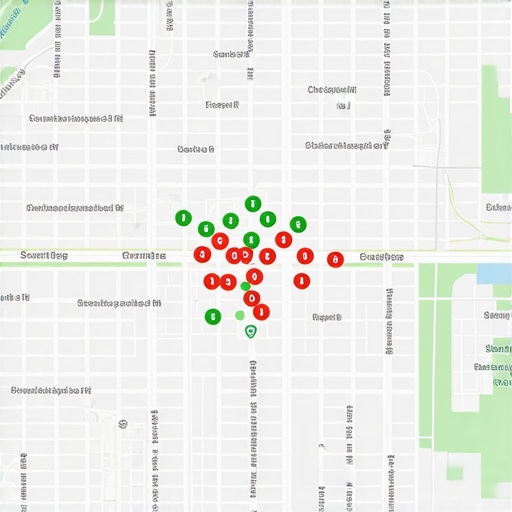 For those looking for effective local pack boosts, look no further than the annual Local Search Ranking Factors survey by Whitespark. Darren Shaw and his team of experts consistently find that while proximity is a ‘hard’ factor you cannot change, your ‘relevance’—driven by things like the keywords in your reviews and your business categories—is where you have the most leverage.
Prepare for the Shift Toward AI-Driven Local Summaries
Looking ahead, the way we interact with maps is changing rapidly. We are moving into a world where Google’s AI will summarize your reviews for the user before they even click your profile. In your blueprint to map pack success in 2025, the focus will shift from just ‘ranking’ to ‘sentiment.’ If your reviews all mention ‘great coffee but slow wifi,’ the AI will tell the searcher exactly that in a bulleted summary. To ensure long-term local pack improvement, you need to be the business that AI wants to recommend because your data is clean and your customer sentiment is overwhelmingly positive. My challenge to you: pick one grid-tracking tool this week and run a scan for your most important keyword. You might be surprised at how quickly your ‘territory’ shrinks just a few streets away. It’s time to stop flying blind and start taking back your neighborhood.
The Brutal Truth I Discovered After My First Ranking Drop
For a long time, I thought I could set my profile and forget it, but the reality is much more demanding. I fell for the trap of thinking a few high-quality backlinks would fix everything. Here is what I actually learned during that stressful period: First, a perfectly polished profile often performs worse than one that looks ‘lived in.’ Real people make mistakes, upload imperfect photos, and leave reviews with typos. Google loves that authenticity. Second, chasing map pack placement secrets usually leads to a dead end because the ‘secret’ is almost always just consistent engagement. Lastly, I realized that 3 mistakes people make when chasing map pack success—like keyword stuffing—will eventually get you flagged. It is better to be the second-best result that stays on the map than the first-place result that gets suspended for being spammy.
The Toolbox I Use to Keep My Clients on Top
If you are serious about this, you need more than just hope. I personally rely on a handful of sources and tools that have never steered me wrong. I check the Whitespark Local Search Ranking Factors survey every single year; it is the industry gold standard for knowing what actually moves the needle. For tracking, I use Local Falcon because it gives you a visual grid of where you are winning and losing. I also recommend checking out map pack success strategies to see how other local heroes are pivoting in real-time. Finally, always use the simple way to track your progress toward a local listing win so you don’t waste time on metrics that don’t result in more phone calls or foot traffic.
The Neighborhood is Yours for the Taking
Success in the digital world isn’t reserved for the biggest budget; it is reserved for the business owner who cares the most about their community. By inviting your customers to share their experiences and by staying active every single day, you are building a wall around your business that no competitor can easily climb. You have the tools, the data, and the strategy to achieve lasting effective local pack boosts. Don’t let your shop remain invisible—it is time to step into the spotlight and claim your local listing win. Have you ever noticed your rankings change when a competitor opens a new location? Let me know in the comments below!