

I spent six months chasing my tail, obsessing over keywords and begging every customer for a five-star review. I was convinced I had cracked the code. Then, one Tuesday afternoon, I sat in a coffee shop just three blocks from my office and searched for my own services. I didn’t even show up on the first three pages of the map. My heart sank. I was doing everything “right,” yet I was getting beat by a competitor who hadn’t updated their profile since 2019. It was a brutal wake-up call that forced me to dig deeper than the standard “best practices” everyone parrots online. I realized I had missed a foundational setting that was telling Google I didn’t actually serve the people standing right in front of me.
The Mistake I Made That Kept My Business Invisible
I used to think that more was always better. I checked every box, filled in every service area, and selected as many categories as I could find. I thought I was being thorough, but I was actually confusing the algorithm. This is a classic hurdle for anyone looking for local pack improvement. By trying to be everywhere, I ended up being nowhere. It turns out that Google’s proximity and relevance filters are incredibly sensitive to how you define your Service Area.
Early on, I set my service radius way too wide. I thought, “Hey, I’m willing to drive 50 miles for a client!” But Google saw that 50-mile radius and compared it to my tiny home office. The lack of focus signaled that I wasn’t a local authority anywhere. If you’ve ever wondered why your service areas affect your map pack placement, this is exactly it. You have to be realistic about where your “boots on the ground” actually are. According to an industry survey by BrightLocal, proximity remains a top-tier ranking factor, and muddling that data with over-ambitious service areas is a recipe for a ranking disaster.
Is fixing this one setting actually worth the effort?
I know what you’re thinking. “It’s just a few checkmarks, how much could it possibly matter?” I thought the same thing until I finally sat down to learn how to audit your own google business profile in under 10 minutes and saw the mess I’d created. Once I tightened my service boundaries to reflect where my customers actually lived, my visibility spiked within weeks. We aren’t just talking about a minor bump; this was a genuine local listing win that changed my monthly lead flow.
The goal today is to stop the bleeding. I want to help you achieve the kind of map pack success that feels earned, not accidental. We’re going to look at the Service Area and Primary Category settings through a lens of brutal honesty. Have you ever felt like you’re doing everything the experts say, but your phone still isn’t ringing? You aren’t alone, and it’s usually because of this one overlooked corner of your dashboard.
The first thing you need to realize is that Google acts like a hyper-efficient librarian. If you tell that librarian you are an expert in everything from plumbing to rocket science, they won’t trust you with either. You have to be specific. To start, you need to understand that why your physical distance is the biggest map pack placement factor isn’t just a theory; it’s the core of the algorithm. If your service area is set to a 50-mile radius but your office is in a crowded suburb, Google assumes your relevance fades the further you get from that pin. Think of your business profile like a lighthouse. If you try to shine a tiny bulb in every direction, the light becomes so faint it can’t be seen by anyone. But if you focus that beam on a specific harbor, it’s blindingly bright. I learned this the hard way with a landscaping client in Jersey. He had his service area set to cover three entire states because he “didn’t want to miss a lead.” He was invisible in his own town. As soon as we learned how to fix your profile for map pack success and restricted his area to just the twelve surrounding zip codes, his “lighthouse” finally cut through the fog. Within ten days, he was in the top three for his most profitable keywords. 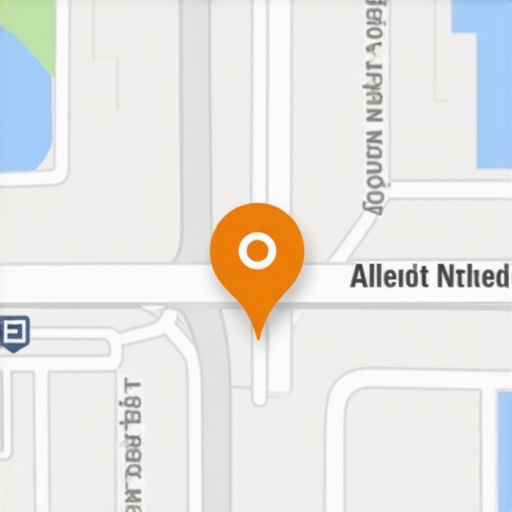
The Blueprint for Reclaiming Your Local Presence
Shrink Your Service Area to Boost Your Relevance
To get started, open your dashboard and look at your “Service Areas.” If you see a list of twenty counties, you’re likely hurting your own chances of a local listing win. Google needs to see a tight connection between your verified address and the people you serve. If you are a service-based business without a physical storefront, this is even more critical. You aren’t losing out on customers by being specific; you are gaining the trust of the algorithm. This is a fundamental step in how to optimize your profile for a local listing win. Remove any areas you can’t reach in thirty minutes. It feels counterintuitive, but specificity is the fuel for better map pack placement.
Pick the One Label That Actually Defines Your Income
The next lever is your Primary Category. This is the single most important piece of metadata on your profile. I’ve seen businesses pick “Consultant” when they are actually “Real Estate Agents,” thinking it sounds more professional. This is exactly why your primary category is destroying your map pack placement. Google uses this label to decide which “bucket” to put you in. If you’re in the wrong bucket, you’ll never show up when a customer types in a specific service. I once audited a boutique gym that had “Wellness Center” as their primary category. They were frustrated because they weren’t showing up for “personal training.” Once we swapped it to “Personal Trainer,” their visibility for that high-intent keyword skyrocketed. But don’t stop there. You can how to use secondary categories for better local pack visibility to capture the “Wellness” crowd without confusing the system about your main business.
Clean Up the Technical Clutter
Finally, you must address the ghosts in the machine. Duplicate listings are like static on a radio station; they make it impossible for Google to hear your “signal” clearly. Learning how to handle duplicate listings for better map pack placement is a non-negotiable part of the process. If there is another version of your business floating around with an old phone number or a slightly different name, Google gets nervous and lowers your authority. You need one source of truth to ensure long-term map pack success. Every small adjustment here acts as a multiplier for your overall local listing win strategy.But here is where things get interesting. Most business owners stop at the dashboard, thinking they’ve finished the job once the categories are set. That’s a mistake. If you want to truly dominate, you have to look at the data points that aren’t visible to the naked eye. While everyone else is obsessing over their average star rating, the real experts are looking at the semantics inside those reviews. I have seen profiles with a 4.2-star rating consistently outrank competitors with a perfect 5.0 simply because their customers used specific service-related keywords in their feedback. This is the relationship between review keywords and visibility in action. Google isn’t just counting stars; it’s reading the narrative of your business to see if you actually solve the searcher’s problem.
Go Beyond the Stars to See Why Review Text Wins
Conventional wisdom says you just need ‘more reviews.’ I disagree. I’ve helped businesses slow down their review requests to focus on quality over quantity, and their rankings went up. This is because why map pack success requires more than just good reviews—it requires context. If your customers are just leaving five stars with no text, you’re missing out on vital ranking signals. Encourage them to mention the specific service they received. This shift in strategy is a core part of 3 advanced map pack placement techniques for dense cities where competition is so fierce that basic profile completion isn’t enough to get you noticed.
#IMAGE_PLACE_HOLDER_C#
Stop Stuffing Keywords Into Your Business Name
There is a massive trap waiting for you: the temptation to rename your business ‘Best Plumber [City Name]’ on your profile. Yes, it might give you a temporary boost in map pack placement, but it is a violation of Google’s Terms of Service. I’ve watched multi-million dollar companies lose their entire local presence overnight because a competitor reported their keyword-stuffed name. Understanding why your business name affects your local listing win is about balancing short-term gains with long-term stability. If your legal name doesn’t have the keyword, don’t force it. The risk of suspension far outweighs the marginal ranking benefit.
Does your website speed actually change your map position?
This is a question I get from sophisticated clients all the time. They assume the map and the website are two different worlds. They are wrong. According to the 2024 Whitespark Local Search Ranking Factors survey, on-page signals are a primary driver of map visibility. This is why your map pack success is linked to website speed and mobile responsiveness. If a user clicks from your map listing to your site and it takes five seconds to load, they bounce back to the search results. Google tracks this behavior. A high bounce rate tells the algorithm that you weren’t a good match, and your local pack improvement efforts will stall out. You need to view your website as the anchor that holds your map pin in place. Without a fast, optimized site, your profile is just floating in the wind. Have you ever fallen into the trap of ignoring your website while focusing solely on your map profile? Let me know in the comments.
I used to think that checking my own rank while sitting in my office was enough. It wasn’t. To truly understand your visibility, you need to see the “ranking dead zones” that are invisible from your desk. This is why I rely on grid tracking tools like Local Falcon. Instead of a single ranking number, it gives me a birds-eye view of how I perform every half-mile. If you want to learn how to monitor your map pack placement progress effectively, you have to stop looking at a single data point and start looking at the geography of your leads. #IMAGE_PLACE_HOLDER_D#
How do I keep my map rankings from dropping over time?
The biggest mistake business owners make is thinking they’ve “won” once they hit the top three. The map is dynamic. Competitors are constantly optimizing, and Google’s algorithm is always shifting. I’ve found that the 5-minute daily routine for map pack success is what separates the flashes-in-the-pan from the long-term leaders. You need to keep your “signal” fresh. This means responding to reviews within 24 hours and posting weekly updates to your profile. I also pay close attention to my “velocity.” If your competitors are getting five reviews a week and you’re getting one a month, you’re going to slide. This is why review velocity is your secret weapon for map pack success. You don’t need a hundred reviews overnight; you need a steady, predictable heartbeat of new data.
The secret to scaling when you hit a ceiling
Once you’ve dominated your immediate neighborhood, the next challenge is expanding your reach. I often get asked how to scale map pack success across multiple service areas without getting flagged for spam. The answer lies in local authority. You can’t just tell Google you’re relevant in the next town over; you have to prove it through localized content on your website that links back to your map profile. As Joy Hawkins from Sterling Sky often points out, the “Vicinity Update” made it harder for businesses to rank far from their physical pin, so your on-page SEO has to work twice as hard to bridge that gap. This is where the factors behind consistent map pack placement shift from just profile settings to true brand authority.
Why your future success depends on AI-driven search trends
Looking ahead, the map isn’t just going to be a list of names; it’s going to be a recommendation engine powered by AI. We are already seeing “Search Generative Experience” (SGE) pulling data from your profile to answer complex questions. If your profile is thin, you won’t even be in the conversation. This makes why consistency is the most underrated factor for map pack placement even more vital. If your hours or services are inconsistent across the web, AI models will flag you as “unreliable” and stop recommending you. Run a grid search today. Find one neighborhood where you are ranked #4 or #5—just outside the pack—and focus your next three client reviews on that specific area. It’s the fastest way to turn a “near miss” into a phone call.I spent six months chasing my tail, obsessing over keywords and begging every customer for a five-star review. I was convinced I had cracked the code. Then, one Tuesday afternoon, I sat in a coffee shop just three blocks from my office and searched for my own services. I didn’t even show up on the first three pages of the map. My heart sank. I was doing everything “right,” yet I was getting beat by a competitor who hadn’t updated their profile since 2019. It was a brutal wake-up call that forced me to dig deeper than the standard “best practices” everyone parrots online. I realized I had missed a foundational setting that was telling Google I didn’t actually serve the people standing right in front of me.
The Mistake I Made That Kept My Business Invisible
I used to think that more was always better. I checked every box, filled in every service area, and selected as many categories as I could find. I thought I was being thorough, but I was actually confusing the algorithm. This is a classic hurdle for anyone looking for local pack improvement. By trying to be everywhere, I ended up being nowhere. It turns out that Google’s proximity and relevance filters are incredibly sensitive to how you define your Service Area.
Early on, I set my service radius way too wide. I thought, “Hey, I’m willing to drive 50 miles for a client!” But Google saw that 50-mile radius and compared it to my tiny home office. The lack of focus signaled that I wasn’t a local authority anywhere. If you’ve ever wondered why your service areas affect your map pack placement, this is exactly it. You have to be realistic about where your “boots on the ground” actually are. According to an industry survey by BrightLocal, proximity remains a top-tier ranking factor, and muddling that data with over-ambitious service areas is a recipe for a ranking disaster.
Is fixing this one setting actually worth the effort?
I know what you’re thinking. “It’s just a few checkmarks, how much could it possibly matter?” I thought the same thing until I finally sat down to learn how to audit your own google business profile in under 10 minutes and saw the mess I’d created. Once I tightened my service boundaries to reflect where my customers actually lived, my visibility spiked within weeks. We aren’t just talking about a minor bump; this was a genuine local listing win that changed my monthly lead flow.
The goal today is to stop the bleeding. I want to help you achieve the kind of map pack success that feels earned, not accidental. We’re going to look at the Service Area and Primary Category settings through a lens of brutal honesty. Have you ever felt like you’re doing everything the experts say, but your phone still isn’t ringing? You aren’t alone, and it’s usually because of this one overlooked corner of your dashboard.
The first thing you need to realize is that Google acts like a hyper-efficient librarian. If you tell that librarian you are an expert in everything from plumbing to rocket science, they won’t trust you with either. You have to be specific. To start, you need to understand that why your physical distance is the biggest map pack placement factor isn’t just a theory; it’s the core of the algorithm. If your service area is set to a 50-mile radius but your office is in a crowded suburb, Google assumes your relevance fades the further you get from that pin. Think of your business profile like a lighthouse. If you try to shine a tiny bulb in every direction, the light becomes so faint it can’t be seen by anyone. But if you focus that beam on a specific harbor, it’s blindingly bright. I learned this the hard way with a landscaping client in Jersey. He had his service area set to cover three entire states because he “didn’t want to miss a lead.” He was invisible in his own town. As soon as we learned how to fix your profile for map pack success and restricted his area to just the twelve surrounding zip codes, his “lighthouse” finally cut through the fog. Within ten days, he was in the top three for his most profitable keywords.
The Blueprint for Reclaiming Your Local Presence
Shrink Your Service Area to Boost Your Relevance
To get started, open your dashboard and look at your “Service Areas.” If you see a list of twenty counties, you’re likely hurting your own chances of a local listing win. Google needs to see a tight connection between your verified address and the people you serve. If you are a service-based business without a physical storefront, this is even more critical. You aren’t losing out on customers by being specific; you are gaining the trust of the algorithm. This is a fundamental step in how to optimize your profile for a local listing win. Remove any areas you can’t reach in thirty minutes. It feels counterintuitive, but specificity is the fuel for better map pack placement.
Pick the One Label That Actually Defines Your Income
The next lever is your Primary Category. This is the single most important piece of metadata on your profile. I’ve seen businesses pick “Consultant” when they are actually “Real Estate Agents,” thinking it sounds more professional. This is exactly why your primary category is destroying your map pack placement. Google uses this label to decide which “bucket” to put you in. If you’re in the wrong bucket, you’ll never show up when a customer types in a specific service. I once audited a boutique gym that had “Wellness Center” as their primary category. They were frustrated because they weren’t showing up for “personal training.” Once we swapped it to “Personal Trainer,” their visibility for that high-intent keyword skyrocketed. But don’t stop there. You can how to use secondary categories for better local pack visibility to capture the “Wellness” crowd without confusing the system about your main business.
Clean Up the Technical Clutter
Finally, you must address the ghosts in the machine. Duplicate listings are like static on a radio station; they make it impossible for Google to hear your “signal” clearly. Learning how to handle duplicate listings for better map pack placement is a non-negotiable part of the process. If there is another version of your business floating around with an old phone number or a slightly different name, Google gets nervous and lowers your authority. You need one source of truth to ensure long-term map pack success. Every small adjustment here acts as a multiplier for your overall local listing win strategy.But here is where things get interesting. Most business owners stop at the dashboard, thinking they’ve finished the job once the categories are set. That’s a mistake. If you want to truly dominate, you have to look at the data points that aren’t visible to the naked eye. While everyone else is obsessing over their average star rating, the real experts are looking at the semantics inside those reviews. I have seen profiles with a 4.2-star rating consistently outrank competitors with a perfect 5.0 simply because their customers used specific service-related keywords in their feedback. This is the relationship between review keywords and visibility in action. Google isn’t just counting stars; it’s reading the narrative of your business to see if you actually solve the searcher’s problem.
Go Beyond the Stars to See Why Review Text Wins
Conventional wisdom says you just need ‘more reviews.’ I disagree. I’ve helped businesses slow down their review requests to focus on quality over quantity, and their rankings went up. This is because why map pack success requires more than just good reviews—it requires context. If your customers are just leaving five stars with no text, you’re missing out on vital ranking signals. Encourage them to mention the specific service they received. This shift in strategy is a core part of 3 advanced map pack placement techniques for dense cities where competition is so fierce that basic profile completion isn’t enough to get you noticed.
#IMAGE_PLACE_HOLDER_C#
Stop Stuffing Keywords Into Your Business Name
There is a massive trap waiting for you: the temptation to rename your business ‘Best Plumber [City Name]’ on your profile. Yes, it might give you a temporary boost in map pack placement, but it is a violation of Google’s Terms of Service. I’ve watched multi-million dollar companies lose their entire local presence overnight because a competitor reported their keyword-stuffed name. Understanding why your business name affects your local listing win is about balancing short-term gains with long-term stability. If your legal name doesn’t have the keyword, don’t force it. The risk of suspension far outweighs the marginal ranking benefit.
Does your website speed actually change your map position?
This is a question I get from sophisticated clients all the time. They assume the map and the website are two different worlds. They are wrong. According to the 2024 Whitespark Local Search Ranking Factors survey, on-page signals are a primary driver of map visibility. This is why your map pack success is linked to website speed and mobile responsiveness. If a user clicks from your map listing to your site and it takes five seconds to load, they bounce back to the search results. Google tracks this behavior. A high bounce rate tells the algorithm that you weren’t a good match, and your local pack improvement efforts will stall out. You need to view your website as the anchor that holds your map pin in place. Without a fast, optimized site, your profile is just floating in the wind. Have you ever fallen into the trap of ignoring your website while focusing solely on your map profile? Let me know in the comments.
I used to think that checking my own rank while sitting in my office was enough. It wasn’t. To truly understand your visibility, you need to see the “ranking dead zones” that are invisible from your desk. This is why I rely on grid tracking tools like Local Falcon. Instead of a single ranking number, it gives me a birds-eye view of how I perform every half-mile. If you want to learn how to monitor your map pack placement progress effectively, you have to stop looking at a single data point and start looking at the geography of your leads. #IMAGE_PLACE_HOLDER_D#
How do I keep my map rankings from dropping over time?
The biggest mistake business owners make is thinking they’ve “won” once they hit the top three. The map is dynamic. Competitors are constantly optimizing, and Google’s algorithm is always shifting. I’ve found that the 5-minute daily routine for map pack success is what separates the flashes-in-the-pan from the long-term leaders. You need to keep your “signal” fresh. This means responding to reviews within 24 hours and posting weekly updates to your profile. I also pay close attention to my “velocity.” If your competitors are getting five reviews a week and you’re getting one a month, you’re going to slide. This is why review velocity is your secret weapon for map pack success. You don’t need a hundred reviews overnight; you need a steady, predictable heartbeat of new data.
The secret to scaling when you hit a ceiling
Once you’ve dominated your immediate neighborhood, the next challenge is expanding your reach. I often get asked how to scale map pack success across multiple service areas without getting flagged for spam. The answer lies in local authority. You can’t just tell Google you’re relevant in the next town over; you have to prove it through localized content on your website that links back to your map profile. As Joy Hawkins from Sterling Sky often points out, the “Vicinity Update” made it harder for businesses to rank far from their physical pin, so your on-page SEO has to work twice as hard to bridge that gap. This is where the factors behind consistent map pack placement shift from just profile settings to true brand authority.
Why your future success depends on AI-driven search trends
Looking ahead, the map isn’t just going to be a list of names; it’s going to be a recommendation engine powered by AI. We are already seeing “Search Generative Experience” (SGE) pulling data from your profile to answer complex questions. If your profile is thin, you won’t even be in the conversation. This makes why consistency is the most underrated factor for map pack placement even more vital. If your hours or services are inconsistent across the web, AI models will flag you as “unreliable” and stop recommending you. Run a grid search today. Find one neighborhood where you are ranked #4 or #5—just outside the pack—and focus your next three client reviews on that specific area. It’s the fastest way to turn a “near miss” into a phone call.
The Unspoken Realities of Climbing the Maps Pack
One thing I wish someone had told me early on is that the only way to guarantee long-term local pack improvement is to stop treating your profile like a static advertisement and start treating it like a living community bulletin board. Google values consistency over sudden spikes; a burst of reviews in a single weekend often looks like spam, whereas a steady flow signals a thriving business. Your hidden technical signals matter just as much as your public ones. If you’ve ever wondered how your business logo affects your local pack visibility, imagine the damage an outdated phone number can do across the web. The algorithm has a long memory, and if you try to take shortcuts, you might find that the reason your business stopped showing up in local business maps is a permanent trust penalty that is incredibly hard to reverse.
My Go-To Arsenal for Local Dominance
To stay ahead of the curve, I rely on a select group of tools and resources. I use Local Falcon to visualize geographical ranking shifts and Whitespark for cleaning up citations. I also frequently revisit the simple checklist for local pack improvement to ensure my basic profile hygiene is never neglected. For the most up-to-date algorithm changes, I trust industry leaders like Joy Hawkins and the team at Sterling Sky who run real-world tests rather than just speculating.
#IMAGE_PLACEHOLDER_WRAPUP#
Stop Overthinking and Start Taking Up Space
You don’t need to be a technical genius to follow your blueprint to map pack success in 2025. You simply need to be more present, more accurate, and more helpful than the competitor down the street. Local business maps are essentially a high-tech way for neighbors to find solutions, and when you focus on that local experience, the map pack placement and the leads that follow will align. Don’t let perfectionism stall your progress; go update your hours, respond to that review, and claim the local listing win you’ve earned. What’s the biggest hurdle you’ve faced while trying to move your pin up just one more spot? Let me know in the comments below!