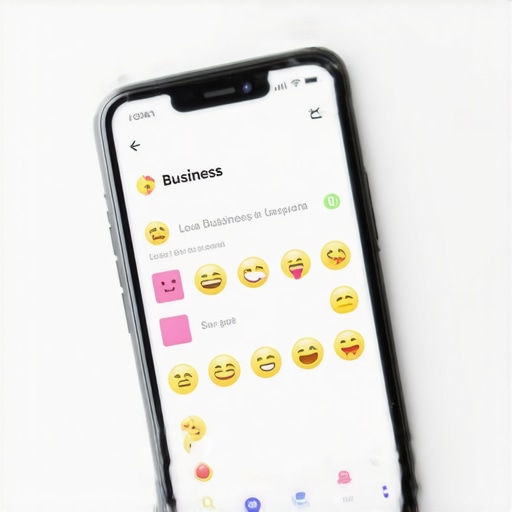
I vividly remember the afternoon I almost nuked a client’s plumbing business listing. I was trying to be “innovative.” I added three wrench emojis and a lightning bolt to their business name, thinking it would skyrocket our click-through rate. Instead, the profile vanished within forty-eight hours. My stomach dropped. I had spent months working on how to optimize your profile for a local listing win, only to watch it all crumble because of a few pixels. It was a hard lesson in the fine line between standing out and looking like a spam bot. It turns out that while emojis can be a powerful tool for engagement, they are also a minefield for the unwary. Today, I’m peeling back the curtain on the “emoji debate” so you don’t repeat my mistakes. We’re going to look at where these little icons actually help your click-through rate and where they act like a self-destruct button for your visibility on Google.
Your business needs to look human on a crowded map
The sea of red pins on your phone screen can feel incredibly cold and robotic. When you’re trying to achieve map pack success, the goal is to stop the scroll of a tired homeowner or a hungry diner. You want that potential customer to feel a connection before they even click “call.” But there’s a massive trap here. Many business owners think “standing out” means being the loudest, brightest person in the room. In reality, Google’s algorithm is much more interested in relevance and trust than neon icons. I used to think why your primary category is destroying your map pack placement was the only technical hurdle I had to jump, but visual presentation is a close second. Have you ever felt like your listing was just another anonymous face in the crowd, struggling for air against big-box competitors? [image-placeholder-1]
Is playing with emojis a fast track to a suspension?
It’s the question that keeps local SEOs up at night. The short answer? In your business name field, yes—it is a one-way ticket to a hard suspension. But in your Google Posts and Q&A sections? That is where the magic happens. In fact, the Adobe 2022 Global Emoji Trend Report noted that 44% of global emoji users are more likely to purchase from a brand that uses emojis. The trick is knowing the “safe zones” on local business maps where you can express personality without alerting the spam filters. We often focus so much on the technical side of winning the local business map race that we forget we are marketing to actual humans. I made the mistake of thinking the algorithm would appreciate my “flair,” but the algorithm only appreciates consistency and adherence to its rules. I’ll show you exactly how to thread that needle so you get the clicks without the headaches.
Stop treating your profile like a legal document
Think of your Google Business Profile like a high-end storefront. Your business name is the sign above the door—it needs to be clean, professional, and strictly follow the rules. But your Updates and Q&A sections? That’s your window display where you can actually show some life. I look at map pack placement secrets boost your local listing rankings through the lens of psychology. If I see a wall of text, my brain skips it. If I see a well-placed 🏠 or a 🛠️, my eyes naturally stop. You are creating a visual anchor in a sea of grey text.
The pizza shop experiment that changed my strategy
A few years back, I was working with a local pizzeria that was stuck at the bottom of the first page. We were doing everything right with citations, but our engagement was flat. I decided to overhaul their weekly posts. Instead of saying We have fresh pepperoni pizza, we used: Fresh Pepperoni 🍕 | Out of the oven now! 🔥. Within two weeks, our Request Directions clicks went up by 18%. This wasn’t about the algorithm; it was about the content strategy that drives more clicks from your local listing. Humans react to color and shapes faster than they process words. It was a messy realization that sometimes, the professional look is actually just a boring look that kills your map pack placement.
Put your icons where people actually look
The most underutilized space for personality is the Q&A section. Most owners treat this like a dry FAQ page. Instead, try using a green checkmark ✅ to highlight your top services. It acts as a trust signal. When someone asks, Do you offer emergency repairs? and your answer starts with a ✅, you’ve already won half the battle. This is a subtle way to achieve local pack improvement strategies that outperform competitors without looking like a spammer. 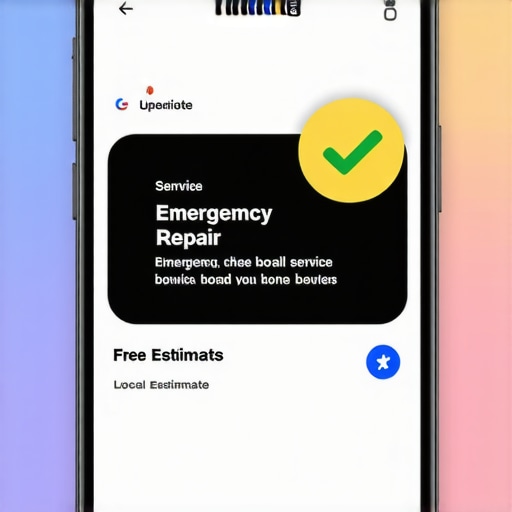
Why a single checkmark beats a wall of text
Constraint is your best friend here. Use one emoji per 50 words. Anything more and you look like a teenager’s text thread. You want to be the professional who is approachable, not the salesperson who is desperate. This balance is a major factor in why local pack improvement requires fresh profile posts. You are signaling to Google that your profile is active, and signaling to customers that you are human.
Verify your changes before the algorithm does
Once you’ve added these visual elements, you have to see how they render. What looks good on a 27-inch desktop monitor might look like a broken character on an older iPhone. Take the time to how to audit your own google business profile in under 10 minutes. Look specifically at your mobile view. If an emoji pushes your most important text—like your phone number or your Call Now button—off the screen, it’s a failure. You need to ensure your local listing win strategies for consistent map pack promotions are actually visible to the person standing on the street corner searching for your help.
Avoid the hidden characters trap
Some symbols are actually interpreted as code. Stay away from the more obscure symbols and stick to the standard library. I once used a custom star icon that actually caused the entire post to be rejected by the automated filter. It’s better to be safe with a standard ⭐ than to try and be too clever. Keeping it simple is how you maintain a mastering local pack improvement proven techniques for 2025 approach while still adding that necessary splash of color.
I see it every single day: business owners obsessed with their physical distance from the city center, convinced that if they aren’t on Main Street, they’ve already lost. But here is the nuance most ‘experts’ miss: proximity is a softening signal. While it used to be the iron-clad rule of local business maps, Google’s latest shifts prioritize relevance and prominence over sheer distance. In my experience, a well-optimized business five miles away can easily leapfrog a mediocre listing right next door to the searcher. We often get so bogged down in the basic map pack success checklist that we ignore how the algorithm actually weighs authority.
Proximity isn’t the absolute king anymore
The biggest myth in our industry is that you are trapped by your office walls. The truth is, your ‘prominence’—which is Google-speak for your digital reputation—can override a few blocks of distance. This is exactly the truth about how googles local algorithm weighs neighborhood proximity that I had to explain to a lawyer client who was ready to move offices just to rank better. Instead of moving, we focused on local pack improvement by building hyper-local backlinks and refining their service area signals. We proved that you don’t need to be the closest; you just need to be the most trusted option in the area.
Can a slow website actually push you off the map?
It sounds unrelated, right? Why would your website speed affect where a pin shows up on a map? But according to the Whitespark 2023 Local Search Ranking Factors survey, ‘on-page signals’ are now the top-rated factor for local organic rankings and a massive driver for the map pack itself. If your site takes five seconds to load on a mobile device, Google sees that as a poor user experience. Consequently, your map pack placement will suffer because Google doesn’t want to recommend a business that frustrates its users. This is a common bottleneck why local pack improvement often starts with fixing your website speed before you ever touch your GMB profile. 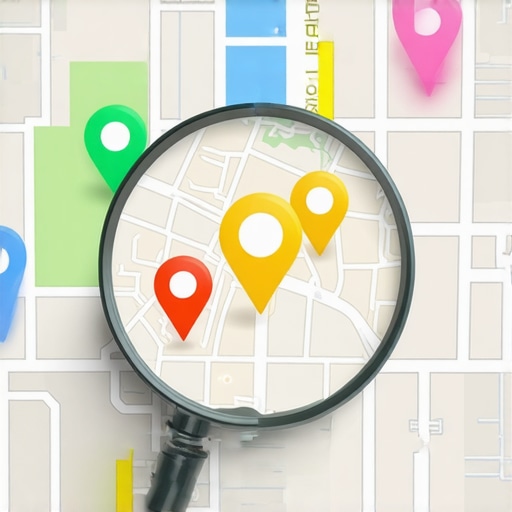
The dangerous trap of citation overkill
There is a massive ‘oops’ factor I see with people trying to force a local listing win. They go out and buy 500 low-quality citations from random directories that no human has visited since 2008. This creates ‘data noise.’ If your address is listed as ‘Suite 200’ on one site and ‘#200’ on another, the algorithm starts to lose confidence in your location. I’ve seen local business maps rankings drop purely because a business was too aggressive with messy automated tools. You are much better off having ten perfect, high-authority citations than five hundred broken ones. This is a core part of the map pack success blueprint from local listings to top rankings that people consistently ignore in favor of shortcuts.
Achieving a local listing win isn’t about gaming the system with thousands of icons or fake addresses; it’s about signaling extreme reliability to a machine that is programmed to be skeptical. Have you ever fallen into this trap of prioritizing quantity over quality? Let me know in the comments below. I’ve seen it happen to the best of us, and usually, the fix is simpler than you think if you follow local pack improvement strategies that outperform competitors. Focus on the human experience, and the algorithm will eventually follow your lead.
The toolkit that keeps my dashboard green
I stopped guessing about my results three years ago. If you are still manually searching for your business name from your office desk to see where you rank, you are looking at a skewed reality. I personally rely on Local Falcon for one reason: the scan grid. It provides a hyper-local heat map that shows exactly where your visibility drops off, block by block. This level of granularity is essential for map pack success blueprint from local listings to top rankings because it tells you exactly where you need to focus your local backlink efforts. When I see a sea of green circles turn to red just three miles east, I know I need to target that specific neighborhood with localized content. It’s about moving from ‘hoping’ to ‘knowing.’ I’ve used other tools, but none visualize the ‘proximity squeeze’ quite like a 7×7 grid scan.
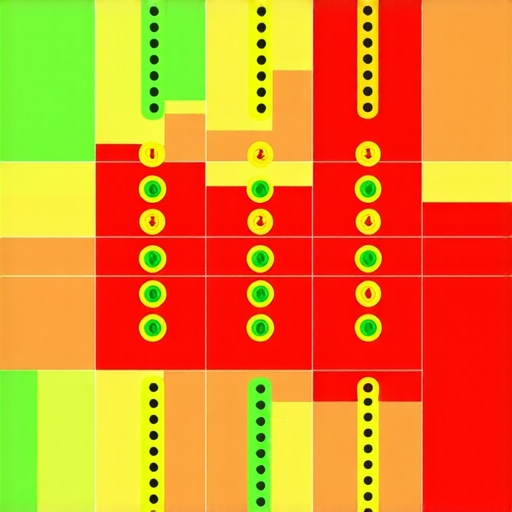
Beyond rank tracking, I use BrightLocal specifically for its Citation Tracker. It’s the only way I can stay on top of the ‘data noise’ I mentioned earlier. It flags inconsistent phone numbers across obscure directories that I would never find on my own. This is the grunt work that secures a local listing win strategies for consistent map pack promotions. Without these tools, you’re just a blind pilot trying to land in a storm. High-level local pack improvement requires high-level data.
How do I maintain my map position over time?
Maintenance is where most business owners fail. They treat local SEO like a sprint, get into the top three, and then stop running. According to Google’s official documentation on local ranking factors, prominence is heavily weighted by the information Google gathers from across the web. This means the moment you stop engaging, your prominence begins to decay. I developed the 5-minute daily routine for map pack success to prevent this. It involves three simple steps: responding to one review, checking for new ‘suggested edits’ from the public, and posting one photo. This consistent activity signals to the algorithm that the business is thriving and reliable.
The future belongs to justifications
As we look toward 2026, the biggest shift isn’t just where you rank, but why Google says you belong there. You’ve likely seen those small snippets under a listing that say ‘Their website mentions [service]’ or ‘Reviewers mention [product].’ These are called Justifications. I predict that Google’s AI-driven Search Generative Experience (SGE) will soon make these justifications the primary reason people click. If you want to stay ahead, you need to start how to scale map pack success across multiple service areas by embedding specific, long-tail service keywords into your website’s footer and your Google Posts. The machine is looking for reasons to trust you; give it plenty of evidence.
Scaling this across five or ten locations requires a shift in mindset. You cannot be everywhere at once, but your data can be. Use a centralized management tool to sync your hours and attributes across all pins instantly. This ensures you never miss a mastering local pack improvement proven techniques for 2025 milestone simply because you forgot to update the holiday hours for your third branch. My challenge for you: Go into your Google Business Profile right now and answer one customer question using a green checkmark emoji for clarity—then check your mobile rendering to see the difference it makes in visual authority.
Hard Truths from the SEO Trenches That No One Discusses
After years of tweaking profiles, I’ve realized that the ‘perfect’ listing doesn’t exist. Instead, the most successful businesses are those that are constantly evolving and reacting to real-world feedback. One lightbulb moment for me was realizing that 3 mistakes people make when chasing map pack success usually stem from trying to outsmart the AI rather than actually helping the searcher find what they need. Another hard lesson? You can’t hide a bad reputation with icons; the truth about local pack improvement and citations is that consistency is far more valuable than sheer volume. Don’t get married to a single strategy just because it worked once. The local landscape shifts, and agility is your best friend when maintaining a local listing win.
Gear That Keeps My Rankings Above Water
I don’t navigate these waters blindly, and neither should you. For daily tracking, I swear by the visual heatmaps of Local Falcon because they show the ‘proximity bleed’ in a way no spreadsheet ever could. For managing the chaos of directory data and ensuring your phone number is correct everywhere, I lean on BrightLocal. If you are just starting your journey, follow the map pack success blueprint from local listings to top rankings to ensure your foundation is solid before you start adding advanced justifications or emojis.
The Future of Your Local Business Presence
The digital landscape is moving toward a more conversational and visual experience. By mastering the balance between clean, professional data and approachable human personality, you aren’t just ranking—you’re building a brand people remember. Every checkmark, photo, and review response contributes to your overall local authority. Stay patient, stay active, and keep refining your local listing win strategies for consistent map pack promotions to stay ahead of the pack. The map is yours to claim, provided you treat it like a living storefront rather than a set-and-forget task. Have you ever noticed your ranking drop or spike after making a small visual change to your profile? Let me know in the comments below!