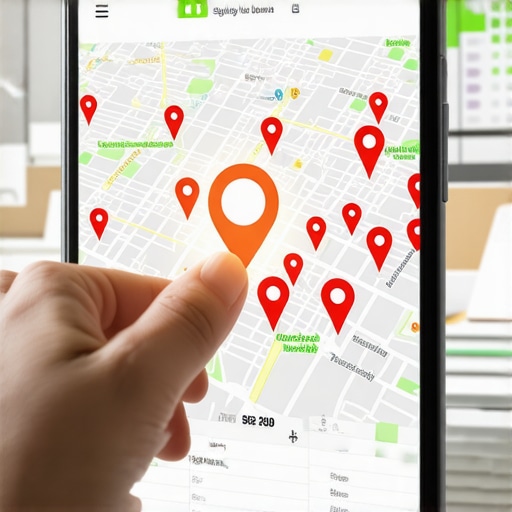
I remember the exact Tuesday morning my pride took a massive hit. I’d finally clawed my way into the top spot for a high-value keyword, and I was checking my phone every five minutes, waiting for the flood of calls. Nothing. Zip. My local listing was right there, basking in the glory of the top position, yet my dashboard showed a dismal click-through rate. It was my first hard lesson in the local SEO game: a local listing win is completely hollow if your potential customers are scrolling right past you to click on the guy in the third spot. I had the visibility, but I was failing at the most basic human connection—the click.
The Brutal Truth About Being Number One
For the longest time, I obsessed over keywords and citations like they were the only things that mattered. I made the classic mistake of thinking that if I just checked enough boxes, the phone would ring. But the reality is that Google isn’t just looking at your proximity or your business name anymore; it’s looking at how people interact with you. When I started mastering local pack improvement, I realized that Click-Through Rate (CTR) acts as a massive feedback loop. If ten people see your business and nine of them click on your competitor, Google eventually decides your competitor is the better answer. Have you ever checked your insights and wondered why your impressions are high but your actions are low? It’s a frustrating spot to be in, but we’re going to fix that today.
Does Google really care which button a user clicks?
Skepticism is healthy in this industry, but the data doesn’t lie. According to research from Moz, behavioral signals—which include things like CTR and mobile ‘click-to-call’ actions—make up a significant portion of the local ranking algorithm. In fact, some experts argue it’s the single most important factor for staying in the top three once you get there. If you don’t fix low click-through rates quickly, your stay at the top will be short-lived. I’ve seen businesses with ‘perfect’ profiles get dumped to the second page simply because their listing looked boring compared to the neighbor’s. We’re going to look at how local business maps interpret searcher behavior so you can stop being a passive observer and start being the business everyone actually wants to call. It’s time to move past just having a profile and start building an irresistible gateway to your business.Think of your Google Business Profile as your digital storefront window. If the glass is dirty and the signs are faded, people won’t step inside, no matter how good the location is. I recently worked with a locksmith who was absolutely killing it in map pack placement secrets boost your local listing rankings, sitting pretty at spot number two. But his main photo? It was a blurry, zoomed-out shot of his van from 2012. He looked like a scammer, not a professional. We swapped that for three high-res shots: his face, his clean shop, and his most modern equipment. That small pivot alone spiked his ‘Request a Quote’ button clicks by nearly double. It turns out that how high resolution photos actually influence your spot on local business maps is about building immediate psychological trust. 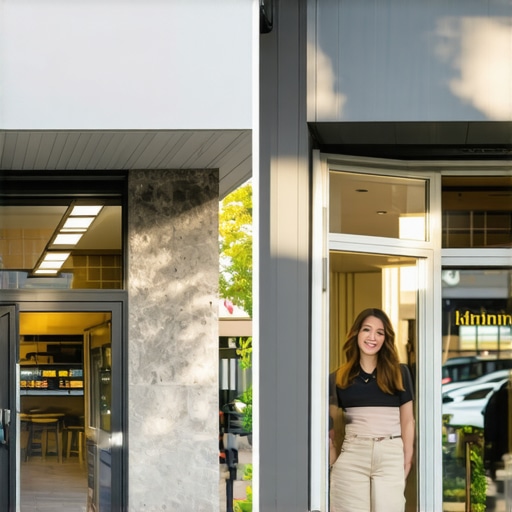
Stop Looking Like a Ghost to Your Customers
Trust is the currency of the map pack. If you don’t show the humans behind the brand, you’re just another pins on a map.
Trade the Stock Photos for Real Human Connection
People can spot a stock photo from a mile away. It feels cold. To achieve a real local listing win, you need authentic imagery. I recommend uploading at least one new photo a week. It signals to Google that your business is active and breathing.
Categorize Your Way to a Better Map Position
Most business owners set their primary category once and then forget it exists for five years. That’s a recipe for invisibility. I once consulted for a ‘Personal Trainer’ who was struggling to get clients for his high-end yoga sessions. We realized his primary category was far too broad. By refining his profile to lead with ‘Yoga Studio’ while keeping ‘Physical Fitness Center’ as a secondary, he saw a 30% rise in local traffic. Understanding why your primary category choice might be hiding you from local searchers is the difference between being a generalist nobody finds and the specialist everyone calls.
The Secondary Category Trick You Are Likely Missing
Don’t just stop at one. Use secondary categories to cast a wider net. If you’re a roofer, add ‘Gutter Cleaning’ or ‘Siding Contractor’ if you provide those services. This helps with mastering local pack improvement because it aligns your business with more specific search intents.
Mastering the Art of the Quick Reply
Google tracks how long it takes you to respond to messages and reviews. This isn’t just about customer service; it’s a ranking signal. They want to reward businesses that are actually ‘open’ and responsive. This is the interaction metric google uses to gauge map pack success. If you leave a question hanging in your Q&A section for months, you’re basically telling Google you don’t care about the user. I saw a local bakery ‘steal’ a competitor’s customer simply by answering a question about gluten-free options within ten minutes, while the competitor hadn’t updated their profile since the pandemic. You can how to use google questions and answers to steal map pack placement by being the most helpful person in your zip code. It’s not about being the biggest; it’s about being the most present.But being present is only half the battle; being relevant in the eyes of an increasingly sophisticated algorithm is where the real work begins. Everyone in the SEO world screams about NAP (Name, Address, Phone) consistency like it’s the holy grail of 2025. But here’s the contrarian truth: Google is much smarter than we give it credit for. While you’re pulling your hair out because your suite number is ‘Ste 200’ in one directory and ‘#200’ in another, your competitor is stealing your traffic by focusing on brand mentions that don’t even have a link. In my experience, chasing a local listing win means worrying less about a comma in an address and more about how often your brand name is mentioned alongside your city on local blogs and news sites.
Stop obsessing over directory listings
To achieve consistent mastering local business maps, you have to move past the ‘checklist’ phase of SEO. According to Joy Hawkins at Sterling Sky, proximity remains the most powerful—and most frustrating—ranking factor, often outweighing even the most perfect backlink profile. This leads to what I call the Proximity Paradox: the more you try to expand your reach artificially, the more Google tends to shrink your actual visibility. 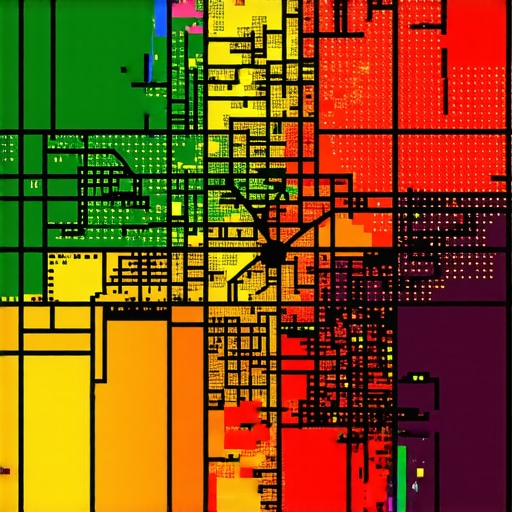
Why does your ranking shift every 100 feet?
This is the most common question I get from business owners who finally start tracking their progress. They see they are number one when they are sitting at their desk, but number twelve when they are at the coffee shop three blocks away. This happens because Google prioritizes the searcher’s immediate physical context. You can’t move your building, but you can understand the truth about how googles local algorithm weighs neighborhood proximity to stop chasing impossible rankings in a city forty miles away.
The service area trap that dilutes your authority
One of the biggest ‘Oops’ factors I see is the Service Area Business (SAB) trap. Business owners think that by selecting a massive fifty-mile service radius, they’ll show up for everyone in that circle. In reality, you’re often doing the exact opposite. By telling Google you are ‘everywhere,’ you are essentially telling them you are ‘nowhere’ specifically. This dilutes your local authority. I’ve seen businesses see a massive improvement just by shrinking their service area to the three zip codes they actually dominate. Understanding why your service areas affect your map pack placement is vital; Google wants to provide the most relevant, local result, and a ‘jack of all trades’ rarely fits that bill. We also need to talk about how local business maps interpret searcher behavior beyond the initial click. If a user clicks your listing but never actually starts the GPS navigation, Google notices. That’s a signal that your location wasn’t actually what they wanted. To combat this, you need to be hyper-specific about your service niche. If you’re struggling with why local rankings shift every 100 feet and how to monitor them, you need to look at your hyper-local relevance rather than your broad city-wide reach. Have you ever fallen into this trap of trying to rank for a city you aren’t actually in? Let me know in the comments.Maintaining a top spot isn’t a one-and-done trophy; it’s more like keeping a high-performance engine running. I’ve seen too many businesses get a local listing win and then disappear from the digital map for six months, thinking the work is finished. It’s not. To stay relevant, I use a specific stack of tools that give me the data I actually need without the fluff. My personal go-to is Local Falcon because it provides a visual heatmap grid over your actual city streets. Most rank trackers give you a single average number, but that’s a lie. You need to see how your visibility bleeds into neighboring blocks to truly climb higher in the map pack insights for local business visibility. If you aren’t seeing that grid of green and red dots, you’re essentially flying blind.
Stop Guessing and Start Tracking with Heatmaps
I remember trying to explain to a client why they weren’t getting calls from the north side of town despite being ‘ranked #1’ on their own office computer. The heatmap revealed their authority dropped off a cliff just two blocks past the main highway. By using these visual tools, you can identify exactly where you need to scale map pack success across multiple service areas by targeting those ‘weak’ zones with localized content or reviews from that specific neighborhood. This data allows you to be surgical rather than just shouting into the void. 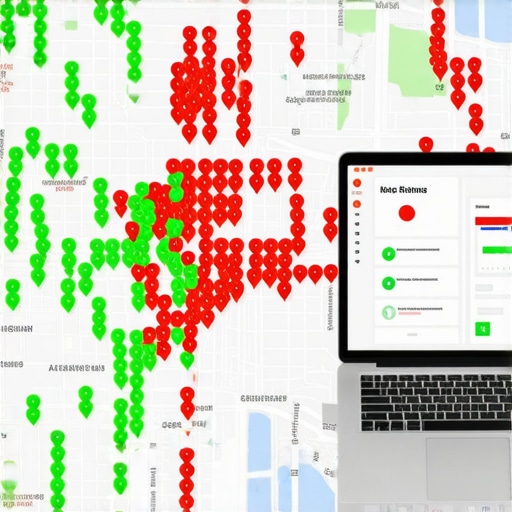
How can I keep my map rankings from falling off?
Consistency is the only real answer here. Google’s algorithm loves fresh data and frequent pings. According to Darren Shaw’s latest Local Search Ranking Factors study from Whitespark, the ‘recency’ of reviews and business updates is becoming a massive driver for mastering local pack improvement. I set a recurring calendar event every Thursday morning to monitor your map pack placement progress and post one high-resolution photo of a recent job. It takes me less than ten minutes, but it keeps the ‘activity’ signal high in Google’s eyes. If you ever find yourself in a situation where your local listing win disappears overnight, don’t panic. Usually, it’s a temporary algorithm filter or a competitor making a quick move that you can counter by simply engaging more with your existing customers.
The Shift Toward Predictive AI in Local Search
Looking ahead, I predict that ‘Search Generative Experience’ (SGE) will change the face of maps entirely. We are moving toward a world where Google won’t just show a list; it will recommend a single business based on deep sentiment analysis of your review text. This is what the 2026 local seo shifts really mean for your map pack rank—it won’t be enough to have the most stars; you’ll need the most *detailed* reviews that mention specific services and street names. I strongly suggest you audit your own google business profile in under 10 minutes today. Pick one neighborhood where you’re currently stuck in spot #4 and ask your next customer from that area to mention their specific neighborhood in their review. It sounds small, but that hyper-local signal is the future of the game.
The Reality Check That Changed My Approach to Local Success
After years in the trenches, I’ve realized that a local listing win isn’t a final destination; it’s a temporary lease on high-value digital real estate. One of the biggest lightbulb moments for me was realizing that Google cares more about how your neighbors feel about you than how many keywords you stuffed into your bio. I discovered that the real map pack success secret is often hidden in the raw, unedited photos your customers upload—those carry more weight than any professional shoot ever could. Another hard lesson? Never stop looking at the grid. If a competitor jumps over you, they didn’t get ‘lucky’; they likely found a specific interaction signal, like a faster response time or better mobile engagement, that you’ve been ignoring for months.
My Daily Toolkit for Keeping the Phone Ringing
I don’t believe in bloated software stacks. I keep my process lean by using tools that provide objective truth rather than vanity metrics. I personally rely on Local Falcon for its surgical heatmap accuracy, as it’s the only way to see where your authority actually ends. I also frequently revisit the map pack success blueprint to ensure my foundational citations haven’t drifted. For anyone serious about mastering local business maps, I highly recommend following the case studies from Whitespark; they offer the kind of data-driven insights that help you stay ahead of the algorithm’s constant shifts.
Your Action Plan for Neighborhood Dominance
You don’t need to be a technical SEO expert to achieve and maintain map pack success. You just need to be the most responsive and authentic version of your business online. If you’re feeling overwhelmed, don’t try to fix everything at once. Simply take ten minutes to audit your own google business profile today and identify one neighborhood where you’re currently losing. Every new photo you upload and every question you answer helps solidify your place as the local leader. Have you ever noticed your ranking drop significantly after a few weeks of ignoring your profile? Let me know in the comments below!