I remember sitting in my home office three years ago, staring at a screen that refused to show my neighbor’s bakery in the top three results. I had done everything the so-called experts said to do. I had filled out the profile, uploaded clear photos, and even got a few local regulars to leave glowing reviews. Yet, when I searched for the best sourdough in our zip code, the bakery was nowhere to be found. It felt like shouting into a void. I realized then that my local pack improvement strategy wasn’t just outdated; it was fundamentally broken. It is a gut-punch when you realize your hard work is completely invisible to the very people walking past your front door every single day.
The Day I Realized My Business Was Invisible to Neighbors
Most of us think that just having a business profile is enough to win. It really isn’t. I spent months chasing generic SEO hacks only to find that Google had moved the goalposts while I wasn’t looking. My biggest mistake early on? I thought I could set it and forget it. I completely ignored why review velocity is your secret weapon and focused on static keywords that didn’t move the needle one inch. According to research by BrightLocal, the local pack receives about 42% of all clicks in local search results, which means if you aren’t in those top three spots, you are essentially fighting for the leftovers.
Is chasing the top 3 actually worth your time?
I totally get the skepticism. You are busy running a real business, not a digital marketing agency. You might wonder if all this tweaking and monitoring is just another digital treadmill that goes nowhere. But here is the truth: being buried on page two is the same as being closed for business in the eyes of a mobile user. When I finally cracked the code and secured a local listing win for that bakery, their phone didn’t just ring—it rang off the hook. That is when I knew why map pack placement is the key to real-world growth. Have you ever looked at your competitors and wondered how on earth they are outranking you with half the effort? Send me a message through the contact page; I would love to hear your biggest frustration with Google Maps.
Why your old map strategy isn’t cutting it anymore
The rules of the game have changed significantly. Proximity still matters, of course, but it is no longer the undisputed king of the hill. Today, Google looks deeply at how people interact with your listing in real-time. If they click to call and then immediately hang up, or if your primary category choice is hiding you from customers, you are losing ground every single hour. I am going to show you exactly how to revive your strategy so you can stop being the best-kept secret in your town. We are moving past the basics and getting into the high-impact moves that actually shift that pin on the map where it belongs.
Fix the infrastructure that actually moves your map pin
To move your business from the shadows into the spotlight, you have to look at your digital foundation like the plumbing of a house—if there is a leak anywhere, the whole system loses pressure. I remember working with a local HVAC technician who was frustrated that his competitors were snagging every emergency call in the county. We performed a 15-minute Google Maps audit and realized he had listed himself as a ‘Construction Company.’ He was technically correct, but he was losing every ‘AC repair’ lead because his primary category was too broad. This is how a simple category change fixed our hidden map listing problem almost overnight.
Stop the category errors that keep you hidden
Your primary category is the single most important signal you send to the algorithm. If you get this wrong, you are essentially telling Google to show your business to the wrong people. I have seen law firms list themselves as ‘Consultants’ and lose 80% of their potential traffic. You need to be hyper-specific. Use secondary categories to catch the outliers, but your primary choice should be the ‘money’ keyword that describes your core service. This is often why your primary category choice might be hiding you from the very people trying to find you.
Build a footprint that Google actually trusts
Google acts like a skeptical investigator; it wants to see the same name, address, and phone number (NAP) across the entire web. A few years ago, I spent weeks trying to figure out why a landscaping client wouldn’t move past rank #5. It turned out they had three different phone numbers listed on old Yelp and YellowPages profiles. Once we aligned everything, the algorithm finally felt confident enough to push them into the top 3. You must learn how to spot citation inconsistencies before they ruin your chances of a local listing win. Consistency isn’t just a best practice; it is a requirement for trust.
Master the art of real-world interaction signals
Once your foundation is solid, you need to prove that people actually like your business. Google tracks ‘pogo-sticking’ on maps just as much as it does in standard search results. If someone clicks your listing and then immediately clicks the back button, it tells Google your listing wasn’t helpful. 
Steady reviews always beat a one-time flood
I once had a client who decided to run a massive giveaway to get 100 reviews in 24 hours. It was a disaster. Google’s filters saw the spike, flagged the account as suspicious, and deleted half of their existing reviews along with the new ones. You want a steady ‘heartbeat’ of feedback. This concept of why review velocity is your secret weapon is what separates the winners from the also-rans. Instead of a flood, try sending the 4-word text message that actually gets Google reviews on a daily basis to keep your momentum natural.
Visual proof is the new currency of trust
Never underestimate the power of a photo. I have seen businesses jump rankings simply by uploading fresh, geotagged images of their work every week. It shows Google that the business is active and physically present at the location. When you understand how high-resolution photos actually influence your spot, you stop treating your gallery like a static portfolio and start treating it like a social media feed. If you are struggling with low engagement, check out these 3 fixes for low local click-through rates to start driving more direct phone calls today. Your digital presence needs to breathe and react to the neighborhood around it, especially because why local pack improvement often starts with fixing your website speed and ensuring your mobile experience is flawless.
Let’s dig deeper into what is actually happening under the hood of the algorithm. Most ‘experts’ will tell you that getting a local listing win is strictly about your profile and your categories. They are partially right, but they are missing the forest for the trees. I have seen businesses with ‘perfect’ profiles get absolutely crushed by competitors who do not even have their main keyword in their title. Why? Because of organic authority. The truth about organic SEO and its role in map pack placement is that Google uses your website’s overall strength to decide how far your map pin ‘reaches’ beyond your front door.
The organic secret most map gurus forget
Everyone says citations are the end-all-be-all, but in my experience, a handful of high-quality brand mentions on local news sites or neighborhood blogs works significantly better than five hundred low-quality directory listings. If your website doesn’t rank on page one organically, your map pin will likely stay tethered to your physical building, never showing up for someone searching three miles away. This is the real reason your competitors are winning the map pack race even when their profiles look neglected. They have built digital prominence that tells Google they are a big deal in the physical world.
Why does your rank vanish when you drive two blocks away?
This is the ‘proximity trap’ that drives business owners crazy. You might see yourself at #1 while sitting in your breakroom, but as soon as you drive to the grocery store down the street, you disappear. According to the Whitespark Local Search Ranking Factors study, proximity remains a top signal, but ‘prominence’ is what allows you to break that proximity barrier. If you are only tracking your rank from a single point, why traditional rank tracking is lying about your real map pack position becomes painfully obvious. You need to understand why local rankings shift every 100 feet to actually build a strategy that covers the whole city.
The ‘oops’ factor that gets your business suspended
Here is a warning you won’t find in most DIY guides: stop trying to game the system by adding descriptive keywords to your business name if they aren’t on your legal paperwork. I call this the ‘Keyword Suicide Mission.’ It might give you a temporary boost, but Google’s AI is getting incredibly good at spotting this, and a suspension can take weeks to resolve. Instead, focus on the 3 prominence signals you are ignoring, like local backlinks and click-through behavior. Have you ever fallen into this trap or seen a competitor do it? Let me know in the comments. We need to move past the ‘hacks’ and start building real local authority that the algorithm can’t ignore.
Winning a spot in the top three is an incredible feeling, but I have learned the hard way that the view from the top is precarious. I remember a plumber friend who finally secured a local listing win after months of effort, only to stop everything the day he hit #1. Within six weeks, he was back on the second page because he stopped feeding the beast. If you aren’t actively maintaining your presence, you are essentially waiting to be replaced by a competitor who is more hungry than you are.
Don’t let your hard-earned ranking rot in the sun
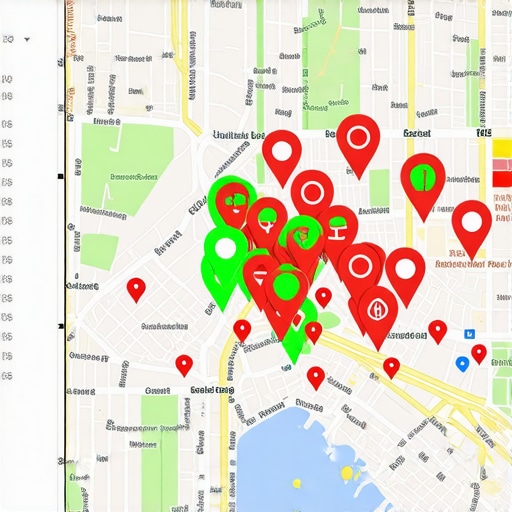
The most important tool in my arsenal isn’t a fancy AI writer; it is a hyper-local grid tracker. I personally use these because why traditional rank tracking is lying about your real map pack position is the most expensive lesson you can learn. A standard report might tell you that you are #1 in the city, but a grid tracker shows you that you are #1 at your front door and #10 just two blocks away. You need to know why local rankings shift every 100 feet and how to monitor them if you want to actually own your neighborhood. I check my grids every Tuesday morning—it’s a non-negotiable part of my routine.
How do I maintain my map position long-term?
Maintenance is about consistency, not intensity. I’ve found that the simple follow-up habit that doubled our google review count is more effective than any one-off marketing campaign. You should also be looking for how to find the ranking gaps your local seo software is missing by manually searching for your services in ‘incognito’ mode from different physical locations. This real-world testing often reveals more than any dashboard ever could. According to Joy Hawkins of Sterling Sky, one of the most respected voices in the industry, even small things like ‘suggested edits’ from users can tank your ranking if you aren’t monitoring your dashboard daily to reject incorrect changes.
The future of local business maps is predictive
Looking ahead, I see a massive shift toward what I call ‘behavioral intent’ ranking. Google is moving away from static signals and toward the interaction metric google uses to gauge map pack success in real-time. By 2026, I predict that your ‘real-world’ popularity—how many people actually drive to your location with GPS active—will outweigh almost every other signal. This is what the 2026 local seo shifts really mean for your map pack rank: you must be a legitimate, active part of your community to survive. If you are a service-based business, you should start learning how to scale map pack success across multiple service areas now, before the algorithm makes it even harder to rank where you don’t have a physical desk. My advice? Pick one service area this week, run a local pack improvement audit, and fix just one citation inconsistency. That small step is how long-term map pack placement is truly won.
The Hard-Earned Lessons from My Worst Ranking Disasters
Over the years, I’ve realized that the distance between a local listing win and total invisibility is often just a few small, consistent habits. One of the biggest lightbulb moments for me was realizing that Google cares more about how the community treats you than how much you optimize your description. If I could go back, I’d stop stressing over keywords and start focusing on the actual human experience of finding my business.
#IMAGE_PLACEHOLDER_E#
- Speed is a silent trust signal: If your site takes five seconds to load on a mobile phone, Google will hesitate to give you that top spot, no matter how many reviews you have.
- Duplicates are ranking killers: I’ve seen years of work wiped out because of a forgotten second listing; you must learn how to fix duplicate listings before they split your ranking power and confuse the algorithm.
- Honesty always wins: It is tempting to take shortcuts, but why buying reviews is a suicide mission becomes clear the moment Google’s filters flag your account for suspicious activity.
The Map Success Toolkit I Carry Everywhere
I don’t believe in using a hundred different tools; I believe in using three that actually move the needle for local pack improvement. First, I always recommend looking at the 7-point checklist for forcing your way into the top 3 to keep your strategy focused on what matters most. Second, I rely heavily on manual incognito searches to see exactly what customers see. Finally, if things get complicated, I look for what a real google business profile expert does to handle the technical nuances that most DIY guides completely overlook.
Stop Waiting for the Algorithm to Be Nice
Local search is a zero-sum game. If you aren’t in those top three spots, your competitor is taking the phone calls that should have been yours. But don’t let that discourage you. Achieving consistent map pack placement isn’t about being a digital genius; it’s about being the most reliable and active business in your neighborhood, both in person and on the screen. Take one small action today—fix a category, respond to a recent review, or upload a fresh photo. Have you ever felt like your map pin was stuck in the mud no matter what you tried? Let me know in the comments below and let’s figure out why.