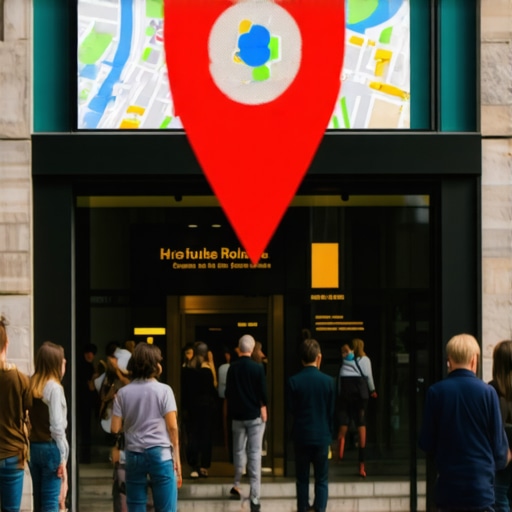
I spent six months prepping my first office. I had the desks, the logo, and enough coffee to fuel a small army. But on opening day, the phone stayed silent. I was a ghost in my own city. When I finally looked myself up, I realized I was buried on page four. That’s when it hit me: if you aren’t in those top three map spots, you don’t exist to your neighbors. I made a lot of mistakes back then. I thought a pretty website was enough. It wasn’t. I even messed up my setup so badly that I later realized choosing the wrong primary category was literally hiding me from the people I wanted to serve. Today, we are going to fix that for you. I am going to show you why local pack optimization is the single most important move you will make this year.
The Day My Empty Office Taught Me About Being Invisible
It is a gut-wrenching feeling. You have poured your life savings into a dream, and nobody knows the door is open. I remember staring at my Google Business Profile—which was basically an empty shell at the time—and wondering why the guy three miles away was getting all the calls. He had half my experience but triple my visibility. It turns out, he was not better at the job; he was just better at being found. Many people struggle with this, and there are usually a few specific reasons you haven’t achieved a win on the map yet. I had to learn the hard way that proximity is only one small piece of the puzzle.
Is the Map Pack actually worth the hype?
Look, I get the skepticism. You are busy running a business. Do you really need to obsess over a little map? The short answer is a resounding yes. According to Search Engine Roundtable, 46% of all Google searches are seeking local information. If you are not in that top 3-pack, you are missing out on nearly half of the potential traffic coming your way. It is not just hype; it is the modern-day equivalent of having a massive neon sign on the busiest street in town. If people cannot find you when they are ready to buy, you are just making it easier for your competitors to take your customers.
Your New Business Needs This More Than a Fancy Website
In the early days, I spent way too much money on a custom-coded website. It looked great, but it did not bring in a single lead. Why? Because most people do not even make it to your website anymore. They see your phone number and your reviews right there on the map and they click Call. This is why understanding map placement secrets is so vital. It is the shortest path between a stranger and a paying customer. Have you ever searched for your own business only to find your competitor’s face staring back at you from the top spot? It stings, doesn’t it? We are going to change that narrative starting now.The Map Pack is not a lottery; it is a scoreboard that rewards specific behaviors. If you want to climb, you have to stop treating your profile like a static yellow pages ad and start treating it like a living, breathing digital storefront. I learned this the hard way when I helped a local bakery that was losing out to a chain down the street. They had better bread, but the chain had better data. We sat down and executed a winning the local business map race strategy that changed everything in thirty days.
The Exact Moves That Forced Google to Notice My Business
The reality is that Google’s algorithm is looking for signals of trust and relevance. When those signals are missing, you’re essentially invisible. Think of your Google Business Profile (GBP) as a lighthouse. If the bulb is burnt out or the lens is dirty, ships—your customers—will just sail right past you toward the next light they see. To get that local listing win, you need to clean the lens first.
Fix the Identity Crisis Before You Spend a Dime
The biggest mistake I see is business owners trying to be everything to everyone. When I performed a 15-minute Google Maps audit for a struggling HVAC contractor, we found he was listed under ‘General Contractor.’ He was competing with home builders instead of people looking for AC repair. We switched his primary category, and his impressions tripled overnight. This is why how a simple category change fixed our hidden map listing problem is a story I tell every new client. You must be hyper-specific. If you are a personal injury lawyer, don’t just settle for ‘Lawyer.’ Dig deeper into the sub-categories that your actual customers are typing into that search bar.#IMAGE_PLACE_HOLDER_B#
Turn Your Happy Customers into a 24/7 Marketing Team
Reviews are the lifeblood of map pack success, but it’s not just about the number of stars. It’s about ‘velocity’—how often you get them—and ‘keywords’—what people actually say. I remember a dry cleaner who had 100 reviews from three years ago and nothing since. Google saw that and assumed he’d gone out of business. We implemented the review management habit that puts you in the top 3 map pack, asking every customer for a photo and a mention of the service they received. When a customer writes, ‘Best wedding dress cleaning in Seattle,’ Google connects the dots. You aren’t just a shop; you are a solution to a specific problem.
Feed the Machine with Real Life Snapshots
Google loves fresh data. If your photos are from the day you moved in five years ago, you are failing the ‘freshness test.’ High-quality, recent images act as social proof that you are active and thriving. In fact, how high resolution photos actually influence your spot on local business maps is often overlooked because it feels ‘too easy’ to be true. I tell my clients to take a photo of a finished job or a new product once a week. It tells the algorithm that you are open for business and provides a visual map of what you do, making it easier for Google to rank you for those specific services.It is time to pull back the curtain on what really moves the needle for your business in 2025. You have likely heard that citations—having your name and address on every directory on the web—are the end-all-be-all for rankings. In my experience, while consistency matters, obsessing over every obscure directory is a waste of your most valuable resource: time. Most people think a clean profile is the final step for local pack improvement, but that is actually just the entry fee. The real secret to map pack success lies in behavioral signals and user interaction. Google wants to provide its users with the best possible experience, and if people are consistently engaging with your listing, you will climb. This is the interaction metric Google uses to gauge map pack success; it is less about what you tell Google and more about how the public reacts to your digital storefront. I once worked with a dentist who was obsessed with ranking for his entire city. He was frustrated because he was invisible in the surrounding suburbs. We had to sit down and look at the grid. Maps are not a blanket; they are a patchwork of varying visibility levels. If you are not careful, you will fall into the ‘proximity trap’—thinking you are winning because you rank #1 while sitting in your own breakroom. The reality is that why local rankings shift every 100 feet is a concept most owners ignore until their phone stops ringing. 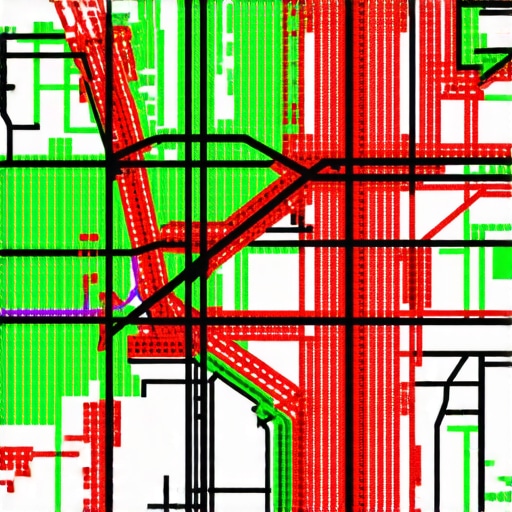
Does your website speed really impact your map position?
Many business owners treat their Google Business Profile and their website as two separate islands. This is a massive ‘oops’ moment. A study by Whitespark on Local Search Ranking Factors confirms that ‘Organic Ranking Factors’—like your site’s authority and mobile speed—are top contributors to your map pack placement. If your site takes five seconds to load on a smartphone, Google is less likely to trust you with a top spot in the local results. This is why local pack improvement often starts with fixing your website speed. If you provide a poor mobile experience, you are essentially telling the algorithm that you are not ready for the traffic. The hidden nuance here is ‘prominence.’ It is not just about being near the searcher; it is about being important. This is why mentioning your business name on local blogs beats traditional citations. It builds a layer of local authority that a generic directory simply cannot replicate. One specific trap I want you to avoid is the ‘Category Gamble.’ I have seen businesses change their primary category every week trying to ‘hack’ the system. Do not do it. It triggers suspension flags faster than almost anything else. Instead, focus on how specific service categories influence your local business maps position by choosing the most relevant one and supporting it with real, geo-tagged photos. Have you ever fallen into the trap of thinking your rankings were better than they actually were because you only checked from your office? Let me know in the comments.I stopped checking my rankings from my office desk years ago. It is a vanity metric that creates a false sense of security. If you want to see the truth, you need a grid-based tracking tool. Personally, I live and die by the BrightLocal Local Search Grid. It shows me a literal heatmap of my visibility, block by block. This is the simple way to monitor your competitors map pack placement changes without having to drive around town with a laptop. If I see a red dot three miles north, I know exactly where my local authority is thinning out. Joy Hawkins, a leading local SEO expert and founder of Sterling Sky, often emphasizes that while proximity is a hard-coded factor, ‘prominence’ is the lever we actually get to pull to expand our reach beyond our front door. This is where mastering local pack improvement comes into play. You have to feed the algorithm technical data it cannot ignore. For example, I have found that the schema markup tweaks that actually move the needle on google maps—specifically LocalBusiness and AreaServed schema—acts like a GPS for Google’s crawlers. It tells them exactly where your services end and where your neighbor’s begin.
How do I maintain my map position over the long haul?
Consistency is the most boring part of business, but it is the most profitable. You cannot just optimize your profile once and walk away. I treat my Google Business Profile like a social media feed. Every Monday, I upload one new photo of a completed project. Every Friday, I respond to every single review, even the one-star ones that make my blood boil. To stay sane, I rely on the simple automation we used to get reviews while we sleep. This is not about being lazy; it is about ensuring that your review velocity never hits a plateau. If your competitors are getting five reviews a month and you are getting fifteen, the algorithm eventually has no choice but to favor the active business. 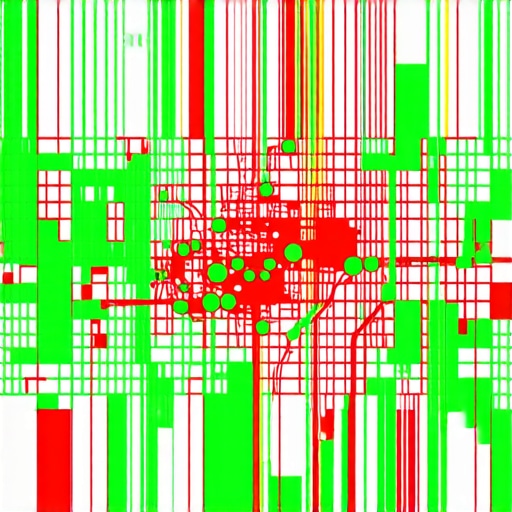
The Future of Local Search is More Visual Than You Think
Looking ahead, we are seeing a massive shift toward AI-integrated search results. I have been tracking what the 2026 local seo shifts really mean for your map pack rank, and it is clear that Google is moving toward ‘visual entity recognition.’ Soon, the AI will not just read your ‘About Us’ section; it will analyze the background of your photos to verify you are actually in the city you claim to be in. The ‘ghost office’ era is ending. Authenticity is becoming a ranking factor. If you want to stay ahead, stop trying to outsmart the algorithm and start out-providing the community. My challenge to you today: Open your phone, find a local rank tracker, and look at your grid. If you see ‘red zones’ where you should be ‘green,’ update your service area and post a geo-tagged photo from that specific neighborhood. It is a small move that signals relevance where it matters most.
The Reality of Maps is Much Messier Than the Gurus Claim
If there is one thing six years in the trenches has taught me, it is that Google rewards honesty over “hacks.” I spent way too long trying to find a shortcut, only to realize that map pack success comes down to consistent, small actions. One of the biggest lightbulb moments was realizing that local pack improvement isn’t a trophy you win once; it is a lease you have to renew every single week. If you stop posting photos or responding to customers, Google assumes you’ve checked out. I also learned that the interaction metric Google uses to gauge map pack success is far more influential than the number of times you mention your keyword in your description. Google watches how people click, call, and ask for directions. You cannot fake that kind of organic interest.
The Gear You Actually Need to Win the Local Race
You do not need a five-figure marketing budget to dominate local business maps, but you do need the right tools to see what is actually happening. I personally rely on the BrightLocal Search Grid because it stops me from lying to myself about my rankings. For my daily workflow, I also use how we automated google review collection without being annoying to keep the feedback loop moving without burning out my staff. I also recommend keeping a simple shared folder on your phone where your team can drop “work in progress” photos. High-resolution images are the easiest way to secure a local listing win because they provide the visual proof the algorithm craves. Finally, if you are feeling stuck, looking at winning your local listing proven tactics for better map placement can give you a fresh perspective on what the top players in other cities are doing.
#IMAGE_PLACEHOLDER_E#
Your Business Deserves to Be Seen
There is no worse feeling than knowing you are the best at what you do, but being hidden behind a competitor who just happens to have a better-optimized pin. You have the tools now to fix that. Don’t try to change everything in one afternoon. Start by auditing your categories, then fix your site speed, and finally, get that review engine humming. The journey to consistent map pack placement is a marathon, but the view from the top of the search results is worth every step. You have the expertise; it is time to make sure your neighbors can find it. Have you ever noticed your rankings change when you drive just a few blocks away from your office? Let me know your experience in the comments below!