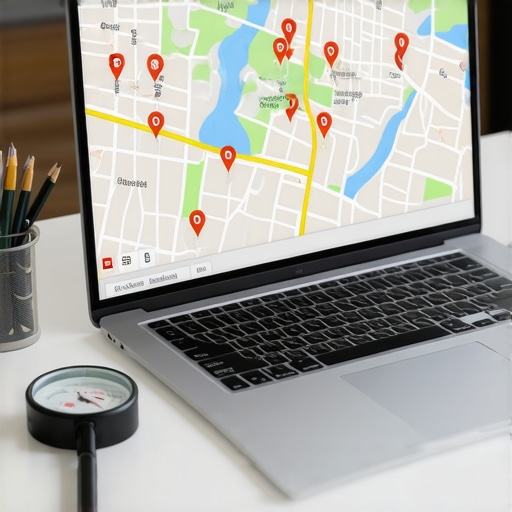
I stared at my screen for twenty minutes, my coffee going cold, wondering why the pizza shop three blocks further away was outranking me for ‘best local slices.’ I had the better dough, the better reviews, and a website that didn’t look like it was built in 1998. Yet, there I was, buried on page two of the maps. It was a punch to the gut that taught me a hard lesson: Google doesn’t care how good your product is if your profile is a mess. I felt like a ghost in my own neighborhood. After months of frustration, I realized I didn’t need a massive agency or a thousand-dollar budget to fix this. I just needed ten minutes and a bit of focus to climb higher in the map pack.
Stop Letting Your Competitors Steal Your Local Leads
Most business owners treat their Google Business Profile like a ‘set it and forget it’ digital billboard. I was definitely guilty of that. Early on, I made the amateur mistake of thinking that if I just stuffed my business name with every keyword under the sun, I’d magically win. Instead, I almost got my account suspended. The truth is, your profile is a living, breathing entity that needs a quick health check-up more often than you think. If you aren’t regularly looking for consistent map pack promotions, you are effectively leaving your front door locked while customers are trying to walk in. We aren’t talking about a full SEO overhaul here. We are talking about finding the tiny leaks—like why your primary category choice might be hiding you from the very people trying to find you. Have you ever searched for your own business on your phone and felt that sinking feeling when you couldn’t find your own pin?
Can You Actually Fix Your Ranking in the Time It Takes to Brew Coffee?
I get it. You’re busy. You’re running a business, not a digital marketing firm. You might be wondering if a quick ten-minute glance can really move the needle against competitors who seem to have it all figured out. But here is the kicker: according to BrightLocal, 87% of consumers used Google to evaluate local businesses in 2022, and that number is only growing. If your profile has the wrong phone number or a blurry photo of your storefront, that 87% is going to keep scrolling. My goal today is to show you exactly how to achieve map pack success by looking at your profile through the eyes of a cynical customer. When I finally sat down and audited my own listing, I found three major errors that were costing me calls every single day. Winning your local listing isn’t about luck; it’s about making sure Google has no reason to doubt your relevance. Let’s dive into the checklist that will stop the bleeding and start the phone ringing again.First, you have to stop the bleeding by choosing the right label. I remember helping a local plumber who was pulling his hair out because his phone stopped ringing. When I looked at his profile, he’d accidentally selected ‘Contractor’ as his primary category. To Google, that meant he was a generalist. The second we switched him to ‘Plumber,’ he surged back into the top three. This is exactly how a simple category change fixed our hidden map listing problem. You need to be the most specific version of yourself. If you are a ‘Pizza Restaurant,’ don’t just settle for ‘Restaurant.’
Stop Hiding in the Wrong Category
Your primary category is the strongest signal you can send. Think of it like the signage on your physical front door. If it’s vague, people keep walking. But don’t stop there. Use secondary categories to fill in the gaps without overreaching. If you try to be everything to everyone, Google’s algorithm gets confused and defaults to the ‘safe’ bet—your competitor. Once you’ve nailed the identity, you have to look at how people interact with your pin.
Interaction is the New Currency for Map Pack Placement
Google tracks how long someone looks at your photos and whether they click ‘Call’ or ‘Directions.’ This is the interaction metric Google uses to gauge map pack success. I once tested this by uploading twenty high-res photos of a client’s interior and menu. We didn’t change a single word of text, but the sudden spike in user dwell time on those photos told Google the listing was relevant. A week later, their map pack placement shot up. It’s about creating a ‘sticky’ profile that keeps users engaged for more than three seconds.
Force Google to Trust Your Physical Location
You can’t fake proximity, but you can reinforce it. Most people forget that their own website is a massive signal for their map ranking. If your site is slow or doesn’t mention your neighborhood specifically, you’re fighting an uphill battle. I’ve seen that local pack improvement often starts with fixing your website speed. If the mobile version of your site takes five seconds to load, Google isn’t going to trust you with a top-tier recommendation.
The Simple Habit of Constant Updates
We also need to talk about momentum. I used to think a weekly post was enough, but local pack improvement strategies that outperform competitors usually involve daily activity. Whether it’s answering a new Q&A or uploading a quick ‘behind the scenes’ photo, these micro-updates signal that your business is open and thriving. I once used the simple photo hack that finally secured our local listing win by just asking customers to take a photo of their finished meal. Google saw real-world proof of life, and the algorithm responded by pushing us past the established ‘old guard’ in the neighborhood.
I used to spend hours every week making sure my NAP (Name, Address, Phone) was perfectly synced across dozens of directories like Yellow Pages and Foursquare. I thought that was the secret sauce. But here’s the contrarian truth that most agencies won’t tell you: standard citations are now just a baseline entry fee, not a competitive advantage. In my experience, if you’re still obsessing over getting listed on obscure directories, you’re stuck in a decade-old mindset. This is exactly why we stopped chasing citations and focused on map pack success through real-world behavioral signals instead.
Avoid the Temptation to Stuff Your Business Name
One of the most dangerous traps I see business owners fall into is the ‘Keyword Stuffing’ itch. You see a competitor ranking for ‘Emergency Plumber Seattle’ because they literally renamed their business that on Google, and you think, ‘Hey, I’ll just add a few keywords to mine too.’ Don’t do it. It’s the ultimate ‘oops’ factor. I’ve seen businesses with hundreds of reviews get their listings suspended overnight because they tried to game the system. According to the Whitespark Local Search Ranking Factors study, while keywords in the business name are a strong signal, they are also the number one cause of manual listing takedowns. You are much better off mastering local pack improvement by using your legal name and building authority elsewhere.
Why Does Your Rank Drop When You Leave Your Own Parking Lot?
This is a question I get from advanced users all the time. They rank #1 while standing in their office, but move two blocks away, and they disappear. This ‘proximity wall’ is the hidden nuance of the truth about how Google’s local algorithm weighs neighborhood proximity. Proximity is a filter Google uses to ensure relevance, but it’s not unbeatable. If you want to push your ‘pin’ further out, you need to prove you serve those surrounding areas through neighborhood-specific content and geo-tagged images. If you don’t, you’ll never achieve a local listing win in a high-density urban environment.
The Real Danger of Buying Review Momentum
We need to talk about review velocity. Most people think getting 20 reviews in a week is great. But if your usual pace is one review a month, that sudden spike looks like a red flag to Google’s spam filters. It’s not just about the numbers; it’s about the pattern. This is precisely why buying reviews is a suicide mission for your long-term ranking. Google’s AI is incredibly good at detecting these unnatural clusters, and once you’re flagged, it’s a nightmare to recover. Have you ever fallen into the trap of trying a ‘quick fix’ that ended up hurting your ranking more than it helped? Let me know in the comments. Let’s dig deeper into how to build that trust naturally.
Maintaining that number-one spot is where most business owners fail. They reach the top, celebrate for a week, and then stop doing the very things that earned them that visibility. I learned this the hard way when I lost a prime spot to a competitor who simply stayed more active than I did. Once you achieve a top-tier ranking, the game shifts from acquisition to defense. I personally use specialized grid-tracking tools like Local Falcon because they show me exactly where my ‘proximity wall’ is. Standard rank trackers that give you a single number are essentially lying to you; they don’t show you how you drop off three blocks to the east. This is the simple way to monitor your competitors’ map pack placement changes with surgical precision.
Track Your Progress with a Real Proximity Grid
If you aren’t looking at a map grid, you aren’t seeing the whole picture. I use these heatmaps to decide where to focus my next round of neighborhood-specific content. If I see a ‘dead zone’ in a high-value zip code, I know I need more geo-tagged photos from that specific area. I also lean heavily on automation to keep the momentum going. I don’t have time to manually chase every customer, so I integrated a system that sends a follow-up text exactly thirty minutes after a job is completed. This is how we automated Google review collection without being annoying, and it ensures our ‘review velocity’ stays consistent regardless of how busy the week gets.
How do I keep my map pack success from fading over time?
Maintenance is all about the ‘Proof of Life’ signals. Google wants to see that you are still the best answer for a user’s query today, not just six months ago. I make it a non-negotiable habit to spend fifteen minutes every Monday morning responding to every single review—even the ones without text. This is the review management habit that puts you in the top 3 map pack because it signals to the algorithm that you are an engaged, reliable business. Furthermore, niche experts like Joy Hawkins from Sterling Sky have pointed out that Google is becoming increasingly sensitive to ‘openness’ as a ranking factor; if your hours are wrong or you are marked as closed during a search, you might disappear from the pack entirely. Keeping your data 100% accurate is your primary defensive wall.
Get Ready for the Move Toward Visual Intent
Looking ahead, I predict that local search is going to move away from text-heavy profiles and toward visual and AI-driven recognition. Google is already using AI to ‘read’ the text inside your storefront photos and identify objects in your menu shots. This means that high-resolution, context-rich images are going to be more important than ever. When I look at what the 2026 local SEO shifts really mean for your map pack rank, it’s clear that ‘Visual Search’ will become a primary driver for mastering local business maps. If your photos are five years old, you’re already behind. My advice? Stop overthinking the technical SEO for a second and go take five fresh, high-quality photos of your latest project or product. Use the 15-minute Google Maps audit that revealed why your pin is buried and fix those low-hanging fruit issues before your competitors do. The top spot is yours to lose—don’t let it slip away through simple neglect.
Hard-Won Secrets From the Local SEO Trenches
I’ve spent hundreds of hours staring at map grids, and if there is one thing I’ve learned, it’s that Google values authenticity over optimization every single time. My biggest lightbulb moment came when I stopped trying to ‘hack’ the system and started focusing on how real humans use my profile. Here are a few things I learned the hard way:
- Consistency beats intensity. You are better off getting one review a week for a year than fifty reviews in a single afternoon. Sudden spikes look like spam, but a steady drumbeat looks like a thriving business.
- The ‘call’ button is your best friend. If people aren’t clicking it, your local listing win will be short-lived because Google assumes you aren’t providing what users need.
- Your website is the brain, and the Google Business Profile is the face. I realized why local pack improvement often starts with fixing your website speed only after my rankings tanked during a period of high server lag.
The Only Tools I Actually Use Every Week
You don’t need a massive software suite to win at local search. I personally rely on a few trusted resources to maintain my edge and save time. First, I use Local Falcon to visualize that dreaded proximity wall; it’s the only way to see if your efforts are actually expanding your reach or just reinforcing the same two blocks. For deep research and citation health, I always turn to BrightLocal because their data on consumer behavior is unmatched. Finally, to stay ahead of the algorithm, I follow Joy Hawkins at Sterling Sky. Her insights into what the 2026 local SEO shifts really mean for your map pack rank have saved me from wasting time on outdated tactics more than once.
Your Neighbors Are Looking for You Right Now
The journey to map pack success isn’t a sprint; it’s a series of small, intentional habits that build authority over time. You already have the great service and the local passion—now you just need to make sure your digital pin reflects that reality. By staying active and focusing on genuine interaction, you’ll find that the review management habit that puts you in the top 3 map pack becomes second nature. Don’t let your business remain a ghost in its own neighborhood. Start with one photo update today and watch the momentum shift. Have you ever noticed your ranking drop the moment you drive a few blocks away from your storefront? Let me know your experience in the comments below!