
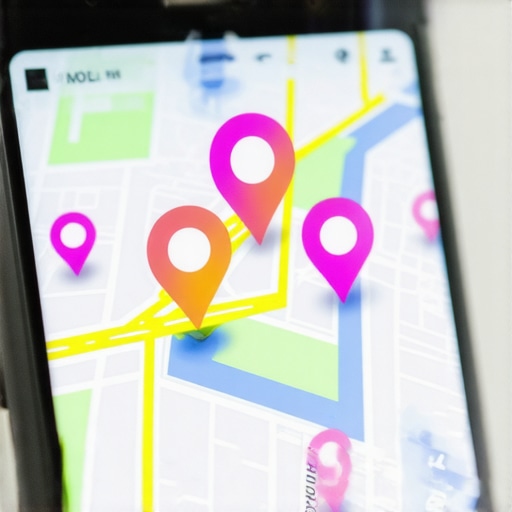
I remember staring at the glowing red pins on Google Maps, feeling my stomach drop as I realized I’d accidentally created a digital ghost town for my favorite local bakery. There they were—three different pins, three different addresses, and not a single one of them was ranking in the top three. I thought I was being helpful by ‘spreading the presence’ across the city, but in reality, I was just confusing the algorithm into oblivion. It was a mess. A total, fragmented disaster that taught me a hard lesson: Google doesn’t reward volume; it rewards clarity. Today, I’m going to show you exactly how to stop fighting yourself and start winning your local listing by cleaning up the duplicates that are holding you back. [image_placeholder]
Stop Letting Google Guess Which Business is Real
When you have two or three profiles for the same business, you aren’t tripling your chances of being seen. You are splitting your ‘ranking power’ into three weak buckets. Google is essentially a giant verification engine. If it sees one listing on Main Street and another with a slightly different name on 1st Ave, it loses trust. According to a study by BrightLocal, citation consistency remains a top-tier foundational factor for local search visibility. If the data is messy, Google hides you to protect the user experience. I’ve seen businesses lose 40% of their call volume just because a former employee created a ‘test’ listing five years ago that never got deleted. It’s frustrating. It’s tedious. But it’s the most impactful map pack success strategy you can implement this week. We’re going to walk through the merge process, how to fix duplicate listings, and how to verify everything is clean. Every minute those ghosts exist, they are siphoning off your authority. It felt like I was playing a game of digital Whac-A-Mole. Every time I thought I had the right address, a new ‘unverified’ listing would pop up, usually with an old phone number from three years ago. I remember the client calling me, frantic because their main competitor—who had half the reviews—was sitting pretty at the #1 spot. The reason? The competitor had one clean, perfect listing, while my client had a fractured identity across the web. I spent three days arguing with a support bot only to realize I had been feeding the algorithm conflicting data all along. It was a humbling realization that even the most advanced local pack optimization can’t save a business that doesn’t know where it actually lives.
Does Cleaning Up This Mess Really Matter?
You might be thinking, ‘Can’t I just leave them there? More pins mean more coverage, right?’ Wrong. That’s the exact mistake I made back in 2018. I thought more was better. I ended up getting the primary listing suspended because Google flagged it as ‘spammy behavior.’ Your map pack placement depends on a single, authoritative source of truth. Have you ever checked your own brand name and been surprised by what popped up? It is honestly a little scary how often random ‘suggested’ listings appear. If you’ve ever faced the nightmare of a suspended profile or a listing you didn’t create, let me know in the comments. We’re going to dive into the process for spotting citation inconsistencies so you can finally clear the path to the top. This isn’t just about housekeeping; it’s about making sure your customers actually find the front door on the first try.
Hunt Down Every Shadow Listing
Finding these duplicates is a bit like playing detective in your own neighborhood. I once worked with a landscaper who couldn’t figure out why his rankings stalled; it turned out a former partner had registered a ‘branch’ at his home address three years prior. Google saw two locations for one name and basically threw its hands up in confusion. To start your map pack success blueprint, you need to search for your phone number, your old addresses, and even variations of your name in an incognito window.

Search Beyond Your Brand Name
Sometimes the duplicate isn’t exactly ‘you.’ It might be a ‘suggested’ place created by a well-meaning user who checked in on Facebook or tagged a photo. You need to spot citation inconsistencies by looking for any pin that occupies your physical space or uses your contact info. Even a slight variation in the suite number can trigger a secondary listing that competes for your authority.
Check the Map Itself
Don’t just trust the search results list. Zoom in on your building in Google Maps. If you see two pins on top of each other, you’ve found the culprit. It’s like having two people trying to stand in the same spot at the same time—it’s awkward and nobody looks good. This clutter is the primary enemy of local pack improvement strategies.
Choose Your Weapon: Merge or Mark as Permanently Closed
Once you’ve found the ghost, you have to decide its fate. This is where execution becomes critical for a local listing win. You can’t just ignore them and hope they fade away; digital ghosts are remarkably persistent.
Keep the Reviews but Lose the Confusion
If you have access to both listings, merging them is the gold standard. It combines the ‘juice’ of both profiles, including your hard-earned reviews, into one powerhouse. This signals to Google that you are a singular, verified authority. It’s the most efficient way to fix duplicate listings without losing your social proof.
Dealing with Listings You Don’t Own
If you can’t claim the duplicate because it was made by an old agency or a random user, you have to use the ‘Suggest an edit’ feature. Select ‘Close or remove’ and then ‘Duplicate of another place.’ It feels like shouting into a void, but persistent reporting is essential for your map pack placement secrets. Google eventually listens when the data consistently points to a single truth.
Why Consistency is Your Secret Weapon
Think of Google like a cautious librarian. If the book title (your business name) or the shelf number (your address) changes every time they look, they’re going to hide that book in the back room to avoid giving users bad info. This is why consistency is the most underrated factor in the entire local search game. It’s not flashy, but it’s the foundation you need to climb higher in the map pack and stay there.
It’s easy to think that once those duplicates are gone, you’re on the fast track to the top. But here’s the thing: most people stop there. They think a clean profile and a hundred five-star reviews are enough. In my experience, focusing solely on the total number of reviews is a rookie mistake. I’ve seen businesses with 500 reviews get outranked by a competitor with 50. Why? Because Google prioritizes review velocity and fresh engagement over a static mountain of old praise. If you got 100 reviews in 2022 and nothing since, Google starts to wonder if you’re still in business. This is where local pack improvement strategies that outperform competitors really separate the pros from the hobbyists. Have you ever fallen into this trap of thinking a high review count was a permanent shield? Let me know in the comments.

Can You Rank Without Being the Closest Shop?
The biggest myth in the industry is that proximity is the only king. While it’s true that Google loves showing the nearest option, the 2023 Whitespark Local Search Ranking Factors study confirmed that ‘prominence’ and ‘relevance’ can actually override physical distance. This is why your proximity advantage is getting crushed by better optimized listings from competitors further away. They aren’t just closer; they are more ‘active.’ If a user searches for a plumber and one is 2 miles away with a 10% click-through rate, but you are 5 miles away with a 40% click-through rate, Google’s algorithm will eventually favor you. This is known as the interaction metric Google uses to gauge map pack success, and it is the secret sauce to staying at the top.
Stop Falling for the Category Bloat Trap
Here is a specific warning: do not try to be everything to everyone. I see business owners adding every possible sub-category to their profile thinking it will cast a wider net. In reality, this dilutes your authority. If you are a high-end Italian restaurant but you also list ‘Pizza Takeaway,’ ‘Caterer,’ and ‘Event Space,’ you might actually hurt your rank for the primary term. This is why your primary category choice might be hiding you from local searchers. Google wants to know exactly what you are the ‘best’ at. When you clutter your identity, you confuse the AI, and confusion leads to a drop in map pack placement. Focus on your core service first, then use secondary categories for better local pack visibility only if they truly represent a significant part of your daily operations. A local listing win isn’t about being seen everywhere; it’s about being the absolute authority in your specific niche.
Make Consistency Your Daily Religion
I’ve realized over the years that a local listing win isn’t a trophy you collect once; it’s a garden you have to water. Most business owners treat their Google Profile like a ‘set it and forget it’ microwave dinner. They do the work, see the rank spike, and then wonder why they’ve vanished three months later. I personally follow a 5-minute daily routine for map pack success that keeps the algorithm happy. Every morning, while the coffee is still hot, I check for new reviews, scan for ‘suggested edits’ from competitors, and post one quick photo. This micro-engagement signals to Google that the business is alive and thriving. If you go dark for three weeks, you are essentially telling the algorithm that you don’t care about your customers’ experience.
Tools That Actually Save Your Sanity
If you’re managing more than one location, or if you’re just serious about mastering local pack improvement, you need to stop guessing. I stopped using standard rank trackers years ago because they only give you a single data point from one zip code. Now, I exclusively use grid-based tracking tools like Local Falcon. Why? Because rankings in the map pack are hyper-local. You might be #1 at your front door but #9 two blocks away. Using this tool is the simple way to monitor your competitors’ map pack placement changes across an entire city. It turned my guesswork into a literal map of where I needed to focus my effort next. 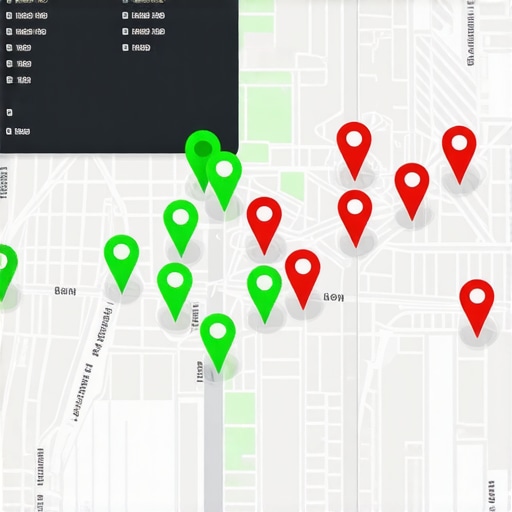
How can I maintain my map rank without working 40 hours a week?
The secret is ‘intelligent automation.’ I’m not talking about bot-generated content—that’s a one-way ticket to a suspension. I’m talking about systems that capture real-world momentum. For example, we’ve shifted toward automated google review collection without being annoying by integrating our point-of-sale system with a simple SMS trigger. This ensures a steady ‘review velocity’ without me having to beg for stars every afternoon. This consistency is the backbone of any map pack success blueprint.
Why AI Vision is the Next Big Map Pack Battleground
Looking ahead, the game is shifting toward what I call ‘Contextual Verification.’ I’ve been following the work of Mike Blumenthal, a leading expert in local search, who has demonstrated how Google’s ‘Vision AI’ now parses the contents of your photos to verify your services. If you say you’re a ‘Tire Shop’ but only post pictures of your office, you’re missing out. Start uploading photos of the actual work being done. This is how high resolution photos actually influence your spot on local business maps. Google wants to see the grease, the tools, and the happy faces because it uses those pixels to build trust in your relevance. I predict that by 2026, ‘Visual Relevance’ will carry as much weight as your primary category choice. If you want a quick win right now, stop overthinking your long-form strategy and try the 4-word text message that actually gets google reviews. Send it to your most recent client today and watch how fast a fresh review can nudge your map pack placement back into the green.
I remember staring at the glowing red pins on Google Maps, feeling my stomach drop as I realized I’d accidentally created a digital ghost town for my favorite local bakery. There they were—three different pins, three different addresses, and not a single one of them was ranking in the top three. I thought I was being helpful by ‘spreading the presence’ across the city, but in reality, I was just confusing the algorithm into oblivion. It was a mess. A total, fragmented disaster that taught me a hard lesson: Google doesn’t reward volume; it rewards clarity. Today, I’m going to show you exactly how to stop fighting yourself and start winning your local listing by cleaning up the duplicates that are holding you back. [image_placeholder]
Stop Letting Google Guess Which Business is Real
When you have two or three profiles for the same business, you aren’t tripling your chances of being seen. You are splitting your ‘ranking power’ into three weak buckets. Google is essentially a giant verification engine. If it sees one listing on Main Street and another with a slightly different name on 1st Ave, it loses trust. According to a study by BrightLocal, citation consistency remains a top-tier foundational factor for local search visibility. If the data is messy, Google hides you to protect the user experience. I’ve seen businesses lose 40% of their call volume just because a former employee created a ‘test’ listing five years ago that never got deleted. It’s frustrating. It’s tedious. But it’s the most impactful map pack success strategy you can implement this week. We’re going to walk through the merge process, how to fix duplicate listings, and how to verify everything is clean. Every minute those ghosts exist, they are siphoning off your authority. It felt like I was playing a game of digital Whac-A-Mole. Every time I thought I had the right address, a new ‘unverified’ listing would pop up, usually with an old phone number from three years ago. I remember the client calling me, frantic because their main competitor—who had half the reviews—was sitting pretty at the #1 spot. The reason? The competitor had one clean, perfect listing, while my client had a fractured identity across the web. I spent three days arguing with a support bot only to realize I had been feeding the algorithm conflicting data all along. It was a humbling realization that even the most advanced local pack optimization can’t save a business that doesn’t know where it actually lives.
Does Cleaning Up This Mess Really Matter?
You might be thinking, ‘Can’t I just leave them there? More pins mean more coverage, right?’ Wrong. That’s the exact mistake I made back in 2018. I thought more was better. I ended up getting the primary listing suspended because Google flagged it as ‘spammy behavior.’ Your map pack placement depends on a single, authoritative source of truth. Have you ever checked your own brand name and been surprised by what popped up? It is honestly a little scary how often random ‘suggested’ listings appear. If you’ve ever faced the nightmare of a suspended profile or a listing you didn’t create, let me know in the comments. We’re going to dive into the process for spotting citation inconsistencies so you can finally clear the path to the top. This isn’t just about housekeeping; it’s about making sure your customers actually find the front door on the first try.
Hunt Down Every Shadow Listing
Finding these duplicates is a bit like playing detective in your own neighborhood. I once worked with a landscaper who couldn’t figure out why his rankings stalled; it turned out a former partner had registered a ‘branch’ at his home address three years prior. Google saw two locations for one name and basically threw its hands up in confusion. To start your map pack success blueprint, you need to search for your phone number, your old addresses, and even variations of your name in an incognito window.
Search Beyond Your Brand Name
Sometimes the duplicate isn’t exactly ‘you.’ It might be a ‘suggested’ place created by a well-meaning user who checked in on Facebook or tagged a photo. You need to spot citation inconsistencies by looking for any pin that occupies your physical space or uses your contact info. Even a slight variation in the suite number can trigger a secondary listing that competes for your authority.
Check the Map Itself
Don’t just trust the search results list. Zoom in on your building in Google Maps. If you see two pins on top of each other, you’ve found the culprit. It’s like having two people trying to stand in the same spot at the same time—it’s awkward and nobody looks good. This clutter is the primary enemy of local pack improvement strategies.
Choose Your Weapon: Merge or Mark as Permanently Closed
Once you’ve found the ghost, you have to decide its fate. This is where execution becomes critical for a local listing win. You can’t just ignore them and hope they fade away; digital ghosts are remarkably persistent.
Keep the Reviews but Lose the Confusion
If you have access to both listings, merging them is the gold standard. It combines the ‘juice’ of both profiles, including your hard-earned reviews, into one powerhouse. This signals to Google that you are a singular, verified authority. It’s the most efficient way to fix duplicate listings without losing your social proof.
Dealing with Listings You Don’t Own
If you can’t claim the duplicate because it was made by an old agency or a random user, you have to use the ‘Suggest an edit’ feature. Select ‘Close or remove’ and then ‘Duplicate of another place.’ It feels like shouting into a void, but persistent reporting is essential for your map pack placement secrets. Google eventually listens when the data consistently points to a single truth.
Why Consistency is Your Secret Weapon
Think of Google like a cautious librarian. If the book title (your business name) or the shelf number (your address) changes every time they look, they’re going to hide that book in the back room to avoid giving users bad info. This is why consistency is the most underrated factor in the entire local search game. It’s not flashy, but it’s the foundation you need to climb higher in the map pack and stay there.
It’s easy to think that once those duplicates are gone, you’re on the fast track to the top. But here’s the thing: most people stop there. They think a clean profile and a hundred five-star reviews are enough. In my experience, focusing solely on the total number of reviews is a rookie mistake. I’ve seen businesses with 500 reviews get outranked by a competitor with 50. Why? Because Google prioritizes review velocity and fresh engagement over a static mountain of old praise. If you got 100 reviews in 2022 and nothing since, Google starts to wonder if you’re still in business. This is where local pack improvement strategies that outperform competitors really separate the pros from the hobbyists. Have you ever fallen into this trap of thinking a high review count was a permanent shield? Let me know in the comments.
Can You Rank Without Being the Closest Shop?
The biggest myth in the industry is that proximity is the only king. While it’s true that Google loves showing the nearest option, the 2023 Whitespark Local Search Ranking Factors study confirmed that ‘prominence’ and ‘relevance’ can actually override physical distance. This is why your proximity advantage is getting crushed by better optimized listings from competitors further away. They aren’t just closer; they are more ‘active.’ If a user searches for a plumber and one is 2 miles away with a 10% click-through rate, but you are 5 miles away with a 40% click-through rate, Google’s algorithm will eventually favor you. This is known as the interaction metric Google uses to gauge map pack success, and it is the secret sauce to staying at the top.
Stop Falling for the Category Bloat Trap
Here is a specific warning: do not try to be everything to everyone. I see business owners adding every possible sub-category to their profile thinking it will cast a wider net. In reality, this dilutes your authority. If you are a high-end Italian restaurant but you also list ‘Pizza Takeaway,’ ‘Caterer,’ and ‘Event Space,’ you might actually hurt your rank for the primary term. This is why your primary category choice might be hiding you from local searchers. Google wants to know exactly what you are the ‘best’ at. When you clutter your identity, you confuse the AI, and confusion leads to a drop in map pack placement. Focus on your core service first, then use secondary categories for better local pack visibility only if they truly represent a significant part of your daily operations. A local listing win isn’t about being seen everywhere; it’s about being the absolute authority in your specific niche.
Make Consistency Your Daily Religion
I’ve realized over the years that a local listing win isn’t a trophy you collect once; it’s a garden you have to water. Most business owners treat their Google Profile like a ‘set it and forget it’ microwave dinner. They do the work, see the rank spike, and then wonder why they’ve vanished three months later. I personally follow a 5-minute daily routine for map pack success that keeps the algorithm happy. Every morning, while the coffee is still hot, I check for new reviews, scan for ‘suggested edits’ from competitors, and post one quick photo. This micro-engagement signals to Google that the business is alive and thriving. If you go dark for three weeks, you are essentially telling the algorithm that you don’t care about your customers’ experience.
Tools That Actually Save Your Sanity
If you’re managing more than one location, or if you’re just serious about mastering local pack improvement, you need to stop guessing. I stopped using standard rank trackers years ago because they only give you a single data point from one zip code. Now, I exclusively use grid-based tracking tools like Local Falcon. Why? Because rankings in the map pack are hyper-local. You might be #1 at your front door but #9 two blocks away. Using this tool is the simple way to monitor your competitors’ map pack placement changes across an entire city. It turned my guesswork into a literal map of where I needed to focus my effort next.
How can I maintain my map rank without working 40 hours a week?
The secret is ‘intelligent automation.’ I’m not talking about bot-generated content—that’s a one-way ticket to a suspension. I’m talking about systems that capture real-world momentum. For example, we’ve shifted toward automated google review collection without being annoying by integrating our point-of-sale system with a simple SMS trigger. This ensures a steady ‘review velocity’ without me having to beg for stars every afternoon. This consistency is the backbone of any map pack success blueprint.
Why AI Vision is the Next Big Map Pack Battleground
Looking ahead, the game is shifting toward what I call ‘Contextual Verification.’ I’ve been following the work of Mike Blumenthal, a leading expert in local search, who has demonstrated how Google’s ‘Vision AI’ now parses the contents of your photos to verify your services. If you say you’re a ‘Tire Shop’ but only post pictures of your office, you’re missing out. Start uploading photos of the actual work being done. This is how high resolution photos actually influence your spot on local business maps. Google wants to see the grease, the tools, and the happy faces because it uses those pixels to build trust in your relevance. I predict that by 2026, ‘Visual Relevance’ will carry as much weight as your primary category choice. If you want a quick win right now, stop overthinking your long-form strategy and try the 4-word text message that actually gets google reviews. Send it to your most recent client today and watch how fast a fresh review can nudge your map pack placement back into the green.
Three Lies I Believed Before My First Local Listing Win
Reflecting on years of trial and error, I’ve realized that the biggest hurdles to success are often the ‘best practices’ we take for granted. First, I used to think volume was a shield—that having a massive number of reviews would protect me from ranking drops. It doesn’t. Google cares more about how you handle the present than what you did three years ago. Second, I was convinced that proximity was an unbeatable wall. I’ve since learned that relevance and high engagement can actually help you outrank the shop right across the street from the searcher. Finally, I thought automation was for ‘lazy’ marketers. In reality, finding ways to automate review collection is the only way to maintain the steady momentum the algorithm craves.
The Toolkit That Keeps Me Ahead of the Competition
I don’t believe in using twenty different apps to manage one profile. Instead, I rely on a few high-impact sources that provide actual insight. I personally trust Local Falcon for its hyper-local grid tracking; it’s the only way to see if you’re actually winning the block or just the building. For deep research into what the algorithm currently favors, I always turn to the annual Whitespark Local Search Ranking Factors report. It cuts through the noise and shows exactly where to focus your energy. If you ever feel stuck, checking competitor map placement changes can often reveal the hidden gaps in your own strategy.
Take Back Control of Your Digital Storefront
The journey to the top of the map isn’t about one giant leap; it’s about the small, consistent steps that build a foundation of trust. Cleaning up those duplicate listings is your first major victory, but staying there requires the 5-minute daily routine for map pack success we discussed. Don’t let the technical jargon intimidate you. At the end of the day, Google just wants to provide its users with the most reliable, active, and honest local option. If you commit to being that option, the local listing win will follow naturally. You have the tools and the blueprint—now it’s time to clear the ghosts out of your map and claim your spot at the top. Have you ever found a ‘ghost’ listing for your business that you didn’t create? Let me know your story in the comments below.