

I sat there, staring at my screen, nursing a lukewarm coffee as I watched my neighbor’s plumbing business jump from nowhere to the top of the map pack while my client—with three times as many reviews—was stuck in the basement. It was maddening. I’d spent months begging for stars, thinking that volume was the golden ticket to a local listing win. But the map didn’t care about my volume. It cared about what people were actually saying. I realized right then that I had been playing the wrong game entirely by ignoring the hidden language inside those text boxes. Today, we’re going to stop chasing just stars and start leveraging the specific words that trigger map pack placement. I’ll show you how to turn your customers’ feedback into a ranking engine that actually moves the needle. Have you ever felt like you’re doing everything right with your profile, yet your competitors still seem to have a ‘secret sauce’ you can’t find?
The Day I Realized Star Counts Are a Vanity Metric
Three years ago, I made a massive blunder. I told a local HVAC company to focus purely on ‘getting to 100 reviews.’ We hit the goal, popped the champagne, and then… nothing happened. Our map pack success was non-existent because 90% of those reviews were just ‘Great job!’ or ‘Five stars.’ Google’s algorithm is sophisticated, and according to the Whitespark Local Search Ranking Factors survey, review keywords (mentioning the specific service or city) remain one of the most influential factors for how local business maps decide who is relevant. If your reviews don’t mention ’emergency pipe repair’ or ‘clogged drain,’ the algorithm doesn’t know you’re the best person for those specific searches. I was treating reviews like a popularity contest, but Google treats them like a library index. Once I started coaching customers to mention the *service* they received, our local pack improvement happened almost overnight.
Is obsessing over specific keywords actually worth your time?
You might be worried that asking for specific keywords feels ‘salesy’ or that customers will find it annoying. I get it. I used to be terrified of being that pushy business owner. But here’s the reality: most customers actually appreciate a little guidance on what to write. They want to help you, but they often don’t know where to start. When you frame it as ‘mentioning the service you got helps other neighbors find us,’ it stops being a chore and starts being a community favor. This shift is the foundation of long-term map pack visibility. We aren’t just looking for feedback; we are building a semantic map of your expertise that Google can’t ignore.To move from a ghost town to a thriving hub, you need to treat every customer interaction like a data entry point. Google’s algorithm functions like a massive filing cabinet; if your folder just says ‘Business,’ you’re lost in the shuffle. You need to label your folder with the exact terms your neighbors are typing into their phones at 2 AM. This is where winning your local listing comes into play. You aren’t just asking for a rating; you’re asking for a testimony of specific skill.
Stop Begging and Start Directing Your Feedback
Most business owners send a generic link and cross their fingers. Instead, try the ‘Guided Prompt’ method. I remember working with a small locksmith who was getting crushed by a national franchise. We started asking customers to mention their specific neighborhood and the type of lock we fixed. The result? His review velocity actually increased because people found it easier to write a review when they had a starting point. This is a fundamental pillar of consistent map pack success.
The Specific Script That Triggered My First Major Breakthrough
I once sat down with a landscaping client who felt ‘pushy’ asking for keywords. We drafted a simple three-sentence text: ‘Hey [Name], thanks for letting us handle your [Service Name] in [City] today! If you have a second, could you mention the [Service Name] in a review? It helps other [City] neighbors find us.’ That tiny change—naming the service and the city—is a core part of local pack improvement. 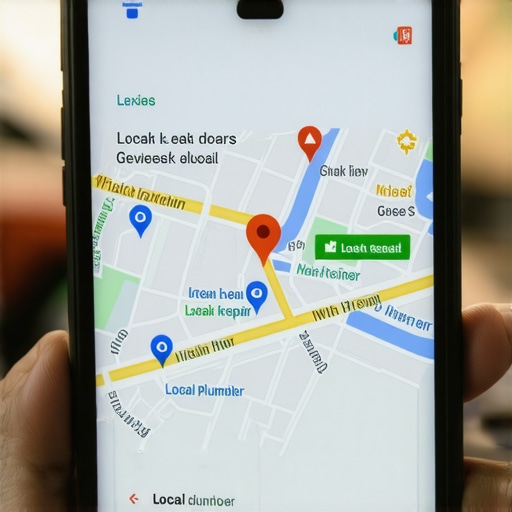 Within thirty days, that landscaper was ranking for ‘sod installation’ in three surrounding suburbs where he’d previously been invisible. It was messy at first—some customers got the city name wrong—but Google’s AI is smart enough to understand the intent.
Why Your Google Profile Thinks You Only Sell Good Jobs
If every review you have says ‘Great service!’ or ‘Highly recommend!’, you are technically telling Google that you are a ‘Great service’ provider, not a plumber or an electrician. This lack of specificity is why your map pack placement progress might feel like it’s hit a brick wall. Google uses the nouns in your reviews to verify your primary and secondary categories. When a customer writes, ‘Best emergency water heater repair in Phoenix,’ they are effectively validating your business categories for free. This is the ultimate shortcut for a local listing win. It’s like giving the algorithm a high-resolution map of your expertise rather than a blurry polaroid. You can also leverage ‘Review Replies’ to double down on this. When a customer leaves a short review, don’t just say ‘Thanks!’ Reply with: ‘Thanks for the review! We loved helping you with that [Specific Service] at your [Specific Neighborhood] home.’ While the owner’s reply doesn’t carry as much weight as the customer’s text, it reinforces the semantic relevance across the local business maps ecosystem. Use this as your new standard operating procedure to ensure your map pack placement stays high regardless of algorithm shifts.Let’s dig deeper into why simply having more stars isn’t the finish line. One of the most common myths I see business owners fall for is the ‘Total Review Count’ trap. They think that if they have 500 reviews and the competitor has 200, they should automatically win. But in my experience, Google values the freshness and the behavior behind those reviews far more than the legacy volume. This is why review velocity is your secret weapon for map pack success. If your 500 reviews were all from 2022 and your competitor is getting five new ones a week, Google’s algorithm sees them as the more ‘active’ and reliable choice for a current searcher. Have you ever fallen into this trap? Let me know in the comments.
Stop letting your primary category destroy your reach
The most expensive ‘oops’ factor I encounter is the primary category blunder. I once consulted for a high-end boutique that was listed as a ‘Clothing Store.’ Sounds right, right? Wrong. They specialized in bridal wear. By not being specific, they were competing with every T-shirt shop in a ten-mile radius. We changed their primary category to ‘Bridal Shop,’ and their visibility for high-intent searches tripled within a week. This is a classic example of why your primary category is destroying your map pack placement if it is too broad. Google doesn’t reward generalists; it rewards the most specific answer to a user’s problem. 
Can you really beat the ‘Proximity Tax’ through better engagement?
Many experts will tell you that you simply cannot rank for a user who is more than a few miles away from your front door. While the truth about how Google’s local algorithm weighs neighborhood proximity is that it is a dominant factor, it is not an unbreakable wall. A study by BrightLocal highlighted that behavioral signals—like how often people click your profile versus your neighbor’s—can actually ‘stretch’ your ranking radius. This is the real connection between CTR and map pack success. If Google sees that people are skipping the closest business to click on yours, they eventually realize your relevance outweighs the convenience of distance.
Why your local rankings shift every 100 feet
If you’ve ever sat in your office and seen yourself at #1, only to drive two blocks away and see yourself at #7, you’ve experienced the ‘proximity shift.’ It can be maddening to realize that why local rankings shift every 100 feet and how to monitor them is a technical reality of the current mobile-first landscape. Google is hyper-focused on the user’s GPS coordinates. To combat this, you need to stop thinking about ‘ranking for the city’ and start thinking about ‘dominating the neighborhood.’ This requires you to how to interpret changes in local business maps by looking at your data through a hyper-local lens rather than a generic dashboard. When you master these nuances, you stop guessing and start growing.
The Toolkit That Keeps My Phone Ringing
Scaling the mountain is one thing; staying at the summit is where the real work begins. I remember thinking that once I hit the top three, I could just coast. I was wrong. The map is dynamic, and if you aren’t watching your ‘grid,’ you’re flying blind. I personally rely on tools like Local Falcon because they visualize those 100-foot shifts I mentioned earlier. It’s a heat map of your business’s relevance. If I see a red dot appearing in a neighborhood where I used to be green, I know exactly where to send my next ‘Guided Prompt’ review request. This is the only way to achieve a local listing win that lasts more than a month. You need to see your map pack placement as a living, breathing organism that requires a pulse check at least once a week.
How do I keep my rankings steady when life gets busy?
The biggest threat to your visibility isn’t your competitor; it’s your own lack of consistency. I tell my clients that maintenance is just 15 minutes a week of checking for ‘suggested edits’ from the public. People—sometimes well-meaning, sometimes malicious—can change your hours or phone number. This is why consistency is the most underrated factor for map pack placement. Google trusts data that matches across the web. If your Yelp page says you close at 5 PM but your Google profile says 6 PM, the algorithm gets ‘confused,’ and confusion is the enemy of map pack success. Spend that quarter-hour verifying your data, and you’ll outlast 90% of your competition who ‘sets it and forgets it.’
The 2026 Shift You Need to Watch For
Looking ahead, I see a massive pivot toward what experts like Mike Blumenthal, co-founder of Near Media, call ‘implicit signals.’ Google is getting better at using your phone’s location history to see if people actually visit your shop after searching for it. They are looking for ‘foot traffic’ as the ultimate verification of your authority. This means that a local pack improvement that survives the next decade will focus less on digital keywords and more on how you treat people in person. If Google sees that users search for you but never actually show up at your physical address, they will eventually stop recommending you. Real-world interaction is becoming the strongest signal on local business maps.
Scale your reach without losing your mind
If you are expanding to a second location or a new suburb, don’t just copy-paste your existing strategy. You need to understand how to scale map pack success across multiple service areas by building unique local authority for each branch. This is where winning your local listing becomes a game of specialized neighborhood pages and distinct local engagement. Try this right now: Take 10 minutes today to monitor your map pack placement progress using a grid-tracking tool. Don’t just search from your desk; look at the neighborhoods five miles away. Identify one ‘red’ area and send a review request to a customer specifically located in that zip code to start reclaiming that territory.
The Harsh Truths I Learned While Fighting for the Top Spot
I used to believe that a high star rating was the ultimate shield against competitors. I was wrong. I’ve watched 4.2-rated businesses dominate 5.0-rated ones simply because their reviews were packed with relevant nouns and recent customer-uploaded photos. Another realization? Google’s foot traffic tracking is far more precise than most realize. If you aren’t optimizing for the mobile experience, you’re missing the biggest shift in why mobile search behavior is the key to local pack improvement. I also learned that you can’t fake engagement; the algorithm knows if people are actually clicking your ‘Call’ button or just scrolling past you. High volume doesn’t matter if nobody interacts with the listing.
The Three Essentials in My Daily Local SEO Arsenal
I don’t make a move without checking these three things first. First, I use Local Falcon to see my ranking grid—if I’m not green in the neighborhoods that matter, I change my strategy immediately. Second, I look at the Whitespark Local Search Ranking Factors annually to see what the algorithm is prioritizing. Lastly, I keep a dedicated ‘Review Request’ shortcut on my phone to maintain that critical review velocity. Using these effective local pack boosts ensures I’m never guessing where my next lead is coming from. These tools help turn a static profile into a lead-generating machine.
Your Neighbors Are Searching Right Now
Every hour you spend at the bottom of the map pack is a lead handed to your competitor on a silver platter. This isn’t just about SEO; it’s about making sure your business is the first name someone sees when they are in a moment of need. By following a blueprint to map pack success in 2025, you aren’t just ranking; you’re building a local legacy that survives every update. Start today by looking at your profile through the eyes of a customer who needs help immediately. What is the one specific service you want to be known for this month? Let me know in the comments below!