
I remember sitting at my desk three years ago, staring at a local pizza shop ranking #1 on Google Maps while my client, who had significantly better food and triple the total reviews, was stuck at the bottom of the pile. I couldn’t wrap my head around it. I had spent months thinking that the total number of stars was the only thing that mattered for a local listing win. It was a massive rookie mistake. I was focused on the ‘what’ instead of the ‘when,’ and it cost my client weeks of phone calls and foot traffic.
The Day I Realized Total Reviews Are a Lie
That failure taught me something vital: Google isn’t just looking for the biggest pile of praise; it’s looking for a pulse. My client had 200 reviews, but the last one was from six months ago. Their competitor only had 50, but three of those came in just last week. This steady rhythm, which experts call review velocity, is often the deciding factor in map pack success. Today, I’m going to show you why a slow, steady stream of feedback beats a one-time ‘review bomb’ every single time. We will fix your local pack improvement strategy by focusing on consistency over sheer volume. Have you ever noticed your ranking drop even though your star rating stayed perfect?
Does Google Really Care How Fast You Get Feedback?
It sounds like a lot of extra work, and you might be skeptical if it actually moves the needle. However, the data is pretty clear. According to the team at BrightLocal, the recency and velocity of reviews are among the most influential ‘Review Signals’ for the local algorithm. It makes sense if you think about it like a neighbor. If I ask you for a recommendation, you aren’t going to suggest the place that was great in 2019 but hasn’t been mentioned lately; you’ll suggest the one everyone is talking about today. I used to think I could just automate one big blast and be done, but that’s the fastest way to see your local business map presence vanish. If you’re struggling with a hidden map listing problem, your velocity—or lack thereof—is likely the culprit. Let’s look at how we can turn that around without begging every single customer for a favor.I started by looking at my client’s dashboard—a small landscaping company in Ohio. They had just finished a massive summer promotion and got 40 reviews in two days. Then, silence for two months. Their ranking spiked, then cratered. That’s because Google views a sudden burst of activity followed by a ‘flatline’ as a sign of manipulation. To achieve a real local listing win, we had to stop the feast-and-famine cycle.
Stop chasing total volume and start timing your asks
Think of your Google Business Profile like a campfire. If you dump ten gallons of gas on it, you get a huge flame for a second, but then it burns out. If you feed it small logs consistently, it stays hot all night. This is exactly how the interaction metric Google uses to gauge map pack success works. They want to see that customers are engaging with you every single week. When I worked with a local dental clinic, we shifted their strategy from a monthly email blast to a daily SMS request sent immediately after the appointment. The result? We didn’t get more reviews total, but we got them steadily. Their map pack placement shot up within three weeks.
Build a steady flow that keeps Google happy
The easiest way to fail at this is to try and do it manually. You’ll forget. You’ll get busy. You need a system that triggers a request when the customer is at their happiest. I personally recommend using the simple text template that actually gets 5-star Google reviews without nagging. By automating this, you ensure that even on your busiest days, your velocity remains constant. This consistency is a primary signal for local pack improvement because it proves your business is still active and providing high-quality service today, not just two years ago. 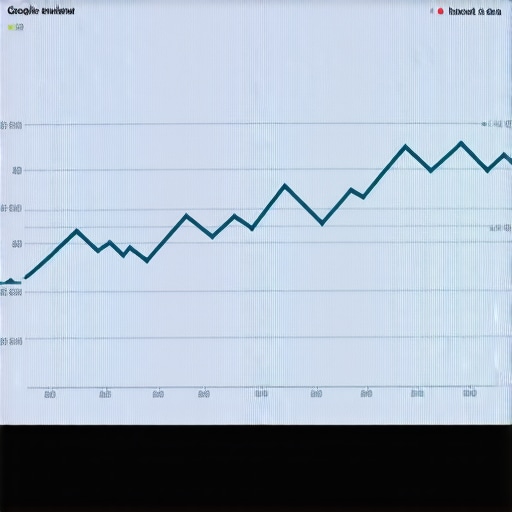
Talk back to your customers or lose your rank
A review is a two-way street. If someone walked into your shop and said, ‘I love this place!’ you wouldn’t just stare at them in silence. You’d say thanks. Google tracks how often and how fast you respond. There is a direct correlation between response speed and map ranking. For that same landscaping client, we discovered that responding within 24 hours to every single review—even the short ones—helped stabilize their local business maps presence. It’s not just about the keywords in the review; it’s about the signal of a managed business.
The risk of trying to cheat the system
When I first started, I thought I could outsmart the algorithm by having friends post reviews all at once. Big mistake. One of my early projects actually got flagged, and I had to learn the process we use to reverse a Google Business Profile suspension fast. It was a nightmare that could have been avoided by just focusing on genuine, steady growth. Now, I tell every client that map pack success is a marathon, not a sprint. If you try to sprint with fake or clustered reviews, you’re just asking for a ban. Focus on the review management habit that puts you in the top 3 map pack: one request, one response, every single day.
Everyone tells you that proximity is king—that if you aren’t within a mile of the searcher, you are essentially invisible. In my early days, I believed this too, but I’ve since realized it is a massive oversimplification. While distance matters, it isn’t a prison. I’ve seen businesses three miles away consistently snatch a local listing win from competitors sitting right next door to the customer. Why? Because Google increasingly prioritizes ‘Prominence’ and ‘Relevance’ over raw distance when a profile shows high engagement. If your prominence signals are strong enough, you can expand your reach far beyond your physical street corner.
Proximity doesn’t have to be your prison
The biggest mistake I see ‘experts’ make is assuming that proximity alone will save you. In reality, a well-optimized profile with high interaction can ‘stretch’ its influence. According to the Whitespark Local Search Ranking Factors study, behavioral signals—like click-through rates and driving direction requests—are becoming more influential than ever. This means that if people choose you even when you’re further away, Google takes notice and boosts your map pack placement across a wider radius. Have you ever noticed your ranking drop even when you haven’t changed your address? Have you ever fallen into this trap? Let me know in the comments.
Can your website speed actually sink your map rank?
Most business owners think of their website and their Google Business Profile as two separate islands. This is the ‘Oops’ factor that kills local campaigns. I once worked with a boutique gym that had a perfect profile but was stuck on page two. It turns out, their home page took eight seconds to load on mobile. Because Google treats your website as the foundational ‘authority’ for your listing, local pack improvement often starts with fixing your website speed. If the landing page linked to your profile is slow or broken, Google will demote your pin because it doesn’t want to send users to a frustrating experience. 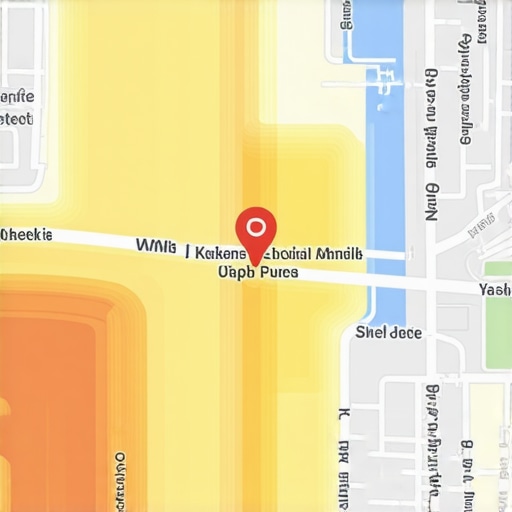
The hidden danger of the wrong primary category
Another nuance that often gets ignored is the ‘Searcher Intent’ mismatch. You might think you’re a ‘Restaurant,’ but if you specialize in pizza delivery, and you haven’t specified that, you’re missing out on the most valuable traffic. I’ve found that choosing the wrong primary category is the fastest way to become a ghost in your own neighborhood. Google’s algorithm is smart, but it still needs you to point it in the right direction. We often find that local business maps interpret searcher behavior based on these categories; if your category doesn’t match the intent of the ‘near me’ search, you’ll lose every time. Don’t let a simple settings error stand in the way of your next big local pack improvement.
I used to celebrate every time a client hit the top three, cracking open a beer and thinking the job was done. That was until I saw a client drop from #1 to #7 in forty-eight hours because a competitor simply started posting photos more frequently. Getting a local listing win is hard, but keeping it is where the real professionals separate themselves from the amateurs. You can’t just set your profile and forget it; you need to treat it like a garden that requires constant weeding. If you aren’t actively managing your presence, you are effectively handing your map pack success to the guy across the street. To stay ahead, I rely on a specific set of tools and a weekly maintenance checklist that ensures we never get caught off guard by an algorithm shift.
Stop checking your rank from your office chair
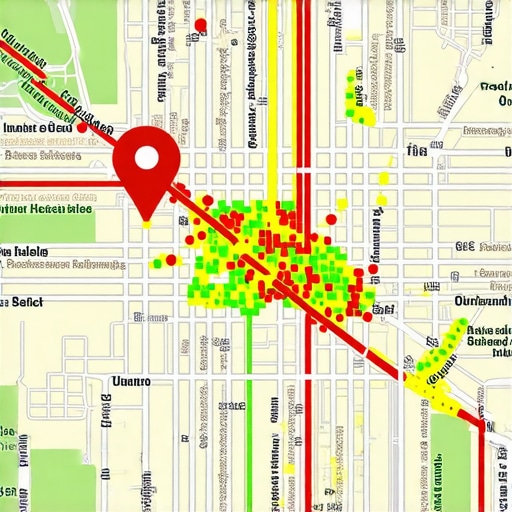
The biggest lie in local SEO is the single-point rank tracker. If you’re just looking at a dashboard that says ‘Rank: 1,’ you’re missing 90% of the picture. I personally use BrightLocal’s Local Search Grid because it shows me exactly where my visibility drops off. I might be #1 at my storefront, but three blocks away, I’m #10. By knowing why local rankings shift every 100 feet and how to monitor them, I can tell if I need to focus more on local backlinks or if I need to adjust my service area settings. If you want to stay on top, you have to use the simple way to monitor your competitors map pack placement changes. If they suddenly expand their reach, you need to know exactly what they changed in their profile to cause that shift.
How do I keep my map pack rank from falling off a cliff next month?
The secret to long-term local pack improvement isn’t a magic trick; it’s consistency. I set a recurring calendar invite every Tuesday to perform a 15-minute audit. I look for ‘suggested edits’ from users that might have changed my hours or phone number without me knowing. I also check for Google Questions and Answers. According to Darren Shaw, founder of Whitespark and a leading expert in local search, behavioral signals like ‘clicks to call’ and ‘requesting directions’ are now the most significant drivers of prominence. This means you need to give people a reason to click. I use high resolution photos of my clients’ actual work every week. It keeps the profile ‘fresh’ in Google’s eyes and encourages those vital interaction metrics.
The tools I trust to keep me sane
I don’t have time to manually log into fifty different dashboards, and neither do you. For scaling a local listing win across multiple locations, I automate the ‘boring’ stuff. I use the simple automation we used to get reviews while we sleep to ensure our review velocity never hits zero. For monitoring, I rely heavily on GMB Spy, a Chrome extension that lets me peek at the sub-categories my competitors are using. Often, a local pack boost comes down to finding a secondary category your competitor missed. I also keep a close eye on how to monitor your map pack placement progress using heatmaps, as this is the only way to visualize if your ‘geofence’ of authority is growing or shrinking.
Predicting the future of local business maps
Looking ahead, the game is going to change significantly. I predict that by late 2025, real-time data integration—like showing current store foot traffic or live inventory directly in the map pin—will become a primary ranking factor. We are already seeing hints of this in what the 2026 local seo shifts really mean for your map pack rank. Businesses that can prove they are ‘active’ in real-time will crush static profiles. If you want to stay relevant, start thinking about how to integrate your point-of-sale or booking data with your profile now. Don’t wait until you’ve already vanished from the results. Go download a local grid tracking tool today and see where your ‘invisible wall’ actually is—you might be surprised at how much market share you’re leaving on the table just two blocks away.
The Hardest Lesson I Learned While Climbing the Local Ranks
After years of tinkering, I realized that Google’s algorithm is essentially trying to mimic a picky neighbor. The biggest lightbulb moment came when I stopped trying to ‘trick’ the system and started treating my clients’ profiles like actual living storefronts. I learned that a single, heartfelt response to a 3-star review often did more for long-term local listing win stability than ten generic 5-star ‘review bombs’. Google rewards businesses that show they are present and listening today, not those relying on glory from three years ago. Don’t chase perfection; chase authenticity and steady activity to ensure your local business maps presence remains rock-solid.
My Personal Arsenal for Dominating Local Maps
You don’t need a massive budget to win, but you do need the right data. I personally rely on BrightLocal for its grid tracking, which reveals exactly where my influence ends. For finding hidden opportunities, I often recommend a 10-minute profile audit to catch the small errors that kill conversions. If you are struggling with manual follow-ups, using the simple text template that actually gets 5-star Google reviews without nagging is a lifesaver for maintaining that crucial review velocity. These tools transform local pack improvement from a guessing game into a predictable process.
#IMAGE_PLACE_HOLDER_E#
Your Journey to the Top Starts with One Review
The map isn’t a static document; it’s a living, breathing marketplace. While the technical side matters, your genuine connection with your community is what will ultimately drive your map pack success. Don’t be overwhelmed by the competition—most of them are set on autopilot. If you show up every week, post your photos, and engage with your customers, you’ll find yourself climbing higher in the map pack faster than you think. Your map pack placement is a reflection of your business’s pulse; keep it beating. What is the biggest hurdle keeping you out of the top 3 right now? Let me know in the comments below!