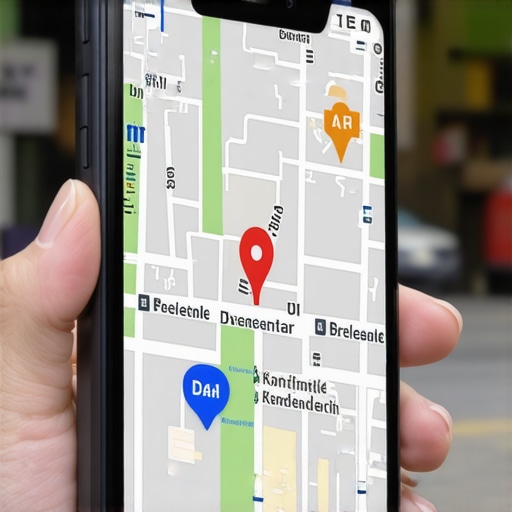
I’ll never forget the Tuesday morning I sat in my shop, staring at my phone, wondering if I had accidentally offended the internet gods. I was searching for my own business—right from the front counter—and I couldn’t even find my pin. Meanwhile, the guy down the street, who honestly makes a mediocre latte, was sitting pretty at the top of the search results. It made no sense until I looked at our listings side-by-side. My main photo was a dark, grainy shot I took on a rainy day five years ago. His? It was a crisp, high-resolution masterpiece that practically let you smell the roasted beans through the screen. That was my big lightbulb moment where I realized a local listing win isn’t just about keywords; it is about the visual story you are telling the algorithm.
How Those Grainy Flip-Phone Photos Are Hurting Your Rank
We often think of SEO as a game of words and technical backlinks, but the reality on local business maps is much more visual. When I first started trying to climb the rankings, I made the classic mistake of focusing entirely on my description while leaving my gallery looking like a 1990s crime scene. I thought, “People know what a store looks like, why does the quality matter?” Boy, was I wrong. Google isn’t just a search engine anymore; it is an AI-driven vision engine. According to research by BrightLocal, businesses with more than 100 images get 520% more calls than those with fewer. If your photos look like they were taken with a potato, you are not just losing customers; you are losing the algorithm’s trust. Achieving a local pack improvement requires feeding the machine exactly what it wants: clarity, context, and high-quality data points.
Does Professional Clarity Really Move the Needle?
You might be sitting there thinking, “Surely a few extra pixels won’t change my map pack placement.” I get it. I was a skeptic too. But here is the thing: Google’s Cloud Vision API actually “sees” what is in your photos. It identifies your signage, your products, and even the general “vibe” of your establishment. When you upload high-resolution shots, you are providing high-quality data that the AI can confidently categorize. Low-res, blurry junk is just noise that the AI can’t interpret, which often results in your business being pushed down in favor of a “clearer” competitor. I spent weeks chasing the simple photo hack that finally moved my pin, and it all started with realization. Today, we are going to dive into why upgrading your visual game is the shortest path to dominance. Have you ever looked at your own map listing and felt a little embarrassed by the photos customers have uploaded? It is a common struggle, but it is one of the easiest things to fix once you stop overcomplicating it.
Stop Hiding Behind Blurry Lens Smudges
If you want to achieve a local pack improvement, you have to treat your business photos like a digital storefront window, not a dumping ground for random snapshots. I learned this the hard way with a local florist friend, Maria. Her listing was buried because her photos featured half-empty buckets and cardboard boxes in the backroom. We spent one Tuesday afternoon simply wiping her phone lens and taking ‘hero’ shots of her most vibrant arrangements in natural sunlight. Within ten days, her phone started ringing for wedding consultations. The algorithm didn’t just see ‘flowers’; it saw high-intent, high-quality data that it felt safe showing to users. Think of your photos as a bridge between the digital search and the physical front door. If that bridge looks rickety and dark, nobody is going to cross it. Achieving map pack success depends on presenting a version of your business that looks ready for prime time.
Show Google Exactly What You Sell Without Saying a Word
It is a common mistake to think that keywords do all the heavy lifting. In reality, local business maps are increasingly powered by visual recognition. If you’re a plumber, don’t just post a photo of your van. Post a high-res shot of a complex manifold you just installed. Google’s AI analyzes these images to confirm you actually do what you say you do. This transparency is the cornerstone of a local listing win because it builds immediate trust with the ‘vision engine.’ I once worked with a contractor who refused to update his photos from 2012. He was losing work to a guy with half his experience just because the competitor’s gallery looked current and professional. Once we updated his profile with crisp shots of his latest renovations, his map pack placement jumped five spots in a single month.
Turn Your Gallery Into a High-Traffic Interaction Machine
It isn’t enough to just upload and walk away. You need to encourage your customers to do the work for you. Google tracks the ‘dwell time’ people spend looking at your photos. When a customer uploads a great shot of their meal or your finished project, it acts as a massive social proof signal. I found that placing a small sign at the checkout—not begging for a review, but inviting people to ‘Share Your Experience on the Map’—boosted our photo count by 30%. This steady stream of fresh, user-generated content is like fuel for your ranking. Every time someone zooms in on a photo or swipes through your gallery, you are racking up engagement points that solidify your position. If you want to maintain your local listing win, keep the visual story moving. You aren’t just selling a service; you are building a visual archive that proves you are the most relevant answer to a local search.
Most people in the local SEO world will look you in the eye and tell you that proximity is the ultimate king of local search. They believe that if your shop is physically closer to the user, you automatically win. I’m here to tell you that this is a dangerous half-truth. In my experience, relying on your address to do the heavy lifting is how you end up invisible. While the truth about how Google’s local algorithm weighs neighborhood proximity is still rooted in physics, the weight is shifting. According to the 2023 Local Search Ranking Factors study by Whitespark, behavioral signals—like how many people click your profile after seeing it—are now a primary driver of sustained rankings. If your engagement is low, Google will happily show a competitor two miles further away just because people find their listing more useful.
Why Proximity Is Actually a Weak Ranking Signal
Everyone says ‘location, location, location,’ but in the digital world, that’s a trap. I once worked with a boutique gym that was literally 100 feet away from a major transit hub, yet they were being outranked by a crossfit box three neighborhoods over. Why? Because the competitor had mastered the art of generating interaction pings. They weren’t just sitting there; they were winning the local business map race by encouraging users to check-in and upload real-time photos. When you rely solely on your zip code, you’re essentially leaving your map pack placement to chance. In reality, a local listing win comes from proving your relevance through activity, not just your latitude and longitude. Have you ever fallen into the trap of thinking a closer address would solve everything? Let me know in the comments.
Can You Really Beat a Competitor Who Is Closer to the Searcher?
The short answer is yes, but it requires a shift in strategy. You have to stop thinking about your listing as a static yellow-page ad and start seeing it as a real-time data feed. Google’s algorithm is increasingly looking for ‘proof of life.’ This means the interaction metric Google uses to gauge success is often more important than the physical distance. If you can trigger more digital wallet pings or directions-requests than the guy next door, you can effectively expand your ‘ranking radius.’ I’ve seen businesses double their reach simply by focusing on high-quality engagement rather than just trying to get more citations. This is why your proximity advantage is getting crushed by competitors who are more active and responsive.

Don’t Let Keyword Stuffing Kill Your Listing Before It Starts
Here is the ‘oops’ factor that ruins more businesses than anything else: the temptation to stuff your business name with keywords. It feels like a quick win to rename your shop ‘Joe’s Plumbing Emergency Repair Near Me,’ but this is a suicide mission. Google is getting incredibly aggressive with suspensions for name-spamming. I’ve seen decade-old listings vanish overnight because they tried to game the system this way. Instead of risking a permanent ban, focus on the reason why relying on keywords alone is killing your placement. Real map pack success comes from a clean, honest profile that uses actual foot traffic signals to tell the algorithm you’re the real deal. When you try to trick the machine, you might see a temporary spike, but the crash is inevitable. True local pack improvement is built on trust, not just clever naming conventions. If you want a listing that lasts, you have to play by the rules while being louder and more active than everyone else.
I’ll let you in on a secret: the most frustrating part of a local listing win isn’t getting there—it is staying there. I used to think that once I hit the top three, I could just coast. But the local algorithm is like a living, breathing organism that gets hungry every few days. If you stop feeding it fresh data, your competitors will happily eat your lunch. I started using grid-tracking tools like BrightLocal’s Local Search Grid because I realized that why traditional rank tracking is lying about your real map pack position is actually quite simple: your rank changes every time a searcher moves 500 feet. By visualizing my rank on a map rather than a spreadsheet, I could see exactly where my ‘influence’ was fading.
Stop Blindly Guessing Where You Rank
When I first started, I was manually searching from my phone at different coffee shops just to see if I was still winning. That’s a waste of time. Now, I rely on automated heatmaps to tell me where I’m losing ground. This data is the backbone of local pack improvement because it tells you exactly where you need to drum up more local mentions or reviews. If I see my pin dropping in the north side of town, I’ll run a targeted promotion for customers in that specific zip code. This isn’t just about ‘SEO’; it is about defending your territory. According to Joy Hawkins at Sterling Sky, a leading authority on local search, even small inconsistencies in your data or a sudden drop in engagement can signal to Google that your business is less ‘relevant’ than it was yesterday. This is why the 15-minute google maps audit that revealed why your pin is buried should be a weekly ritual, not a once-a-year chore.
What does it take to stay in the top three for good?
The answer is a mix of automation and genuine human habit. I’ve automated my review invites using a simple Zapier integration that triggers a text message 30 minutes after a customer pays. This simple automation we used to get reviews while we sleep ensures that our ‘proof of life’ signals never go cold. But you can’t automate everything. You still need to respond to the good, the bad, and the ugly reviews. In fact, how responding to negative reviews faster drives a sudden local listing win is one of the most overlooked tactics in the game. It shows the algorithm that you are active and that you care about the user experience. I also make it a point to check my ‘Questions and Answers’ section every Monday. If you aren’t answering those questions, a random stranger—or worse, a competitor—will do it for you. This kind of review management habit that puts you in the top 3 map pack is what separates the winners from the ‘one-hit wonders.’
The Future Is Coming and It Looks Like Real-Time Data
Looking ahead to 2025 and 2026, the trend is moving away from static profiles and toward real-time interaction. I’m already seeing huge jumps for businesses that integrate their actual stock levels into their listing. This is why real-time inventory syncing is the shortest path to map pack success in the modern era. Google wants to know that if they send a user to your shop for a specific item, that item is actually on the shelf. We are moving toward a ‘Visual Storefront’ model where live video and AI-verified stock levels will be the primary map pack placement signals. If you want to future-proof your business, start thinking about how you can share more live data with the search engine. My challenge for you this week: pick one tool—whether it’s a grid tracker or a review automation script—and implement it. Don’t wait until you disappear from the map to start caring about your visibility.
The Brutal Lessons I Learned Fighting for My Rank
After years of obsessing over map pack placement, I’ve realized that the algorithm is far more human than we give it credit for. Here are the three lightbulb moments that changed everything for me during my journey.
- Proximity is just a suggestion. I used to think my address was my destiny. It is not. I’ve seen firsthand why proximity alone won’t save your low google business engagement, and the truth is that Google values a popular shop two miles away more than a ghost town right next door.
- Interaction is the real fuel. Every click on your Directions button is a vote of confidence. When I started focusing on the interaction metric Google uses to judge relevance, my ranking stability skyrocketed.
- Consistency beats intensity. You cannot just optimize once and walk away. A local listing win is built on small, weekly habits like responding to reviews and refreshing your photo gallery.
The Tools That Keep My Business on the Map
I do not believe in over-complicating things, but there are a few resources I simply cannot live without if you want map pack success. First, BrightLocal is my eyes and ears; their heatmaps show me exactly where my influence drops off so I do not have to guess where I am losing ground. Second, I swear by Zapier for how we automated google review collection without being annoying—it removes the friction from the customer experience and keeps fresh data flowing. Finally, I always run my main hero shots through Google’s own Cloud Vision AI demo. If the AI cannot tell what you are selling, your customers will likely struggle too.
Take the First Step Toward Your Own Local Listing Win
The digital landscape is shifting fast, but the core principle remains the same: be the most helpful, most active, and most visible answer to your neighbor’s search. Do not let the technical jargon of SEO intimidate you. Focus on the visuals, keep your data clean, and engage with every person who takes the time to leave a review. Your journey toward a permanent local pack improvement starts with a single high-quality photo or a single thoughtful response today. You have the blueprint, now it is time to build your presence. Have you noticed your ranking change significantly when you move just a few blocks away from your office? Let me know your experience in the comments below!