
I remember sitting at my desk three years ago, staring at a screen that told me my business was essentially invisible. I had spent thousands on ads and weeks on blog posts, but when I searched for my own services from the coffee shop next door, I wasn’t even in the top twenty. It felt like a punch to the gut. I was doing everything by the book, or so I thought. It wasn’t until I stayed up until 3:00 AM drinking lukewarm coffee that I found the culprit: my business was listed as ‘Main St.’ on Yelp, ‘Main Street’ on my website, and ‘Suite 200’ was missing entirely from four other directories. To a human, that’s nothing. To Google’s algorithm, it looked like three different businesses fighting for the same spot. That night was a massive wake-up call about how easily you can sabotage your own local listing win without even realizing it.
Your Business Information is Playing a Game of Telephone
Today, we are going to fix the identity crisis your business is likely having online. I’m going to show you exactly how to hunt down these discrepancies and kill them before they push you off the map. When your NAP (Name, Address, Phone number) data varies even slightly across the web, you lose the trust of the search engines. If Google isn’t 100% sure where you are or how to reach you, they won’t risk showing you to a customer. Achieving map pack placement isn’t just about keywords; it is about proving you are a real, reliable entity. I learned the hard way that how we found the citation gaps was the only way to finally move the needle. We are going to stop the bleeding and make sure every corner of the internet says the exact same thing about your shop.
Does a small typo really matter that much?
You might think I’m being dramatic. I used to think the same thing. I figured Google was ‘smart enough’ to know that ‘Avenue’ and ‘Ave’ were the same thing. I was wrong. Early in my journey, I made the mistake of using three different tracking phone numbers on three different directories to see which one performed better. It was a disaster. My rankings plummeted because I had effectively fractured my ‘local authority.’ According to a study by BrightLocal, 80% of consumers lose trust in local businesses if they see incorrect or inconsistent contact details online. If the customers are frustrated, you can bet the search engine is even more annoyed. Consistency is the foundation of winning your local listing and staying there. Have you ever checked your business info on a site you didn’t even sign up for and found a typo you didn’t create? It happens more often than you’d think, and it’s usually the reason your competitors are outranking you with half the effort.
Scrub Your Digital Footprint From Top to Bottom
Think of your business information as a digital fingerprint. If that print is blurred or smudged, the authorities—in this case, Google—can’t verify who you are. To fix this, you have to go on a search-and-destroy mission. I once spent a grueling weekend helping a local HVAC contractor who couldn’t figure out why his phone stopped ringing. It turned out he had three different ‘official’ addresses because he’d moved offices twice in five years but never bothered to close the old profiles. We had to treat it like a forensic investigation. You can’t just hope Google figures it out; you have to force the correct data down the algorithm’s throat.
Find Every Ghost of Your Business Online
You start by doing what I call a ‘deep-web scrub.’ Don’t just look at the first page of search results. You need to look for old Yelp pages, forgotten Yellow Pages listings, and even obscure local chamber of commerce directories. I’ve found that the 15-minute Google Maps audit is usually the best place to begin because it reveals exactly where your pin is currently buried and why. If you find a listing you didn’t create, claim it. If it’s wrong, edit it. This isn’t a one-and-done task; it’s the foundation of your map pack success blueprint.

Choose One Final Truth for Your Address
Pick a ‘Master Format’ for your NAP. If you use ‘Suite 100,’ don’t ever use ‘#100’ or ‘Ste 100’ elsewhere. This level of obsession is what separates the winners from the ‘also-rans’ on page two. When we standardized the HVAC guy’s address to the letter, his rankings didn’t just crawl up; they jumped four spots in a week. It’s also vital to realize that how to fix the most common Google Maps errors often comes down to this specific type of data hygiene. If your website says one thing and your Google Business Profile says another, you are essentially telling Google to ignore you.
Why Your Technical Foundation Dictates Your Map Position
Most people think the ‘Map Pack’ is separate from their website, but that is a dangerous myth. Google looks at your site’s health to decide if you’re a ‘real’ business worthy of a recommendation. If your site takes six seconds to load on a mobile phone, Google isn’t going to send a mobile user your way, regardless of how many reviews you have. This is why why local pack improvement often starts with fixing your website speed. It’s the gatekeeper for all your other efforts.
Turn Your Interactions Into Ranking Fuel
Once the data is clean and the site is fast, you need to prove you are active. I started a habit of responding to every single review—even the ones that were just five stars with no text—within two hours. This signal tells Google that the lights are on and someone is home. We found that the simple follow-up habit that doubled our google review count was actually more effective than any paid ad we ever ran. You aren’t just collecting stars; you’re creating a pattern of engagement that the algorithm rewards with better mastering local business maps results. Every time a customer pings your business and you respond, you’re strengthening your local authority.
Most business owners think that if they just get a hundred more reviews than the guy down the street, they will automatically secure a local listing win. I thought the same until I saw a client with 400 five-star reviews get outranked by a shop with 50. It was maddening. What I eventually realized is that Google isn’t just counting stars; it is measuring ‘Review Velocity’ and ‘Review Sentiment.’ If you get 50 reviews in a week and then zero for three months, the algorithm smells a rat. You are much better off with a slow, steady drip of feedback. This is a nuance many miss when they start local pack optimization how to dominate google maps in 2025 strategies.
Then there is the dangerous ‘Business Name’ trap. You have seen it: ‘Best Los Angeles Plumber – Emergency Drain Cleaning & Repair.’ It works for about two weeks, and then one day, your listing vanishes. I have seen businesses lose their entire digital presence overnight because they tried to game the system this way. I actually wrote a deep dive on why blind keyword stuffing is killing your local pack improvement because the risk of suspension far outweighs the temporary rank boost.
Why Your Primary Category Choice Might Be Hiding You
Choosing categories seems simple, but it is where most experts separate themselves from the amateurs. If you are a ‘Personal Injury Lawyer,’ but your primary category is ‘Law Firm,’ you are competing against every divorce and corporate attorney in the city. You are diluting your relevance. According to the 2023 Local Search Ranking Factors survey by Whitespark, ‘Primary GMB Category’ remains the single most important on-page ranking factor. If you get this one wrong, everything else is an uphill battle. Have you ever fallen into this trap? Let me know in the comments.

Beyond the digital settings, we are moving into an era where why verified store visits beat keyword stuffing for map pack placement is the new reality. Google knows when a phone physically enters your store. They are tracking ‘Offline-to-Online’ signals. If someone searches for you, looks at your map, and then their GPS shows them walking through your front door, that is the ultimate ranking signal. This is the truth about how googles local algorithm weighs neighborhood proximity—it is not just about how close you are, but how many people actually make the trip.
Many business owners obsess over ‘citations’ like it is still 2015. While consistency matters, the sheer volume of low-quality directories won’t help you anymore. Focus instead on interaction metrics. Are people clicking ‘Call’? Are they asking for ‘Directions’? If your listing is stagnant, Google will stop showing it. It is a ‘use it or lose it’ environment where map pack placement secrets are less about hidden code and more about real-world activity. Have you ever noticed your ranking drop when your store was closed for a holiday? That is the algorithm at work.
One of the biggest lies I was told early on was that I could just ‘set and forget’ my Google Business Profile. I learned the hard way that a single local listing win is just a snapshot in time. If you aren’t actively monitoring your territory, a competitor with a newer, hungrier strategy will eat your lunch. I started using geo-grid tracking because I realized why traditional rank tracking is lying about your real map pack position. If you only check your rank from your office computer, you are seeing a distorted reality. You need to know how you look to the customer three blocks away sitting at a stoplight.
Stop trusting the single-point rank tracker
Standard SEO tools usually give you one number for your ranking, but that is useless for local maps. Rankings are hyper-local. I now use specialized grid-tracking software to see my ‘heat map’ across the city. It was a shock to see I was #1 in my parking lot but #14 just two miles north. This is why local rankings shift every 100 feet and how to monitor them accurately. Without this granular data, you are essentially flying blind. Joy Hawkins, a renowned local SEO expert and owner of Sterling Sky, has frequently highlighted how Google’s ‘Vicinity’ update made proximity the heaviest-weighted factor, meaning your visibility can evaporate the moment a user crosses a neighborhood boundary. To combat this, I focus on building localized relevance that stretches my ‘ranking bubble’ further than my competitors.
How do I keep my map pack placement from slipping?
It comes down to consistency in your backend signals and never letting the data go stale. I eventually set up the simple automation we used to get reviews while we sleep because manual outreach is where most business owners fail. Life gets busy, you get a rush of customers, and you forget to ask for that feedback. By the time you realize your review velocity has stalled, your ranking has already dipped. If you want effective local pack boosts, you need a system that breathes with your business every single day. I also make it a point to upload at least three fresh photos a week—not stock photos, but real shots of our team or our latest projects. Google loves fresh, unique visual data because it proves you are still operational and relevant.
The dashboard is the new search engine
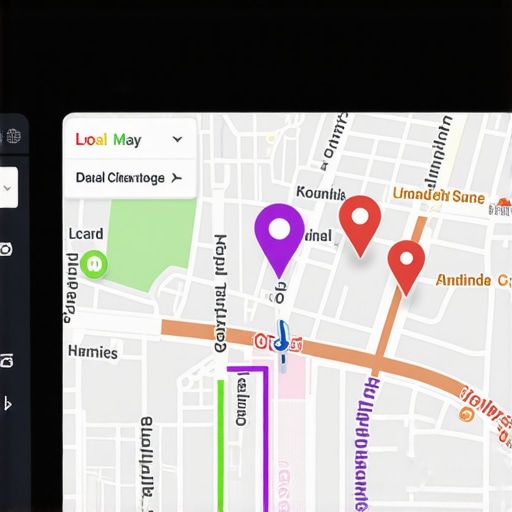
Looking ahead, the game is shifting toward deep hardware integration. I predict that by 2026, the majority of local searches won’t happen on a browser, but through integrated AI in vehicles and wearable tech. We are already seeing how 3-smart-car-proximity-fixes-for-map-pack-success-in-2026 are becoming essential for businesses that want to capture ‘en-route’ traffic. Your car’s dashboard is becoming the new primary search interface. If your data isn’t optimized for these in-vehicle systems, you are missing the highest-intent customers on the road. This is the next frontier of mastering local business maps. You need to ensure your API data is clean enough for an AI assistant to read it aloud to a driver without hesitation. My challenge to you: download a geo-grid tool today and run one report for your main keyword. I bet you’ll find ‘dead zones’ only a few miles from your shop that you never knew existed. Fixing those gaps is the first step toward a true, sustainable map pack success.
The Unfiltered Truth About Why Rankings Actually Move
After years of obsessing over local pack improvement, I’ve realized that the algorithm isn’t a puzzle to solve—it’s a mirror of your real-world reputation. My biggest ‘lightbulb moment’ was discovering that local pack improvement strategies that outperform competitors always prioritize the customer’s actual experience over technical tricks. Stop trying to outsmart the software and start being the most reliable business in your zip code.
Consistency isn’t just about your address; it’s about your response time. I used to think I could ignore reviews for a few days, but I learned that Google monitors how quickly you engage. If you aren’t active, you aren’t relevant. Lastly, don’t fear the competition; let their gaps be your roadmap. Every time they miss a detail, it’s an open door for your business to step through.
Where I Go to Keep My Competitive Edge
I didn’t learn all this in a vacuum. To stay on top of map pack success, I rely on a few high-value resources. I highly recommend following Joy Hawkins at Sterling Sky; her team’s deep dives into algorithm updates are the gold standard. For technical execution, I always refer back to your blueprint to map pack success in 2025 because it cuts through the noise of generic SEO advice.
For monitoring, I use geo-grid tools like Local Falcon or BrightLocal. Seeing your rankings at a street-level view is the only way to get an honest look at your visibility. If you feel like your progress has stalled, checking out climb higher in the map pack insights for local business visibility can help you identify those invisible barriers holding you back.
Your Neighborhood Is Waiting For You To Show Up
The digital landscape changes every day, but the core of a local listing win remains the same: being the most helpful answer for a neighbor in need. You have the tools, the data, and the strategy to reclaim your spot at the top. Don’t let another day pass while your competitors take the leads that should be yours. It’s time to take action and secure the map pack placement your hard work deserves. If you ever feel stuck, you can always reach out through our contact page for a direct hand. Let’s get you on the map.
Have you ever noticed your ranking drop after changing something seemingly small like your business hours or a single word in your title? Let me know your experience in the comments below!