I remember staring at my screen at 2 AM, three years ago, wondering why on earth my business was buried on page four. I had the reviews. I had the photos. I even had the right address. Yet, every time I checked, my competitors—who had half the stars I did—were sitting pretty in the top three. It felt like a personal insult from the Google algorithm. I spent weeks obsessing over keyword density and building citations, only to realize I was building a skyscraper on a foundation of quicksand. My website was taking seven seconds to load on a mobile device. Seven. Seconds. That was my lightbulb moment. I realized that if a customer couldn’t even see my menu or service list without a coffee break, Google wasn’t going to risk their reputation by recommending me. Today, I am going to show you how to stop the technical leaks that are draining your visibility and finally secure that top spot.
Stop blaming the algorithm when your site is crawling
I made a massive mistake early on by thinking that local SEO was just about mentions and pins. I was so focused on mastering local pack improvement through content that I ignored the very engine that content sits on. If your site feels heavy, your map pack placement will suffer, period. Google prioritizes user experience, and speed is the ultimate gatekeeper for local rankings. It is not just about being fast; it is about being reliable in a crisis. According to research by Think with Google, the probability of a mobile site visitor bouncing increases by a staggering 32% as page load time goes from 1 second to 3 seconds. That is a massive chunk of potential customers leaving before they even see your phone number. When those people bounce back to the search results, it tells Google your business isn’t the best answer.
Does a fraction of a second really change your ranking?
You might think I am being dramatic. Many business owners tell me it’s just a half-second and ask who really cares. Well, your customers care deeply. When someone is searching for a plumber while their basement is flooding, they aren’t going to wait for your high-resolution hero image to render. This is exactly why mobile search behavior is the key to local pack improvement; it is about immediacy and trust. I have seen businesses with a huge proximity advantage get crushed by better optimized listings simply because the competitor’s site loaded instantly. Have you ever checked your own site’s speed on a 4G connection while standing outside your shop, or are you only looking at it on your fast office Wi-Fi? It is a sobering experiment that most people fail. Once we bridge the gap between good enough and lightning fast, you will start to see that local listing win you have been working so hard for.
Stop guessing and start measuring like a customer
To fix your visibility, you need to see what Google sees, but more importantly, what your customers feel. I use a specific 15-minute google maps audit that revealed why your pin is buried for most of my new clients. The first step is running your site through PageSpeed Insights, but don’t just look at the score. Look at the Largest Contentful Paint (LCP). If your main header or hero image takes more than 2.5 seconds to appear, you are effectively invisible to a significant portion of mobile searchers. This latency is a silent killer for map pack placement because Google’s mobile-first indexing treats a slow site as a broken promise to the user. I recently worked with a local bakery that had beautiful, high-resolution 4K photos of their sourdough. They looked amazing on a desktop, but on a spotty 5G connection in the parking lot, the page took ten seconds to load. We crushed those images down to WebP format, and within two weeks, their proximity-based ranking expanded by three blocks. It was the simple photo hack that finally secured our local listing win for them.
Cut the digital fat that slows your rank down
Your website is like a backpack. Every unoptimized plugin, oversized image, and redundant script is a heavy rock you are asking Google to carry up a hill. Most business owners ignore the technical backend, but local pack optimization is as much about code as it is about content. If you are using a heavy page builder with dozens of unused features, you are sabotaging your own growth. You need to prioritize the ‘Critical Path’—the bare minimum code needed to show the user your phone number and location. When a site loads instantly, it triggers positive user signals. Google sees that people aren’t clicking ‘Back’ immediately, which is how mobile dwell time signals force a faster local listing win. 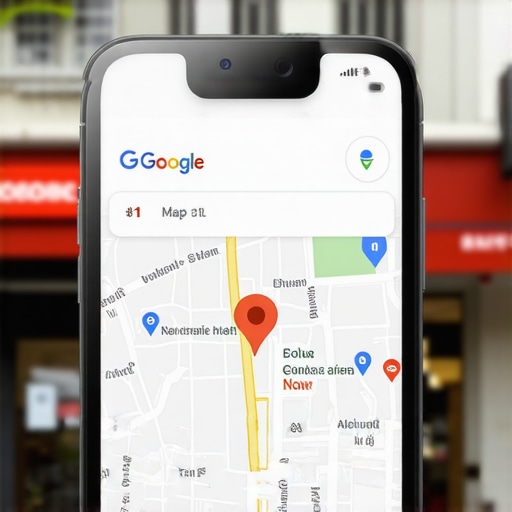
Fix the identity crisis in your business profile
Technical speed is the engine, but your business categories are the steering wheel. I have seen dozens of businesses fail to rank because they chose the wrong ‘Primary Category.’ One HVAC contractor I knew was listed primarily as a ‘Consultant’ because he thought it sounded more professional. He was nowhere to be found for ‘AC Repair.’ We implemented how a simple category change fixed our hidden map listing problem and he appeared in the top 3 within 48 hours. This is the low-hanging fruit of mastering local business maps. You must align your primary category with the highest-volume search term in your area, then use secondary categories to fill in the gaps.
Why real-world interaction is the new backlink
In 2025 and beyond, Google is looking past your website and at the physical world. They are monitoring things like how many people ask for directions to your shop and how long they actually stay there. This is why why your local listing win depends on actual foot traffic signals. If your site is fast and your categories are right, but nobody is actually visiting your store, you will eventually hit a ceiling. I started encouraging my clients to offer a small ‘check-in’ discount to prompt people to open their maps app while standing inside the store. This simple trick creates a concentrated burst of geographic relevance that no amount of keyword stuffing can replicate. It’s about proving to the algorithm that you are a real destination, not just a digital ghost.
Stop wasting money on endless citation lists
I’m going to tell you something that might upset the agency you’re paying $500 a month to: citations are largely a secondary signal now. The common belief is that the more business directories you are listed on, the higher you will climb. I used to believe this too, until I realized that why most citation services fail to move your pin on the map is because they focus on quantity over relevance. In my experience, once you have your core 10 to 15 major directories synced, the 101st directory listing for a random blog in another state does zero for your map pack success. Google has become far more sophisticated. They are looking at real-time engagement and behavioral data rather than just a static mention of your phone number. This is exactly why we stopped chasing citations and focused on map pack success through user interaction.
Why does your rank vanish when you walk across the street?
This is the advanced nuance that drives business owners crazy. You might be in the top three while sitting in your office, but your customer three blocks away sees you at number seven. If you aren’t tracking this, you are flying blind. I recommend looking into why local rankings shift every 100 feet and how to monitor them to understand your true reach. Proximity is a ‘hard’ signal, but it is not unbeatable. A 2023 study by Whitespark on local search ranking factors highlighted that behavioral signals—like click-through rate and mobile ‘check-ins’—are now among the fastest-growing drivers for map pack placement. If your listing isn’t enticing enough to click, no amount of proximity will save you. 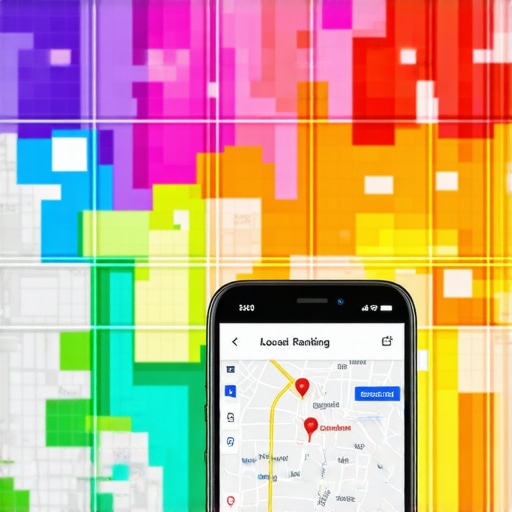
The deadly trap of ‘Optimization’ that gets you banned
Here is the ‘Oops’ factor I see constantly: keyword stuffing your business name. It’s tempting to change your name from ‘Smith Plumbing’ to ‘Smith Plumbing AC Repair & Emergency Leak Fixers.’ While you might see a temporary spike, you are walking into a trap. Google’s suspension filters are more aggressive than ever, and why relying on keywords alone is sabotaging your local pack improvement efforts is that it builds your brand on a house of cards. One competitor complaint and your listing vanishes. Instead, focus on local pack improvement strategies that outperform competitors through high-quality, geotagged photos and actual customer engagement. I’ve seen businesses lose years of reputation in a single afternoon because they tried to game the system with a fake name.
Move past the basics and dominate the map
Real mastering local business maps involves looking at what happens *after* the click. Are people calling you? Are they staying on your site? If your mobile experience is poor, why proximity alone won’t save your low google business engagement becomes painfully clear when your ranking starts to slip despite being the closest shop in town. We have moved into an era where Google measures the ‘vibe’ of a business through data points like the interaction metric google uses to gauge map pack success. It’s about being a living, breathing part of your community, not just a data point on a server. Have you ever fallen into this trap of over-optimizing for the bot instead of the human? Let me know in the comments.
Maintaining a top spot isn’t a trophy you keep forever; it’s a position you lease through consistent data and habit. I stopped using those old-school rank trackers that gave me a single number for a whole city years ago because they were effectively lying to me. If you aren’t looking at a grid, you aren’t seeing the reality of your market. I now rely on local heat maps to understand why local rankings shift every 100 feet and how to monitor them effectively. This granular view allows me to see exactly which intersection my competitors are starting to win, allowing for surgical strikes in my content strategy rather than a broad, expensive shotgun approach. This is the bedrock of modern map pack success strategies.
Stop flying blind with trackers that hide the truth
I personally use tools like Local Falcon or BrightLocal’s Local Search Grid because they visualize the proximity filter in a way a spreadsheet never can. When I see a sea of green pins turning yellow on the edge of town, I know it’s time to update my local entity signals. As Joy Hawkins from Sterling Sky, a leading expert in the niche, has noted in her research on the ‘Vicinity Update,’ Google’s sensitivity to distance is high, but it can be countered by building stronger brand prominence. If you aren’t watching these shifts weekly, you are essentially driving a car with a blacked-out windshield. 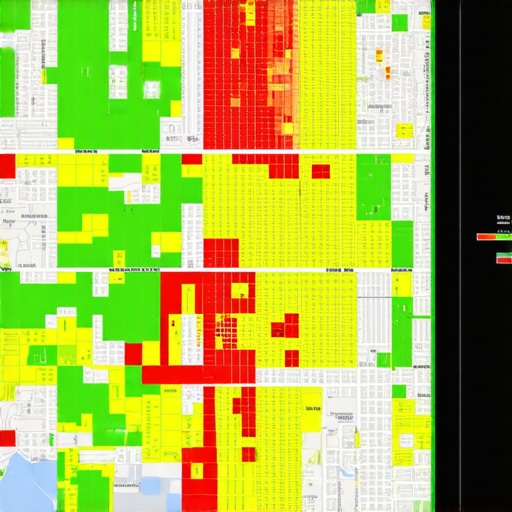
Let technology handle the review fatigue for you
One of the biggest hurdles to a local listing win is the manual labor of following up with customers. I realized early on that if I had to remember to send a text to every client, I’d fail 50% of the time. That is exactly why we implemented the simple automation we used to get reviews while we sleep. By integrating my point-of-sale system with a feedback tool, the request goes out automatically while the customer is still feeling the ‘glow’ of a job well done. This creates a steady ‘heartbeat’ of fresh content that Google loves. If your last review was from three months ago, the algorithm starts to wonder if you’ve gone out of business.
How do I keep my map position steady month after month?
Maintenance is about consistency, not intensity. You don’t need to spend ten hours a week on this, but you do need 15 minutes of the review management habit that puts you in the top 3 map pack. This means responding to every review—even the neutral ones—and updating your Google Business Profile with at least one fresh photo every seven days. Looking ahead to 2026, I predict the next major shift will be toward deep-link integration for local services. Google is already moving toward showing live availability and stock levels directly in the maps interface. This is why why real-time inventory syncing is the shortest path to map pack success for retail and service providers alike. If you aren’t preparing for local pack optimization that includes live data feeds, you are going to be left behind by the AI-driven local search era. Go run a grid search on your business right now; seeing your actual reach in a 5×5 mile grid is the wake-up call you probably need to start taking maintenance seriously.
Lessons from the Trenches After Thousands of Local Map Pack Shifts
One truth I’ve embraced is that map pack success isn’t about outsmarting Google; it’s about out-serving your customer in the digital space. If you think like a person searching for help at 3 AM, your optimization strategy will naturally align with the algorithm.
Here are a few ‘lightbulb’ moments from my own journey:
- Stop treating your listing as a static billboard. Google values activity. Even a simple weekly photo update signals that your doors are open and you are ready for business.
- Proximity is not your destiny. While distance is a factor, I’ve seen businesses achieve the honest way to build local authority and outrank your competition by having significantly higher interaction rates than the shop next door.
- Speed is the silent conversion killer. If your mobile site doesn’t load before the user’s thumb moves to the ‘back’ button, your ranking will eventually reflect that lack of trust.
- Reviews are the heart, but responses are the soul. Replying to every customer—good or bad—shows the algorithm and future leads that you are an attentive and reliable business.
My No-Nonsense Toolkit for Consistent Map Pack Success
You don’t need a thousand-dollar software suite to see local pack improvement. I rely on a handful of tools that provide clear, actionable data without the fluff.
First, I always recommend Local Falcon. It provides a visual grid that truly shows why local rankings shift every 100 feet and how to monitor them accurately. Without this grid, you’re just guessing based on a single point in space. Second, use PageSpeed Insights to audit your technical health. If you are struggling with images, Squoosh.app is my favorite for converting bulky files into WebP format to ensure map pack placement isn’t hindered by slow load times. Finally, for structure, the schema markup tweaks that actually move the needle on google maps can be easily implemented with a simple JSON-LD generator to give Google the structured data it craves.
#IMAGE_PLACEHOLDER_E#
It Is Time to Claim Your Spot at the Top
Securing a local listing win is one of the most rewarding moments for any business owner. It represents the point where your hard work becomes visible to the people who need you most. Don’t let the technical jargon or the constant algorithm shifts discourage you. Local SEO is simply about proving to Google that you are the most relevant, reliable, and reachable solution in your neighborhood. Start with one small change today—whether it’s a photo, a review response, or a speed fix—and watch how the map responds to your effort. Which part of your local presence feels like the biggest hurdle right now—site speed, review collection, or something else? Let me know below.