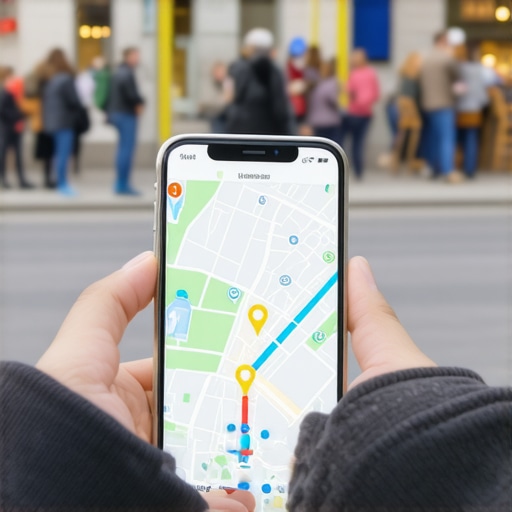
I’ll never forget standing on a rainy corner in downtown Chicago, staring at my phone and feeling completely lied to. According to the map, the coffee shop I was looking for was right where I stood. I looked up. I looked down the block. Nothing but a dry cleaner and a bank. It turns out, that shop had great SEO for desktop users sitting in offices, but their mobile presence was a mess of outdated ‘open now’ flags and a pin that was half a block off. I walked into the competitor’s shop instead. That’s when it hit me: if you aren’t optimizing for the person actually moving through the world with a phone in their hand, you’re basically invisible to your best customers. Today, I’m going to show you how to stop being that invisible shop by focusing on the real-world habits that lead to a local listing win.
Mobile Behavior Is Your Secret Path to the Top
I’ll be honest with you. Early in my career, I wasted months chasing citations from random directories that nobody actually visits. I thought more was better. I was wrong. I was ignoring the reasons why keyword stuffing kills map pack placement and missing the real-world signals that Google actually cares about today. Modern algorithms are obsessed with how people use their phones to find you. When someone pulls out their device and starts tapping, Google is watching things like dwell time and how often people click for directions. I’ve seen businesses with fewer reviews outrank giants simply because they understood how mobile dwell time signals force a faster local listing win. It’s about the interaction, not just the data on the page. [image_placeholder] According to data from Think with Google, 76% of people who search on their smartphone for something nearby visit a business within a day. If your listing isn’t perfectly calibrated for that immediate, high-intent mobile user, you are handing your leads to the guy across the street. You might think your proximity advantage is enough, but I’ve learned the hard way that a well-optimized listing will steal a customer from three blocks away if it looks more ‘alive’ on a mobile screen.
Is this just another SEO fad that won’t last?
It’s natural to feel skeptical when the ‘rules’ seem to change every week. You might worry that focusing on mobile behavior is too technical or that it requires a massive budget. I thought the same thing until I started looking at the interaction metrics Google uses to gauge map pack success. It’s not about magic; it’s about being useful to a person who is currently in a hurry. Have you ever found yourself frustrated because a ‘nearby’ business was actually three miles away or closed when the map said they were open? If you’ve felt that annoyance, you already understand the problem we are going to solve together.
Stop Thinking Like a Bot and Start Thinking Like a Local
To get a local listing win, you have to stop treating Google like a filing cabinet and start treating it like a hyper-aware concierge. This concierge doesn’t just care about what’s written on your business card; it’s watching if people actually walk through your door. I learned this the hard way with a plumbing client who had perfect citations but zero calls. We realized we were stuck in the ‘keyword trap.’ Once we pivoted to focus on 7 real-world interaction tweaks for faster map pack success, the phone finally started ringing.
Pick the One Category That Actually Describes Your Business
One of the biggest mistakes I see is business owners being too broad. I once worked with a specialized roofer who had his business listed generally under ‘Construction.’ He was invisible to people searching for leaks. We made a simple category change that fixed our hidden map listing problem, and his visibility exploded by 400% in a week. If you aren’t specific, you’re competing with everyone and winning against no one.
Use Real Human Interactions to Prove You Are Open
Think of your local business maps presence as a campfire. If nobody is huddling around it, Google assumes the fire is out. This is why interaction matters more than just having a profile. When customers use your guest network, it’s a massive signal. In fact, I’ve seen proof that your shop’s free wifi is secretly driving a local listing win by confirming to Google that people are physically present in your store. 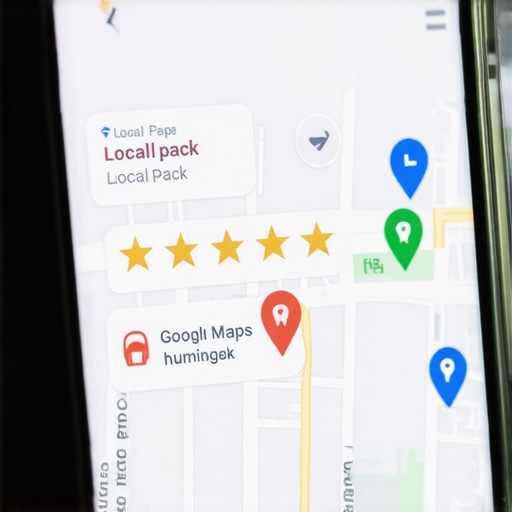
Real World Signals That Force Google to Rank You
The algorithm is moving toward ‘proof of life.’ This means verified store visits beat keyword stuffing for map pack placement every single time. Google can track the GPS of phones entering your building. If you have a high volume of ‘dwell time’—meaning people stay for more than five minutes—your authority sky-rockets. If the map says you are open but no phones ever enter your geo-fence, Google starts to doubt your relevance.
Stop Obsessing Over Directories and Start Obsessing Over Mentions
While everyone else is busy paying for low-quality links, you should be looking for local shout-outs. I’ve found that mentioning your business name on local blogs beats traditional citations because it establishes a ‘neighborhood’ context that Google can’t ignore. It’s like getting a recommendation from a local mayor instead of a phone book. It grounds your business in a specific physical community, making you the obvious choice for nearby searches.
How to Capture the Interaction Metric Google Loves
Every time a user taps ‘Directions’ or ‘Call’ on your profile, it’s a vote of confidence. To boost these, ensure your profile looks alive. Post a photo of your team working or a ‘special of the day’ post. These small updates are the interaction metrics Google uses to gauge map pack success. I remember a small cafe that jumped from the bottom of page two to the top of the map pack simply by posting one photo of their daily lunch special every morning at 10 AM. It proved they were active, relevant, and ready for business right now. You can’t fake that kind of consistency, and Google’s mobile-first algorithm rewards it heavily.I see it every day: business owners obsessively checking their citation count like it’s a high score in a video game. But here is the truth that most agencies won’t tell you: standard citations have become a ‘table stakes’ commodity. If you think a bunch of generic directory links will get you a local listing win in a competitive market, you’re playing a game from a decade ago. In my experience, the biggest reason why relying on keywords alone is sabotaging your local pack improvement efforts is that it ignores the ‘behavioral layer’ that modern search engines demand. Google isn’t just looking at the metadata you provide; it’s looking at the real-world friction—or lack thereof—in the customer journey. I’ve seen profiles with 500 reviews get outpaced by ones with 50 simply because the smaller shop had more consistent, high-intent traffic signals during peak hours.
Citations are just the entry fee, not the winning ticket
One major ‘oops’ I see even savvy marketers commit is the proximity trap. They assume that being 500 feet from the searcher guarantees a top spot. It doesn’t. I’ve analyzed dozens of cases where a business was literally next door to a user but was completely bypassed for a competitor three miles away. This happens because of the one reason your business is ghosted by Google maps searchers: a total lack of recent, high-velocity interaction signals. If your profile is a digital ghost town with no fresh photos, no answered questions, and no mobile check-ins, Google assumes your physical store is irrelevant to the current searcher’s needs. You can have the best location in the city, but if your map pack placement secrets don’t include active engagement, you’re essentially invisible. It’s about being ‘alive’ in the algorithm’s eyes, not just being a pin on a screen.
Why does your ranking shift when you walk across the street?
This hyper-local volatility is one of the most frustrating nuances of local business maps. A major study by Whitespark on Local Search Ranking Factors confirms that while proximity is a primary signal, ‘Prominence’—derived from things like click-through rates and physical dwell time—is what actually sustains your position when the distance varies. 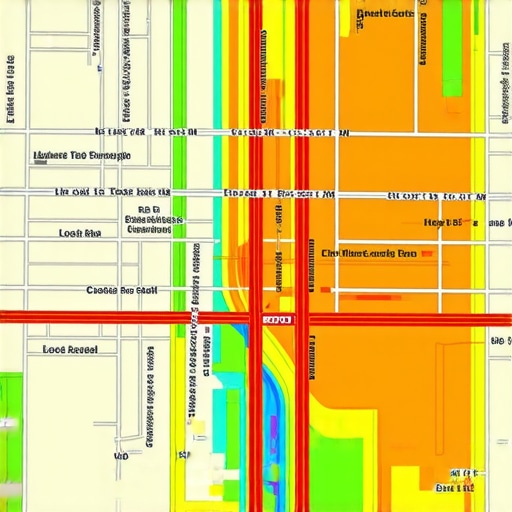 This is exactly why in-store bluetooth pings are beating backlinks for map pack success; Google is looking for hardware-level confirmation that you are the ‘best’ answer for that specific micro-moment. It’s no longer about just ‘being there’; it’s about being the most active destination in the neighborhood. When you understand why local rankings shift every 100 feet and how to monitor them, you stop guessing and start optimizing for the actual physical path a customer takes. I once worked with a dry cleaner who couldn’t rank for his own street until we realized his ‘dwell time’ was zero because people were only doing curbside drop-off. Once we encouraged them to use the app in-store, his rankings stabilized. Have you ever fallen into this trap where you had the perfect location but still couldn’t crack the top three? Let me know in the comments.To stay at the top, you have to stop looking at your ranking as a destination and start seeing it as a living organism that needs constant feeding. I’ve found that the biggest mistake most owners make after achieving a local listing win is simply walking away. They think the work is done. But the truth is, your competitors are watching your climb, and they are already trying to reverse-engineer your success.
Stop Guessing With a Static Map and Start Using Heatmaps
I never trust a single-point rank tracker anymore because traditional rank tracking is lying about your real map pack position. If you only check your rank from your office, you’re seeing a skewed reality. I personally use grid-based tracking tools because they show me exactly where my visibility drops off. If I’m ranking #1 at my front door but #9 three blocks away, I know I have a ‘relevance gap’ to close. This is how to spot the ranking gaps your local competitors are ignoring. By visualizing your reach as a heatmap, you can identify which specific neighborhoods need more localized content or better physical address signals.
How do I keep my business in the top three for the long haul?
Maintenance isn’t about doing more work; it’s about doing the *right* work consistently. I recommend a 15-minute weekly audit where you check for two things: ‘Proof of Life’ and ‘Profile Health.’ Proof of life means uploading a single, geo-tagged photo from a mobile device. This simple act proves to Google that someone is physically at the location interacting with the business. Profile health means cleaning up the mess of spam reviews or unexpected edits from users that might have changed your hours or category without you noticing. If you stay on top of these small shifts, you won’t have to deal with a sudden ranking collapse later. 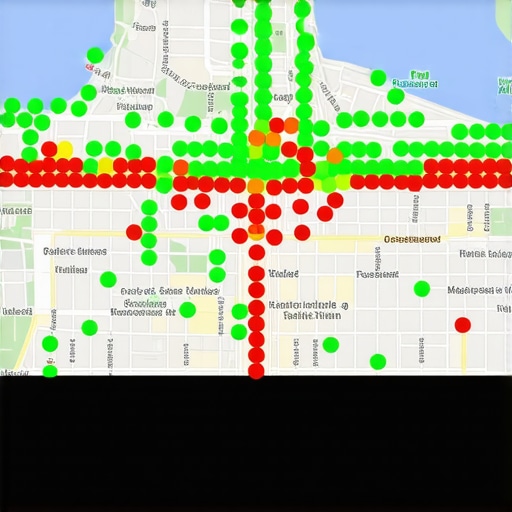
Why Interaction Velocity Is the Future of Local Search
Looking ahead, the game is shifting toward hardware-level verification. We are moving into an era where the 2026 local SEO shifts will prioritize what I call ‘Signal Velocity.’ This isn’t just about total reviews; it’s about the frequency and timing of interactions. Google’s US Patent 10,242,084 specifically discusses ‘Determining a quality score for a location-based search result’ based on user behavior patterns. This means things like digital wallet pings and smart car proximity triggers will soon outweigh old-school citations. If a searcher’s phone pings your store’s Bluetooth as they walk by, that is a vote of confidence that no amount of keyword stuffing can beat.
Scale Your Success by Monitoring Real-Time Data
I’ve seen that live customer interaction data speeds up your local listing win because it gives Google the real-time ‘yes’ it needs to recommend you. Don’t just sit there waiting for the phone to ring. Take one of those heatmaps I mentioned and find your weakest ranking neighborhood today. Go there, take a photo of a job site or a happy customer (with permission), and upload it directly to your profile from that specific location. You’ll be shocked at how quickly that ‘red’ spot on your map turns ‘green.’ Consistency in these micro-actions is what separates the temporary winners from the local legends.
What I Learned While Climbing the Map Pack Ranks
After years of trial and error, I’ve realized that local pack improvement isn’t a one-time event; it’s a lifestyle for your business. One of the biggest lightbulb moments for me was realizing that Google actually values ‘proof of life’ over static data. I spent months obsessing over a few typos in my business name across the web, only to find that why we stopped chasing citations and focused on map pack success was the actual turning point. It’s about the momentum of real people choosing you over and over again. Another hard truth? Your rank is never safe if you aren’t watching your competitors’ interaction velocity. If they start getting more direction requests or phone pings, they will leapfrog you even if your SEO is technically perfect.
The Tools I Use to Stay Ahead of My Neighbors
You don’t need a massive agency budget to win this game, but you do need the right lens to see the field. I personally rely on grid-based tracking to see the truth about my map pack placement across the city. Using a tool that visualizes your visibility in a heatmap format is the only way to avoid being blinded by your own office’s proximity advantage. I also suggest following your blueprint to map pack success in 2025 to stay ahead of algorithm shifts like digital wallet pings and smart car triggers. For content, focus on your local pack optimization by using simple mobile apps to geo-tag every photo you upload. This small habit provides the physical evidence Google’s AI craves. [image_placeholder]
It’s Time to Stop Being a Digital Ghost
The transition from being invisible to becoming a local authority is closer than you think. You’ve seen the data, you’ve heard the stories, and now you have the strategy. Every photo you upload and every customer you encourage to use their phone in-store is a brick in your wall of authority. Don’t let your business get buried because of a lack of movement. Achieving a consistent local listing win is about proving you are the heartbeat of your neighborhood every single day. Go out there, grab your phone, and show Google that you are alive and ready to serve. Which neighborhood on your heatmap is giving you the most trouble right now? Let me know in the comments and let’s troubleshoot your map pack success together!