How to Find the Ranking Gaps Your Local SEO Software Is Missing
Most business owners and agency founders follow a predictable script: they realize they need more leads, they hear about the “Map Pack,” and they immediately sign up for a subscription-based local seo software. They plug in their keywords, wait for the green checkmarks to appear, and then wonder why their phone isn’t ringing despite the “optimization” score being 100%.
Here is the hard truth: most automated tools are built on legacy metrics that haven’t evolved as fast as Google’s algorithm. They are designed to track what is easy to measure, not what actually moves the needle in 2025 and 2026. As a Google Business Profile (GBP) Product Expert, I’ve seen thousands of profiles that look perfect on paper but are completely invisible to actual customers.
My name is Kevin Pauls, and my mission is to expose the “invisible” ranking gaps that your dashboard is hiding from you. If you want to achieve true google business profile seo dominance, you have to stop looking at static reports and start looking at the behavioral and technical signals that Google actually cares about. In this guide, I’m going to show you exactly how to find the holes in your strategy that your software is fundamentally incapable of seeing.
The “Software Lie”: Why Traditional Rank Trackers Fail
The biggest misconception in the industry is that a rank tracker provides an accurate map of your visibility. Most local seo tools use static pings from a handful of data centers to estimate your position. This is a “snapshot” approach to a “cinema” problem. Local search is fluid, hyper-localized, and incredibly sensitive to the user’s physical movement.
You might have seen our previous research on Why Traditional Rank Tracking Is Lying About Your Real Map Pack Position. The reality is that proximity is no longer a fixed radius; it is a shifting tide. A tool might show you at #1 when the “ping” originates from the center of town, but you could be at #20 just two blocks away because of a competitor’s stronger proximity signal or a literal physical barrier like a highway or a river that Google’s algorithm accounts for in “travel time” logic.
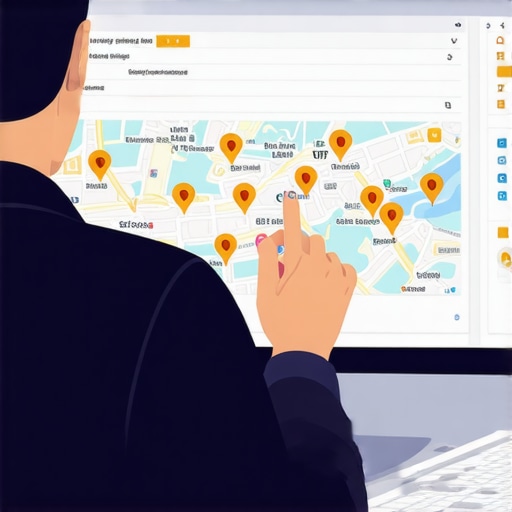
Furthermore, standard trackers are often “blind” to the personalization of search. They don’t account for the user’s search history, their current velocity (are they walking or driving?), or their previous interactions with your brand. To get a real sense of where you stand, you need a more granular, grid-based approach. This is why I recommend using a specialized google maps ranking service like SEO Viper Tools. Unlike enterprise tools that give you a single average number, you need to see the “heat map” of your rankings to identify exactly where your “ranking cliff” begins.
Gap #1: Behavioral & Real-Time Interaction Signals
We are entering the era of “Live Signal Gaps.” In 2026, Google isn’t just looking at your keywords; it’s looking at the physical reality of your business. Standard local seo software can tell you if you have the word “Plumber” in your description, but it cannot tell you if a customer actually stayed in your store for 20 minutes or if they bounced the moment they saw your storefront.
Google’s algorithm now incorporates data points that most SEOs didn’t even consider five years ago:
- Mobile Dwell Time: How long does a user’s device stay within the geofence of your business location?
- In-Store Bluetooth Pings: High-traffic businesses are verified by the density of Bluetooth and beacon signals in the area.
- WiFi Latency and Connection: Google can see when users connect to your guest WiFi, confirming a physical visit.
Software cannot simulate these real-world interactions. If your competitors have higher “dwell time” because they have a waiting room with high-speed internet or an engaging showroom, they will eventually outrank you, even if your backlink profile is stronger. This is a core component of modern google business profile optimization. You have to prove real-world engagement. If you want to dive deeper into this technical frontier, check out our guide on Why Your Map Pack Placement Needs Real-Time WiFi Data in 2026.
To bridge this gap, you must look at your “Insights” data – not just the surface-level numbers, but the ratio of “Direction Requests” to “Actual Visits.” If people are asking for directions but their devices aren’t actually arriving at your coordinates, Google sees a “trust gap,” and your rankings will suffer.
Gap #2: The Competitor “Visual & Content” Audit
Most tools have a “competitor analysis” tab. Usually, it just shows you how many reviews they have and if their NAP is consistent. This is a surface-level audit that misses the psychological triggers of the local map pack seo.
I recently participated in a Reddit AMA where we discussed a fascinating finding: Google’s Cloud Vision AI is now actively “reading” the images you upload to your profile. If your competitor has 50 high-quality, original photos of their team performing specific services (e.g., a roofer installing a specific brand of shingle), and you only have 10 generic photos of your truck, Google will favor the competitor for specific, long-tail queries. Software will tell you that you “have photos,” but it won’t tell you that your photos are semantically inferior.
The Manual Audit Strategy:
1. Open the top 3 competitors in your niche.
2. Count their “Post” frequency. Are they posting once a week or once a day?
3. Look at their Q&A section. Are they seeding their own questions?
4. Use a google business profile audit tool like SEO Viper Tools to see if they are out-performing you on specific “Entity” associations within their image metadata.
A major gap software misses is the “Q&A” engagement. Competitors are often using the Q&A section to seed keywords that they can’t fit into their business name or description. If you aren’t actively managing your Q&A to answer the top 10 questions your customers actually ask, you are leaving a massive ranking gap wide open.
Gap #3: Hyper-Local Schema & Entity Association
If you think local map pack seo is still just about your Name, Address, and Phone number (NAP), you are living in 2018. Today, Google is an “Entity Engine.” It wants to know not just where you are, but what you are and who you are connected to.
Software often checks for basic LocalBusiness schema, but it misses the advanced “Entity Authority” tweaks. For example, does your schema include knowsAbout properties that link to your specific certifications? Does it use the areaServed property to define your service boundaries in a way that matches your GBP settings?
Many tools will give you a “pass” if they see any schema at all, but they won’t tell you that your schema is disconnected from your Google Business Profile. This “Entity Mismatch” is a silent killer. We’ve documented the specific fixes for this in our article on The Schema Markup Tweaks That Actually Move the Needle on Google Maps.
To rank higher on google maps, your website and your GBP must speak the same technical language. If your website mentions a service that isn’t listed as a “Service” or “Product” on your GBP, or if the “Entity” (your business) isn’t clearly linked via sameAs tags to your social profiles and niche directories, Google’s confidence in your data decreases. Software rarely audits the *connection* between these assets; it only audits the assets in isolation.
Gap #4: The Citation “Quality vs. Quantity” Trap
There is a massive industry built around “citation building.” Software loves to report that they’ve submitted your business to 100+ directories. They show you a beautiful bar chart of “Citations Created.” But here is the problem: 90% of those citations are useless, and some might actually be hurting you.
Research from Merchynt highlights “the high cost of inaccurate business information.” If a software tool creates a citation on a low-authority, spammy directory that has your old phone number or a slightly different suite number, it creates “data noise.” Google hates noise. It wants “data harmony.”
The gap that software misses is the “Niche-Specific Citation.” A general local seo software will put a dentist on a generic “Business List” site, but it might miss a high-authority dental directory that is specific to their city or state. These niche-specific, high-relevance links are what actually move the needle. We saw this firsthand when we analyzed a client’s failure to break into the top 3; we detailed the process in How We Found the Citation Gaps That Kept Us Out of the Top 3. It wasn’t that they didn’t have enough citations – it was that they didn’t have the *right* ones that their competitors possessed.
Instead of focusing on the quantity of citations, you should be using a google maps ranking service to identify where your top 3 competitors are mentioned that you are not. This is a manual, surgical approach to citation building that software simply cannot automate effectively.
A Step-by-Step Manual Audit Checklist (The Kevin Pauls Method)
To truly improve google maps ranking, you need to step away from the automated dashboard and perform a manual audit at least once a quarter. Here is the checklist I use for my private consulting clients:
- 1. Verify Primary/Secondary Categories: Software often misses “Category Dilution.” Are you using too many categories that don’t relate to your core business? Or worse, did a competitor suggest an edit to your category that you didn’t notice?
- 2. Audit “Attributes”: Google frequently adds new attributes (e.g., “Identifies as Black-owned,” “Wheelchair accessible,” “On-site services”). Software rarely flags these as “missing,” but filling them out provides more “surface area” for Google to match you with specific searches.
- 3. Check for “Ghosting”: Is your profile hidden due to proximity filters? Search for your business category in your area. If you don’t see yourself, zoom in. If you suddenly appear, you are being “filtered” because you are too close to another similar business. Software won’t tell you that you’re being filtered; it will just show you a low rank.
- 4. The Review Velocity Audit: Don’t just look at the total number of reviews. Look at the *frequency*. If you got 50 reviews in one month and then zero for three months, Google sees this as unnatural. You need a steady “heartbeat” of reviews.
- 5. Use a specialized tool: Go to SEO Viper Tools and run a geo-grid report. This is the only way to see the “Ranking Gaps” across your entire service area.
Remember, local search optimization is a game of inches. While your competitors are relying on their local seo software to tell them they are doing a “good job,” you can find the 1% tweaks that actually result in a #1 position.
The Future of Local SEO: 2026 and Beyond
As we look toward 2026, the gap between “automated SEO” and “expert SEO” is only going to widen. We are seeing the emergence of “5G Latency” and “Digital Wallet Pings” as the new “backlinks” for local maps. Google is increasingly able to verify if a business is popular based on how many people are paying with Google Pay or Apple Pay at that physical location.
Software can’t fake this. It can’t optimize it. The only way to win is to have a superior physical presence combined with a technical strategy that mirrors that reality. You need to ensure your google business profile optimization is so tight that Google has no choice but to trust your data over the “noisy” data of your competitors.
Stop letting your software tell you that you’re winning when your lead volume says otherwise. Most business owners are sabotaging their own growth by ignoring the “why” behind the “how.” For more on this, read Why Relying on Keywords Alone Is Sabotaging Your Local Pack Improvement Efforts.
Conclusion & Call to Action
Software is a compass, not the engine. It can point you in the right direction, but it won’t drive you to the top of the Map Pack. To truly rank higher on google maps, you need a combination of expert strategy, manual oversight, and high-precision local seo ranking tools that provide more than just surface-level data.
The “Ranking Gaps” are there – you just have to know where to look. Whether it’s behavioral signals, entity mismatches, or the “quality trap” of citations, identifying these holes is the first step toward total market dominance.
Are you ready to see what your current software is hiding? I highly recommend you start by auditing your profile using the advanced grid tracking at SEO Viper Tools. If you’re tired of “green checkmarks” that don’t result in green dollars, contact me, Kevin Pauls, for a deep-dive consultation. Let’s stop guessing and start dominating the local map pack together.